
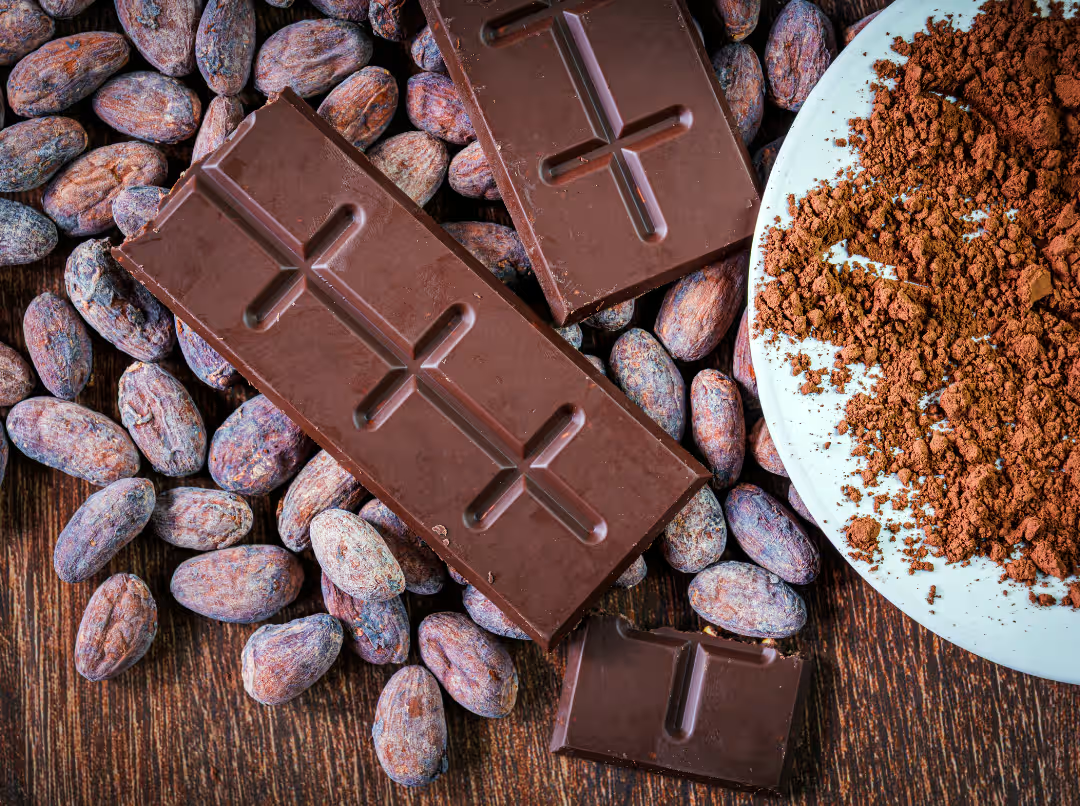
A raw cacao bean tastes nothing like chocolate. It’s bitter, astringent, and faintly fruity—closer to an unripe olive than anything you’d find on a dessert menu. The transformation to a glossy, snapping bar is not a recipe. It’s a chain of controlled chemical events, each one permanent, each one capable of building quality or destroying it.
That matters because every attribute you judge when you buy chocolate—flavor complexity, smoothness, snap, gloss, price—was decided at a specific point in that chain. Understand which stage controls which outcome and labels start meaning more, price gaps start making sense, and terms like “bean-to-bar” or “single origin” become things you can actually evaluate rather than trust on faith.
This guide covers all six steps. Those with the greatest impact on the final bar get the most space.
The 6 Steps at a Glance
For those who want the map before the territory:
- Harvest — Ripe cacao pods are cut from the tree and split open; beans and pulp are removed together.
- Fermentation — Beans rest in their pulp for several days while heat and microbes build the chemical precursors of chocolate flavor.
- Drying — Moisture drops to a stable level, allowing beans to be stored and shipped without spoiling.
- Roasting and winnowing — Heat converts flavor precursors into chocolate aroma; the shell is then removed, leaving clean nibs.
- Grinding and refining — Nibs become cocoa liquor; sugar and milk are added; every particle is ground to a size the tongue can’t detect.
- Conching and tempering — The mass is worked to refine flavor and texture, then crystallized into its final structure before molding.
Each step hands off to the next. Skip one or rush it, and the damage compounds forward.
Why the Process Matters More Than Most Buyers Realize
Most people think of chocolate as a manufactured product—something built from ingredients following a formula. A more accurate picture is a relay race, where each stage inherits what the previous one left behind and cannot go back to fix it.
Fermentation creates flavor compounds no later step can add. Drying locks in stability that roasting cannot replicate. Roasting develops aroma from precursors that fermentation built—if those precursors are absent, the best roaster in the world has nothing to work with. Refining sets the particle size that determines whether chocolate feels silky or chalky on the tongue. Tempering crystallizes cocoa butter into the one stable form that delivers gloss, snap, and shelf life.
Quality doesn’t get added at the end. It accumulates—or it doesn’t—at fixed points across the process. A maker who executes five steps brilliantly and mishandles the sixth still ships a flawed bar. That’s the frame worth keeping in mind: not just what each step is, but what it controls, what it can’t fix, and what its failure looks like in your mouth.
Step 1: Harvest
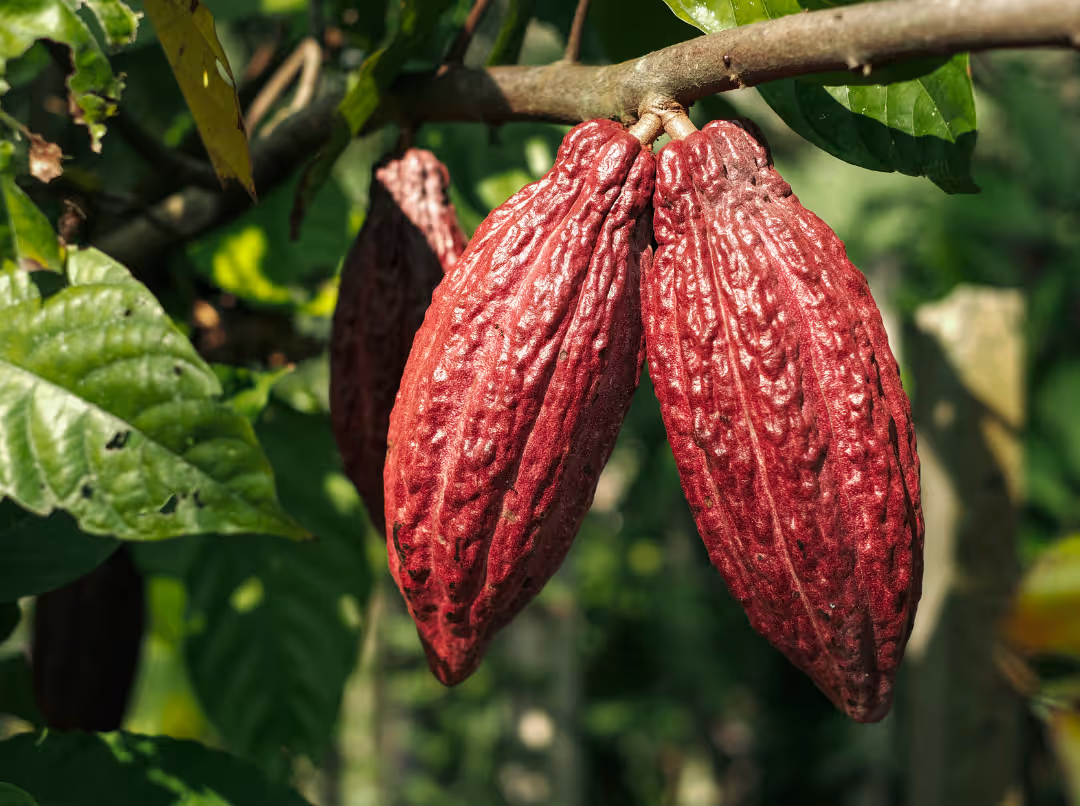
Cacao grows in a narrow tropical band running roughly 20 degrees north and south of the equator—in West Africa, Central and South America, and parts of Southeast Asia. The pods grow directly on the trunk and low branches, each holding 30 to 50 beans packed in sweet white pulp.
Harvesting is done entirely by hand. Workers identify ripe pods by color and sound, then remove them with a blade rather than tearing, which would damage the sites that produce future fruit. The pod is split, and both beans and pulp are scooped out together. That pulp is not waste—it’s the fuel for fermentation.
The ceiling for what any bar can become is set here. Underripe pods ferment poorly and produce flat, astringent chocolate. Diseased or damaged beans carry off-flavors that no subsequent step removes. This stage is brief in effort but permanent in consequence.
Step 2: Fermentation — Where Chocolate Flavor Is Built
This is the stage that most determines the quality of the final bar, and the one most casually treated in popular accounts of chocolate-making.
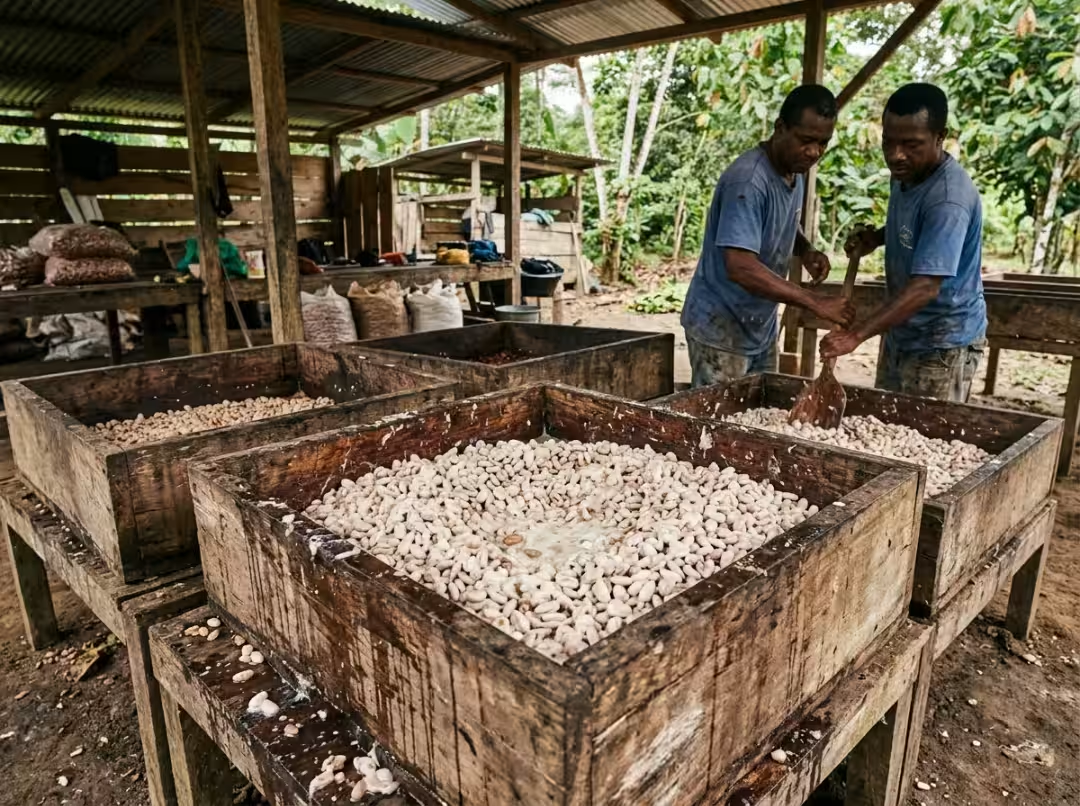
Fresh cacao beans have no chocolate flavor. They’re purple, bitter, and completely undeveloped. Fermentation—carried out over three to seven days in wooden boxes, banana-leaf-lined heaps, or woven baskets—triggers the chemical transformations that make chocolate flavor possible.
What happens inside the fermentation pile
The process runs in two overlapping phases. First, yeasts attack the sugars in the pulp under oxygen-poor conditions, producing alcohol and carbon dioxide. As the pulp breaks down and drains away, air enters the mass and bacteria take over, converting alcohol into acetic and lactic acids. The pile heats significantly, reaching 45–50°C (113–122°F) at its core.
That heat and acidity work on the bean itself. The seed’s germ is killed, ending germination. Inside the cotyledons, complex proteins are hydrolyzed into amino acids and peptides. Polyphenols—the compounds responsible for raw cacao’s harsh astringency—are oxidized and reduced. What forms in their place is a set of flavor precursors: amino acids, reducing sugars, and partially oxidized polyphenols that roasting will later transform into the hundreds of volatile compounds we recognize as chocolate aroma.
What poor fermentation produces—and why it can’t be fixed later
The reason fermentation deserves serious attention is that its failures are permanent. Roasting develops flavor from precursors; it cannot create them. An unfermented bean offers the roaster nothing to transform. A badly fermented bean produces the wrong building blocks, and those carry through every subsequent step unchanged.
Under-fermented beans stay purple in cross-section and produce chocolate that tastes flat, sharp, and one-dimensional—high in raw bitterness with no compensating depth. Over-fermented beans have started to decompose; the resulting chocolate reads as hammy, putrid, or aggressively acidic. Well-fermented beans turn brown throughout, split cleanly along natural seams, and smell pleasantly fruity. For anyone evaluating a cacao source—or judging a finished bar—fermentation quality is the single most predictive variable.
Step 3: Drying
Freshly fermented beans hold around 60 percent moisture. That needs to drop to 6–7 percent before they can be stored or shipped without developing mold. Drying does that job.
The standard method is sun drying on raised wooden platforms or concrete patios, with beans turned regularly over one to two weeks. In humid or rainy climates, mechanical dryers and covered structures do the same work.
Two points worth clarifying. First, drying and roasting are completely different processes. Drying removes water at ambient or gently elevated temperatures; it does not trigger the Maillard reactions that develop chocolate aroma. Second, the drying rate matters. Drying too fast causes the bean’s exterior to dry while the interior stays moist, trapping residual acidity and creating conditions for mold. Drying too slowly in humid air encourages mold directly. Either failure produces off-flavors—musty, excessively sour, or moldy—that carry intact into the finished bar. Careful drying preserves what fermentation built; careless drying undoes it.
Step 4: Roasting and Winnowing
Roasting is the first stage most makers control entirely in their own facility, and the one most often overcredited with making chocolate taste good.
What roasting does—and what it can’t
Heat triggers the Maillard reaction: the interaction between amino acids and reducing sugars that produces hundreds of new aromatic compounds while darkening color and loosening the shell. Roasting also drives off residual moisture and acetic acid, softening the sharp, fermentation-derived sourness that would otherwise carry through.
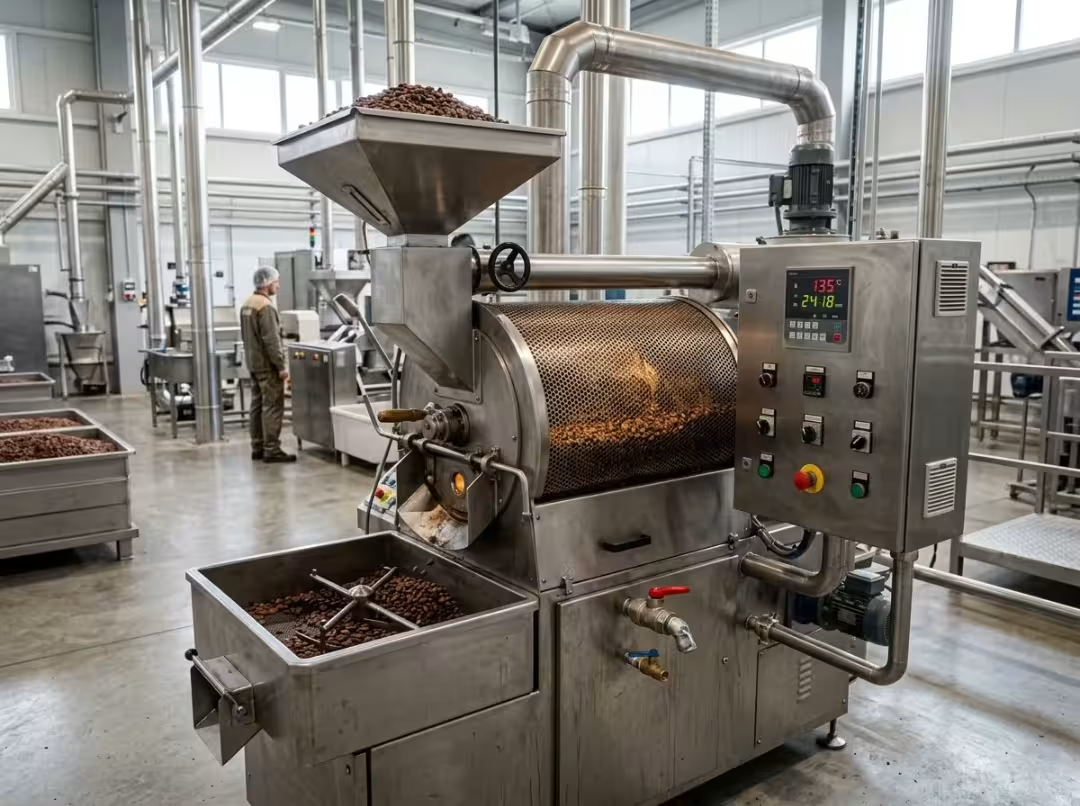
Temperatures and times vary by origin and intent—generally 110–150°C (230–300°F) over 15 to 40 minutes. A lighter roast preserves bright, fruity, and floral notes that reflect the bean’s character. A heavier roast builds deeper, more classic chocolate flavor but risks flattening delicacy or introducing bitterness. Choosing and calibrating a roast profile is a significant craft decision. The cocoa bean roasting guide on this site covers that in more depth, including how different origins respond to heat differently.
The hard limit applies regardless of skill: roasting amplifies and transforms what fermentation provided, but it cannot invent it. Beans with underdeveloped precursors will taste thin and bitter regardless of the roast. Mold taint, smoke contamination, and serious fermentation defects also persist after roasting. Roasting reveals and refines—it does not rescue.
Winnowing
Once roasted, beans are cracked and the shell separated from the nib—the usable cocoa interior. A cracking machine breaks the beans into fragments; a column of moving air then carries the light, papery shells away while the denser nibs fall through. The cocoa bean peeling and winnowing machine performs this separation efficiently at scale, aiming to remove as much shell as possible without losing usable nib.
Shell residue adds bitterness, dilutes flavor, and contributes grittiness to the finished bar. Clean nibs are essentially pure cocoa—the entire flavor foundation built by the first four steps, now ready to become liquid.
Step 5: Grinding and Refining
Cocoa nibs are roughly half cocoa butter by weight. As they are ground, that fat melts from friction alone, turning crushed solids into a dense, dark, flowing paste called cocoa liquor or cocoa mass. This is the foundation from which all chocolate is made, and despite the name, it contains no alcohol.
From nib to cocoa liquor
Cocoa liquor is ground nib and nothing else—cocoa solids suspended in their own fat. It tastes intensely bitter on its own. In industrial production, some liquor is hydraulically pressed to separate cocoa butter from the dry cocoa cake, which is then milled into cocoa powder. For bar chocolate, the liquor usually moves forward intact.
Building the recipe
This is where a bar’s formula takes shape. Sugar is blended in to balance the bitterness. For milk chocolate, milk powder adds the creamy lightness that defines it. White chocolate diverges here entirely—it uses cocoa butter, sugar, and milk but no cocoa solids, which is why it’s pale and lacks the flavor compounds that give chocolate its depth. Additional cocoa butter is often added across all types to adjust flow and mouthfeel.
Refining: engineering texture
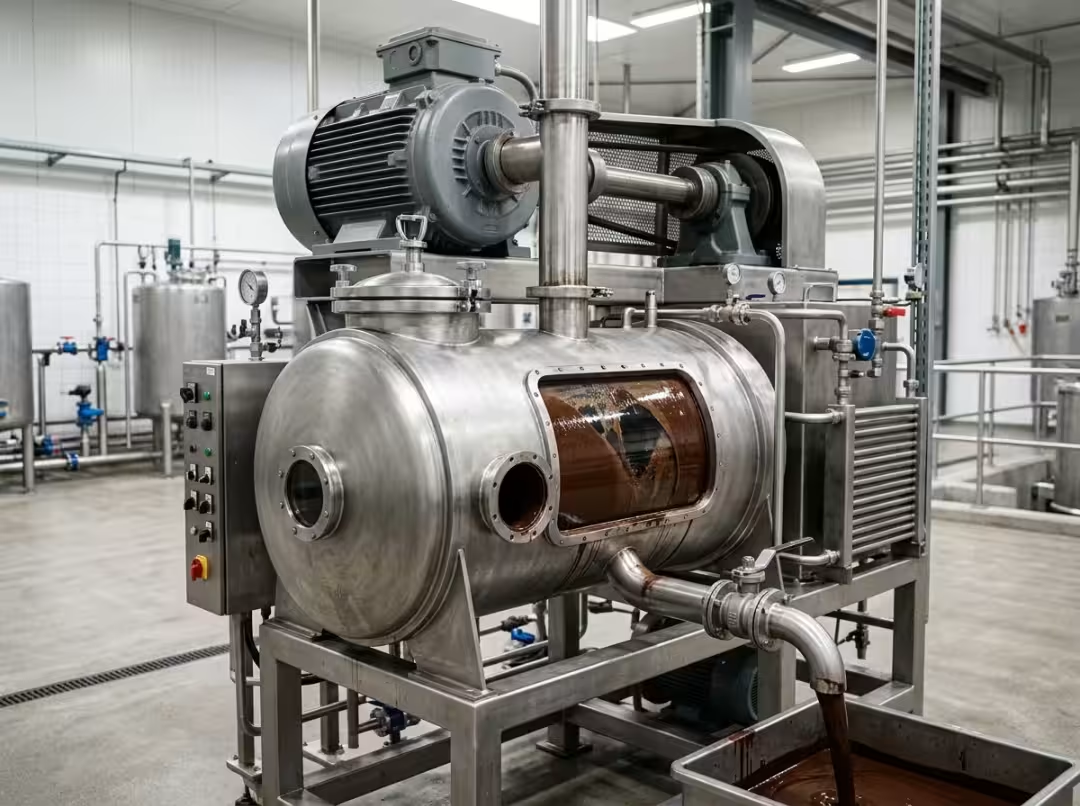
Mixing the ingredients creates a uniform mass, but a coarse one. Every particle—cocoa solids, sugar crystals, milk powder—needs to be ground down to roughly 20 microns or smaller, the threshold below which the human tongue can no longer detect individual particles. Above about 30 microns, chocolate feels gritty or sandy. Below it, the texture reads as smooth and creamy.
This work is done with roller mills or ball mills. A cocoa bean grinding machine handles the initial reduction from nib to liquor, while further refining stages take the mass to its final particle size. Refining controls texture, not flavor. A chocolate can be perfectly refined and taste dull. Poor refining, on the other hand, makes even excellent-tasting chocolate unpleasant to eat. The chalky mouthfeel of cheap chocolate and the silky melt of a premium bar trace almost entirely to this step.
Step 6: Conching and Tempering
Refined chocolate is smooth in particle size but structurally and chemically incomplete. Conching refines flavor and flow; tempering builds the crystal structure that determines what the finished bar looks and feels like.
Conching: finishing flavor and texture
Conching subjects the chocolate mass to prolonged mixing at elevated temperatures—sometimes for hours, sometimes for days. The name comes from the shell-shaped vessels used in early machines.
Several things happen simultaneously. Mechanical agitation coats each solid particle with cocoa butter, improving flow and smoothing perceived texture. Aeration drives off residual moisture and volatile acids—particularly the acetic acid carried over from fermentation—rounding off sharp or sour edges. Extended mixing also homogenizes the mass and distributes aromatic compounds evenly.
Conching time is a maker’s decision, not a universal standard. A chocolate targeting bright fruit and origin character may be conched briefly to preserve delicate notes that longer mixing would round away. One aiming for classic roundness and smoothness may be conched for much longer. Two bars made from identical beans and ingredients can taste genuinely different depending on the conching duration and intensity. This is one of the clearest illustrations of why process choices—not just ingredients—determine what ends up in a bar.
Tempering: building the crystal structure
Cocoa butter can solidify into six distinct crystal forms. Only one—Form V—produces the properties a finished bar needs: a mirror-like gloss, a crisp snap, a smooth melt, and resistance to the whitish discoloration called bloom.
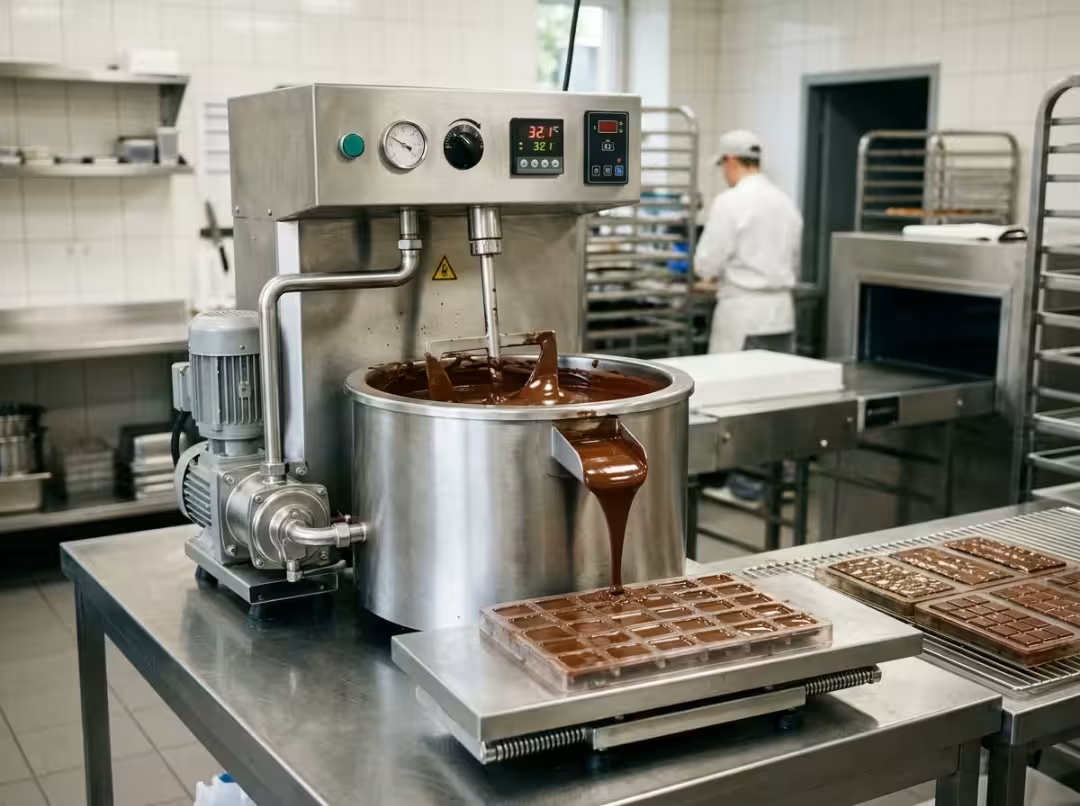
Tempering is the controlled temperature cycling that forces cocoa butter to crystallize into Form V. For dark chocolate, the sequence involves melting all crystal forms at around 45–50°C, cooling the mass with agitation to roughly 27–28°C so stable Form V crystals begin to form, then gently rewarming to around 31–32°C to eliminate unstable forms while the stable ones seed the rest of the batch. Execute it correctly and the whole batch sets properly. Skip it or do it imprecisely and the failure is immediately visible: a dull surface, soft or crumbly texture, and rapid bloom.
Molding
Properly tempered chocolate is poured into molds, vibrated briefly to release air pockets, and cooled until the Form V crystals set throughout. The bar releases cleanly from the mold, is wrapped, and is ready. Every quality attribute in that final square—gloss, snap, smoothness, stability—was determined by decisions made across all six steps.
Bean-to-Bar vs. Commercial Chocolate
The common framing—bean-to-bar is artisanal and better, commercial is industrial and worse—misses what actually separates these two approaches.
Bean-to-bar producers handle every stage in-house, from raw bean through finished bar. That control is the point. It allows them to roast specifically for a particular origin, conch to a chosen flavor profile, and make ingredient decisions that express what’s distinctive about those beans. The trade-off is volume and cost: small-batch production, careful sourcing, and intensive process control are expensive. Bean-to-bar bars are more likely to vary between batches and reflect the character of a specific harvest—and to cost more per ounce as a result.
Commercial manufacturers typically purchase blended cocoa liquor or couverture rather than raw beans, which means the fermentation and roasting decisions were made upstream by someone else. Their goal is a flavor profile that remains identical across millions of bars, seasons, and years. That consistency is a genuine technical achievement—not a shortcut. Wide availability and stable pricing are also real benefits that small makers rarely offer.
Neither is inherently superior. Bean-to-bar is right for you if you value flavor complexity, origin transparency, and variety, and you are willing to accept higher cost and some batch variation. Commercial chocolate is right if you want consistent flavor, easy access, and lower price. Knowing the difference means you can read “bean-to-bar” as a meaningful claim—or recognize when it isn’t one.
What This Process Helps You Notice When Buying Chocolate
Learning the six steps makes the shelf easier to read.
The ingredient list is your first signal. Fine dark chocolate typically lists cocoa mass or cocoa beans, sugar, and sometimes added cocoa butter—nothing more. Vegetable fats used as substitutes for cocoa butter, artificial flavors, and heavy use of emulsifiers generally indicate a bar engineered around cost rather than quality. The shorter the list, the closer the bar is to the raw material.
Origin and process claims deserve scrutiny. A single-origin label suggests fermentation and roasting decisions were made to express something specific about that place. “Bean-to-bar” is meaningful if it reflects genuine in-house processing from raw beans—less meaningful as a style marker with nothing verifiable behind it. “Crafted” and “artisan” alone tell you nothing.
Look at the surface. Well-tempered chocolate has a satiny, even gloss. A matte, blotchy, or streaked surface points to poor tempering or bloom from temperature swings in storage—both affect texture and flavor.
Break it. Properly tempered dark chocolate snaps crisply and cleanly. A soft bend or crumbly fracture suggests tempering problems or excess non-cocoa fat.
Melt a piece slowly. Good refining and conching produce an even, progressive melt with no gritty particles. Chalky texture means coarse refining. A waxy or slow melt often means cheaper fats are present.
Don’t mistake bloom for spoilage. Gray or white streaks are bloom—fat migrating from poor tempering, or sugar recrystallizing from moisture exposure. Bloomed chocolate is safe to eat but will be duller in flavor and softer in texture than it was at its best.
Together, these observations let you form a considered first impression before a bar even reaches your mouth.
FAQs
How many beans are in one cacao pod?
Around 30 to 50, embedded in white pulp. A single 70-gram dark chocolate bar typically requires beans from several pods, which gives some sense of the agricultural scale behind each package.
Does white chocolate go through the same process?
The downstream steps—refining, conching, tempering, molding—are the same. The difference is upstream: white chocolate contains no cocoa solids, only cocoa butter, sugar, and milk. It still requires proper tempering to set properly, but its flavor profile is entirely different because it lacks the compounds that cocoa solids provide.
Why are sugar and milk added during grinding rather than later?
Because refining reduces all ingredients together. Adding sugar and milk powder during grinding means they’re refined alongside the cocoa, so every particle in the final mass reaches the same smooth size. Adding them afterward would leave coarser particles of sugar or milk in an otherwise refined base.
Do all makers conch for the same length of time?
No, and the differences are intentional. Some makers conch briefly to preserve bright, fruity, or acidic notes that extended conching would round away. Others conch for multiple days to achieve a mellow, smooth profile. Duration is a stylistic variable, not a quality indicator on its own.
Can roasting substitute for drying?
No. Drying removes water at low temperatures, bringing beans to a stable moisture level for storage and transport. Roasting applies high heat to develop aroma through chemical reactions. Skipping proper drying and relying on roasting to compensate creates trapped acidity, mold risk, and residual moisture problems that heat alone cannot resolve.
What causes gray or white streaks on chocolate?
Bloom. Fat bloom occurs when cocoa butter migrates to the surface—typically from poor tempering or temperature fluctuations during storage. Sugar bloom forms when moisture condenses on the surface, dissolves sugar, and leaves crystals behind as it evaporates. Neither type is mold; both are safe to eat, but bloomed chocolate will be softer and less flavorful than it was originally.
What does bean-to-bar actually mean?
It means one producer controls the entire process from raw cacao beans to finished bars—sourcing, roasting, grinding, refining, conching, and tempering all occur within the same operation. It distinguishes these makers from those who purchase pre-made cocoa liquor or couverture and only melt and mold it.
Is cocoa liquor alcoholic?
No. Cocoa liquor is ground cocoa nib—a paste of cocoa solids and cocoa butter—and contains no alcohol. The word “liquor” refers to its flowing, liquid state when warm.
What You’ll Notice About Chocolate After Reading This
The six steps form a clear causal chain. Fermentation builds the flavor potential. Drying protects it. Roasting develops it. Grinding and refining set the texture. Conching and tempering complete the flavor profile and determine the bar’s physical structure. A quality failure at any point in that chain shows up in what you taste, feel, and see.
That understanding is directly useful when you shop. You can read an ingredient list and know which entries signal care and which signal cost-cutting. You can assess gloss and snap before you taste. You can place a price premium in context—knowing whether it reflects careful sourcing and process control, or not. For anyone considering making chocolate, the same map shows clearly which stages require the most precision and where better equipment pays off most directly.
Each bar contains all six steps. Now you know what you’re reading.