
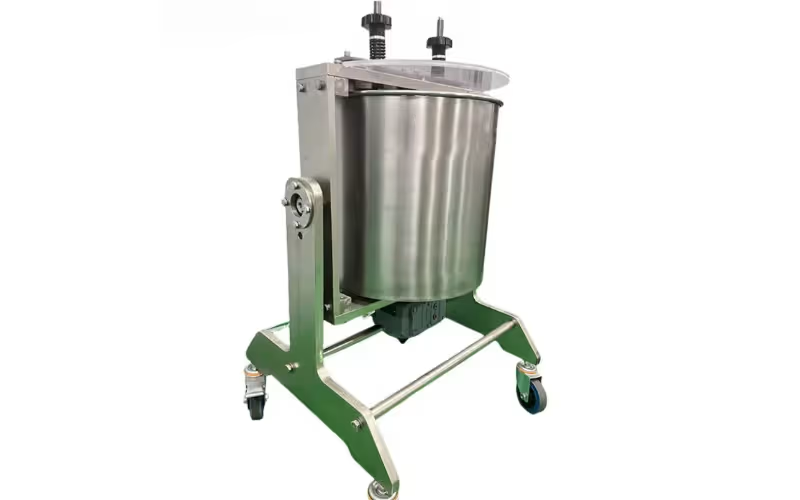
Turning a pile of cocoa nibs or raw nuts into something smooth and spreadable takes more than a quick spin in a blender. It takes hours of patient, stone-on-stone refining—and that’s exactly the job a melanger was built for. For craft chocolate makers and nut butter producers, knowing what a melanger is and how it fits into production is the first step toward consistently better results.
This guide walks you through everything you need to make a confident decision. You’ll learn what a melanger is, how it works, the parts that matter, where it’s used, how it compares to a standard grinder, its real benefits and limitations, when it’s the wrong tool, key buying factors, common mistakes to avoid, and how to choose the right machine for your operation.
What Is a Melanger?
A melanger is a stone grinder that uses heavy granite rollers turning against a granite base to crush, grind, and refine ingredients over many hours. It originated in chocolate making, where it transforms roasted cocoa nibs and sugar into silky chocolate. Today, the melanger machine has expanded well beyond chocolate, serving nut butter producers and food makers who need ultra-smooth pastes without additives. The slow, steady grinding action is what sets it apart from faster, coarser equipment.
Compared with cruder grinding methods, a melanger delivers a noticeably finer result. The prolonged stone-on-stone action gradually reduces particle size and develops a smooth, refined texture. It does this without the harsh, scorching heat or metal contamination risks that some alternatives introduce. That combination of gentleness and precision is why food makers rely on it when product quality matters most.
How Does a Melanger Work?
At its core, a melanger runs a continuous grind-and-refine cycle that slowly transforms coarse ingredients into a smooth, flowing mass. The process rewards patience, and understanding how a melanger works helps you set realistic expectations for run times and results.
The Grinding and Refining Cycle
The mechanics are straightforward but powerful. Granite stones rotate against a granite base, applying steady pressure and friction to whatever you add—cocoa nibs, sugar, or nuts. As the machine runs, these ingredients are crushed and progressively broken down over several hours. The friction also generates gentle heat, which melts the cocoa butter or natural oils inside the ingredients. As those fats release, the dry, crumbly mixture gradually turns into a fluid, glossy paste.
Particle Size and Conching
Extended grinding does more than mix ingredients together. It steadily lowers the particle size until the product reaches a smooth, refined mouthfeel that the tongue can no longer detect as gritty. Many chocolate makers also use the melanger for light conching—a stage that develops flavor while driving off moisture and unwanted volatile acids. Run times often stretch from several hours to a couple of days, depending on the recipe. The lesson is simple: patience is what drives quality in this kind of refining.
Key Components of a Melanger
Understanding the parts of a melanger helps you judge build quality and durability before you buy.
Granite Stones and Drum
The granite rollers and the granite base or drum are the heart of the machine. They do the actual grinding work, so their quality directly affects performance. Food-grade granite matters here—it ensures purity, resists wear, and withstands thousands of hours of continuous use without breaking down or contaminating your product.
Motor and Drive System
The motor powers hours of nonstop operation, so its strength and quality are critical. A well-built motor sustains consistent torque through long runs without overheating. Cheaper motors struggle under load, which affects both reliability and heat management—two things that influence the final texture of your product.
Housing, Bowl, and Tension System
The bowl or container holds your ingredients during the grind, while the roller tension mechanism controls how much pressure the stones apply. Adjustable tension is valuable because it lets you fine-tune grinding efficiency and finished texture for different recipes. The housing and frame hold everything stable through long, continuous runs, reducing vibration and keeping the machine running smoothly.
What Is a Melanger Used For?
Melangers suit any product that needs fine, smooth refining of oily or fatty ingredients. That versatility explains their growing popularity across the craft food world.
Chocolate Making
This is the classic application. In bean-to-bar chocolate production, the chocolate melanger grinds cocoa nibs with sugar into smooth, finished chocolate and performs light conching to round out flavor. It’s equally at home making gianduja, the silky chocolate-and-hazelnut blend that demands a fine, even texture. The result rivals industrial chocolate without the heavy machinery.
Nut and Seed Butters
A nut butter melanger excels at producing almond butter, peanut butter, cashew butter, and hazelnut butter, as well as tahini from sesame seeds and pistachio spread for premium lines. The slow grind releases natural oils and creates an ultra-smooth, additive-free butter that’s hard to match with standard equipment.
Other Food Applications
Beyond chocolate and nut butter, melangers handle spreads, traditional idli and dosa batter, spice masalas, and various specialty pastes. Anywhere a smooth, refined consistency is the goal, a melanger fits.
Who Uses Melangers
Typical users include craft brands, small-batch manufacturers, and operations managers. They’re also a favorite for R&D and recipe development, allowing teams to test and perfect formulas before committing to larger production runs.
Melanger vs Grinder: What’s the Difference?
People often confuse the two, so the melanger vs grinder distinction is worth a closer look. A standard grinder reduces particle size quickly—it chops or crushes ingredients in seconds or minutes. A melanger works on an entirely different timescale, using slow stone refining and light conching to develop a genuinely smooth, flavor-rich product over many hours.
The difference shows up in the finished result. A grinder gives you a coarse-to-medium texture and often generates sharp heat from high-speed blades. A melanger produces a fine, fully refined paste with gentle, controlled warmth that protects flavor. In short, a grinder breaks things down, while a melanger refines them into a polished, finished product.
Side-by-Side Comparison
Here’s how the two stack up across the factors that matter most when choosing equipment.
| Factor | Standard Grinder | Melanger |
|---|---|---|
| Primary purpose | Quick size reduction | Slowly refining into a smooth paste |
| Processing time | Seconds to minutes | Several hours to a couple of days |
| Texture outcome | Coarse to medium, can stay gritty | Fine, fully refined, smooth mouthfeel |
| Heat generation | High, sharp heat from fast blades | Gentle, controlled friction heat |
| Conching ability | None | Light conching to develop flavor |
| Best for | Rough prep, fast batches | Chocolate, nut butters, premium pastes |
| Batch style | Fast, repeated small loads | Patient, continuous single batches |
In short, if you only need to break ingredients down, a grinder is enough. If you need a smooth, finished product with refined flavor, a melanger is the right tool.
Benefits and Limitations of a Melanger
An honest look at where melangers shine—and where they fall short—helps you set the right expectations.
Key Benefits
The advantages are compelling for quality-focused producers. Melangers deliver a smooth, consistent texture that’s tough to achieve any other way. The gentle heat protects delicate flavors and fats. Because the ingredients come into contact only with granite, there’s no metal contamination, which keeps your product pure. The machines are versatile across chocolate, nut butters, and other pastes, making them ideal for small batches and recipe development. On top of that, maintenance is relatively simple, with few complex parts to service.
Limitations to Consider
Melangers aren’t perfect for every situation. Processing times are long, often running many hours or even days per batch. Capacity is limited, so they don’t suit high-volume output. They also require manual oversight—you need to check progress, add ingredients, and monitor texture. For these reasons, matching the machine to your production scale is essential.
When a Melanger Is Not the Right Choice
A melanger is a craft and small-batch tool, not a mass-production line. If your operation runs high-volume industrial lines, needs ultra-fast throughput, or relies on fully automated continuous production, a melanger will quickly become a bottleneck. In those cases, dedicated industrial refiners, ball mills, or continuous conching systems are a better fit. Knowing this upfront saves you from buying the wrong equipment for your scale—and it’s a sign of a producer who’s thinking clearly about growth.
Types of Melangers
Melangers vary by capacity, design, and intended use, so it helps to know the main categories before choosing.
Tabletop / Small-Batch Melangers
These compact units are built for home professionals, R&D work, and micro-batches. They offer lower capacity and lower prices, making them a smart entry point for testing recipes or running very small production runs without a big upfront investment.
Commercial / High-Capacity Melangers
Larger drums define this category, offering higher throughput for craft producers ready to scale. They’re built tougher to handle longer, more frequent runs, and they deliver more finished product per batch—ideal once demand outgrows a tabletop model.
How to Choose the Right Melanger
Matching the machine to your product, volume, and budget prevents costly mistakes. Run through these factors before you commit.
Batch Size and Capacity
Match the drum capacity to your current production volume and your realistic growth plans. Buying too small means constant rerunning, while buying too large wastes money and space on capacity you won’t use.
Expected Run Hours and Duty Cycle
Think about how long and how often you’ll run the machine. A unit used for occasional R&D batches faces very different demands than one running back-to-back batches all week. Confirm the motor and build are rated for your expected duty cycle, so you don’t burn out a machine that wasn’t designed for heavy use.
Cleaning Time and Changeover Frequency
If you switch between products often—say, from dark chocolate to almond butter—cleaning and changeover time directly affect your output. Look for designs that disassemble easily and clean quickly. The more frequently you change recipes, the more this factor influences your real-world productivity.
Build Quality and Materials
Prioritize food-grade granite stones and a durable, well-built motor. The machine needs to run reliably for hours at a time, so build quality directly affects both lifespan and the consistency of your results.
Product Type and Versatility
Consider what you’ll actually make. Chocolate, nut butter, and multi-use applications place different demands on a machine, especially across varying viscosity ranges. Choose a model suited to your primary product and any future plans.
Support, Spare Parts, and Scaling Path
Look past the sticker price. Factor in ease of cleaning, parts availability, motor lifespan, and the quality of manufacturer support. Ask whether replacement stones, tubing, and belts are easy to source, and whether the supplier offers a clear path to larger machines as you grow. A reliable machine backed by responsive support often costs less overall than a cheap one that fails early and leaves you waiting on parts.
Quick Buying Checklist
- Capacity matched to batch size and growth
- Run hours and duty cycle suited to your usage
- Cleaning and changeover speed for your product mix
- Granite quality that’s food-grade and durable
- Motor strength for long, continuous runs
- Product fit for your recipes and viscosity
- Support, spare parts, and a clear scaling path
Common Mistakes to Avoid
A few avoidable errors can waste time, money, and product. Keep these in mind as you evaluate machines.
- Undersizing or oversizing capacity for your actual batch needs, leading to either bottlenecks or wasted spend.
- Overloading the drum strains the motor and can compromise the final texture.
- Cutting short the grind time, leaving a gritty, underrefined finished product.
- Underestimating cleaning and changeover time, which quietly eats into your daily output when you switch recipes often.
- Ignoring spare parts and support until something breaks, only to face costly downtime while you wait.
- Buying for today only, instead of choosing a machine—or a supplier—that supports your next stage of growth.
- Choosing on price alone, ignoring build quality and long-term reliability.
A useful rule of thumb: weigh the total cost of ownership over several years, not just the purchase price. The machine that keeps running reliably—and the supplier who answers the phone—usually wins in the long run.
Conclusion and Selection Recommendations
A melanger is a stone grinder that slowly refines cocoa, nuts, and other oily ingredients into smooth, high-quality chocolate and nut butters. Through hours of patient stone-on-stone grinding, it delivers a texture, purity, and depth of flavor that faster equipment can’t match—making it a cornerstone tool for craft and small-batch producers who care about quality.
The right choice comes down to your goals. Tabletop units are ideal for R&D and micro-batches, while commercial models make sense once you’re scaling craft production. If you need high-volume, fully automated output, though, a melanger isn’t the answer—industrial refining systems are. Whatever your direction, match capacity, duty cycle, cleaning needs, build quality, and supplier support to your real plans.
A practical next step: assess your batch requirements, product mix, and growth path over the next few years, then consult a specialist for a recommendation tailored to your operation. Choosing with your future scale in mind is the surest way to buy once and buy right.