

Brief summary
In this article, we will explore the main characteristics of this machine, how it works, and, in detail, what happens during the chocolate refining process.
Let’s start with a clear definition: a chocolate ball mill is a piece of industrial machinery used to produce refined chocolate. This technology underpins many confectionery operations and plays a crucial role in producing the smooth treats we consume every day.
Refining is a process in which a material is ground within a chamber to create a continuous product with a specific texture. This material, usually a mix of cocoa nibs, sugar, and cocoa butter, is fed into a milling vessel. This chamber is fitted with thousands of steel balls, known as grinding media, which push and crush the material through the system.
The heart of the operation is therefore the milling technology. During the process, the mill’s internal shaft rotates, agitating the balls and heating and melting the material as it grinds it into a smooth paste. This critical step enables the creation of a consistent product that can be shaped to meet specific requirements.
The applications of this technology are surprisingly vast. In many manufacturing industries, ball mills are used to produce artisan chocolates, industrial coatings, fillings, compounds, and specialty products. The versatility of the chocolate ball mill makes it an indispensable tool across sectors ranging from boutique chocolate shops to large-scale food industries.
What is a Chocolate Ball Mill?
These mill models are fitted with a central agitator and grinding media that work in tandem. The two main configurations of chocolate ball mills are batch and continuous systems; the main difference lies in how the material flows through the machine.
- In a batch chocolate ball mill, the ingredients are loaded into the chamber and ground for a predetermined period.
- This configuration is the most common for smaller setups and offers greater versatility for producing a wide range of chocolate recipes.
- Processing one batch at a time helps maintain good control over the recipe, contributing to improved mixing and consistency in the molten material.
Continuous chocolate ball mills:
- In continuous chocolate ball mills, the raw materials are constantly pumped through the milling chamber without stopping.
- This configuration is widely used in large-scale factories and can be highly advantageous for high-volume, automated applications.
- Processing in a continuous flow can improve mixing efficiency, leading to better ingredient dispersion and a much higher production capacity.
In general, the choice between a batch and a continuous chocolate ball mill depends on the specific requirements of the production process and the volume of chocolate produced. Both configurations have their advantages and disadvantages, and the selection will depend on factors such as the material’s viscosity, mixing requirements, target particle size, and the desired properties of the end product.
Key Components of a Chocolate Ball Mill
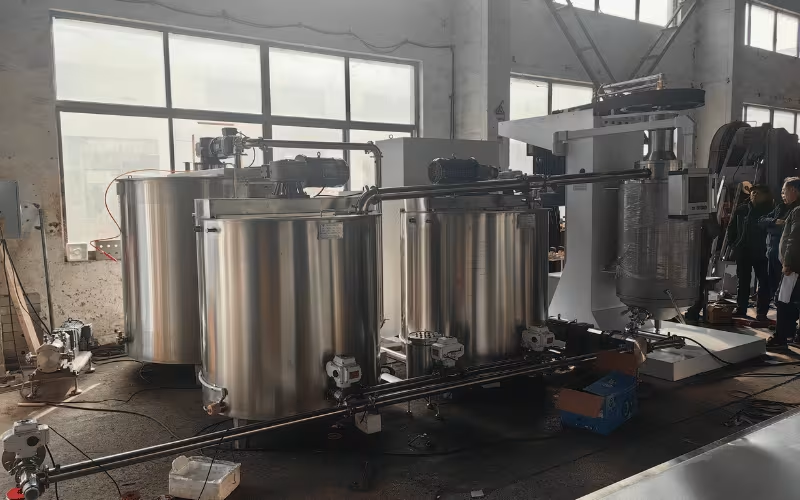
Now let’s look—in a clear and simple way—at the essential components that make up this machinery:
- Grinding Chamber: The material is introduced into an enclosed milling chamber that houses the internal agitator shaft and grinding media. This robust vertical or horizontal cylinder safely contains the intense friction and pressure required to break down coarse sugar and cocoa particles.
- Grinding Media (Balls): The chamber is filled with hundreds of heavy steel or ceramic balls. As the central shaft rotates, these balls collide with one another. This constant impact and shear force refines the chocolate by drastically reducing the particle size, ensuring a perfectly smooth mouthfeel.
- Cooling System: The intense friction generated by the steel balls naturally heats the chocolate. A built-in water cooling jacket surrounds the grinding chamber. This cooling system is fundamental to bringing the material to the right temperature. Accurate temperature control is vital for guaranteeing the quality of the end product and preventing the cocoa from burning.
- Control Panel: modern mills feature an integrated control panel. This interface allows operators to precisely adjust the agitator speed, monitor temperatures, and set grinding times. The right combination of these elements creates an ideal environment for the refining process.
How Does a Chocolate Ball Mill Work?
Understanding the operation requires examining the step-by-step process by which raw ingredients are transformed into a velvety chocolate paste.
- Material Feeding: The material, often in the form of coarse cocoa nibs, granulated sugar, and added fats, is fed into the machine. A pump or hopper introduces these pre-mixed raw ingredients directly into the bottom or top of the milling chamber.
- Grinding Process: The main motor engages, turning the central agitator shaft at high speeds. This movement violently stirs the grinding media (balls) suspended inside the chamber. As the chocolate mixture is pushed through this dense bed of moving steel balls, the ingredients are repeatedly crushed and sheared. The balls effectively refine the chocolate mixture, breaking down microscopic solids until they reach a uniform size of around 20 microns.
- Temperature Control: While the grinding media crushes the particles, the continuous friction creates severe heat. The automated cooling system circulates chilled water through the machine’s outer jacket. This active thermal management prevents overheating, preserving the cocoa’s delicate flavor notes and ensuring consistent quality.
- Final Output: once the material reaches the desired fineness, it exits the chamber. The final result is a continuous flow of highly refined chocolate paste with a glossy finish and a smooth texture. This fluid chocolate can be transferred to a conching machine, molded into bars, or used as it is, depending on requirements.
Applications and Benefits of Chocolate Ball Mills
In the current context, the overriding priority for food manufacturers is efficiency, a demanding and urgent issue that involves everyone working in the confectionery sector. To tackle this challenge, it is key to focus our efforts on optimizing production processes, starting with utilizing the right refining machinery.
Aware of this requirement, the industry widely relies on chocolate ball mills across multiple applications. In artisan chocolate production, smaller batch mills allow craft makers to develop unique, high-quality flavor profiles. In large-scale industrial manufacturing, continuous ball mills seamlessly integrate into massive production lines to create vast quantities of chocolate coatings, biscuit fillings, and specialty chocolate products.
The benefits of these machines are clear. They offer exceptional energy efficiency compared to traditional roll refiners, require a smaller physical footprint on the factory floor, and consistently produce a uniform particle size. This progress is a testament to our genuine commitment to promoting better production standards.
Our mission is to help optimize confectionery manufacturing through advanced solutions. This is why we are committed to offering more and more options to improve efficiency and refine chocolate flawlessly, demonstrating that it is possible to combine industrial speed with artisan quality.
Join us in our commitment to better chocolate production. Choose advanced chocolate ball mill solutions that not only meet the demands of your current operations but also help elevate your final product for future consumers.