

Home / Chocolate Machinery / Chocolate Coating Pan
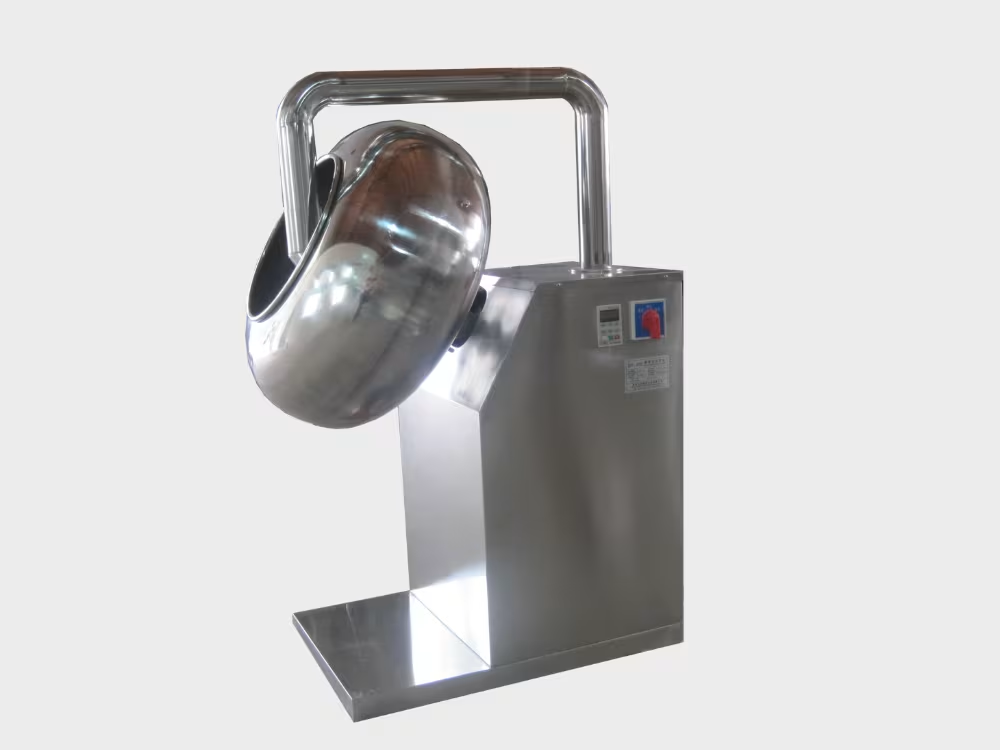
Chocolate Coating Pan & Chocolate Polishing Machine
Providing You with Chocolate Coating Pan Solutions
Our Chocolate Coating Pan ensures precision and efficiency, delivering high-quality chocolate, sugar, and powder coatings for nuts, fruits, candies, and more. With over 35 years of expertise, we offer tailored solutions to meet your confectionery production needs.
Trustworthy China Chocolate Machinery Manufacturer
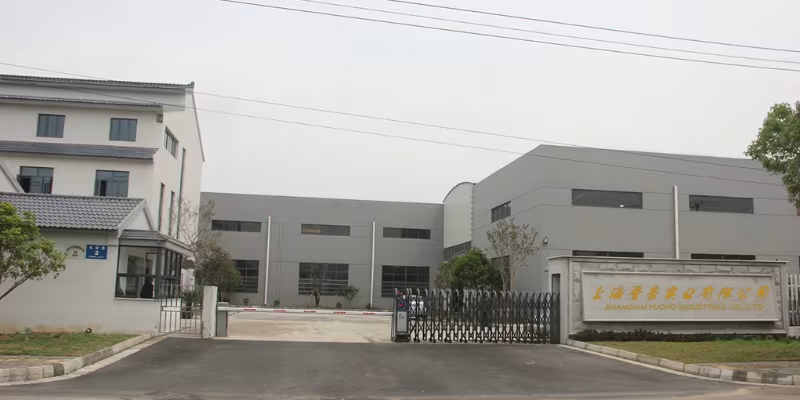
With over 35 years of experience, SHANGHAI YUCHO INDUSTRIAL CO., LTD is a trusted leader in chocolate machinery manufacturing. Our Chocolate Coating Pan is crafted with food-grade stainless steel and advanced automation, ensuring precision, hygiene, and efficiency.
Certified to ISO 9001 and CE, we provide customized solutions and end-to-end services, from design through installation and commissioning. Serving clients in over 100 countries, we are committed to delivering seamless production and enhancing product quality. Partner with YUCHO for reliability, expertise, and complete customer satisfaction.
Contact Us Now
Enter your inquiry details, We will reply you in 6 hours.
Product Details
The Chocolate Coating Pan is a versatile and efficient machine designed for coating dried fruits, nuts, candies, and other products with chocolate, sugar, or powder. Panning, a traditional yet highly effective technique, is optimized in our machines with advanced features such as adjustable speed control and integrated heating systems. The built-in electric heater provides hot air for shaping and smoothing, while a separate air cooler is recommended to accelerate the coating process and ensure a flawless, even finish.
Available in sizes ranging from 400mm to 1500mm, our Chocolate Coating Pan is suitable for both small-scale labs and large-scale factory operations, offering flexibility and precision for diverse production needs.


BY Series Chocolate Coating Pan Specifications
| Data \ model | BY200 | BY300 | BY400 | BY600 | BY800 | BY1000 | BY1250 | BY1500 |
|---|---|---|---|---|---|---|---|---|
| Diameter (mm) | 200 | 300 | 400 | 600 | 800 | 1000 | 1250 | 1500 |
| Revolution (r/min) | 0-60 | 0-60 | 0-60 | 50 | 32 | 32 | 25 | 25 |
| Rotation Speed Can be adjusted | ||||||||
| Main power (KW) | 0.025 | 0.12 | 0.12 | 0.75 | 1.1 | 1.5 | 2.2 | 5.5 |
| Drum power (W) | 40 | 40 | 40 | 100 | 180 | 180 | 370 | 370 |
| Heat power (W) | 300 | 700 | 700 | 800 | 2000 | 3000 | 3000 | 3000 |
| Capacity (kg/time) | 0.5 | 1-3kg | 3-5kg | 20-30 | 30-50 | 50-70 | 80-150 | 300-400 |
| Dimension (mm) | 200*300*450mm | 480*330*450mm | 600*600*800mm | 650×450×920 | 925x900x1400 | 1100x1100x1500 | 1200x1250x1630 | 1300*1500*1800 |
| Weight (kg) | 9 | 23 | 33 | 85 | 205 | 220 | 350 | 450 |

Coating Pan features
- Food-grade SUS304 stainless steel pan
- Enclosed epoxy powder-coated base
- Quick-access side panel for cleaning
- Dual-bearing supporting shaft
- Ultra-clean interior with no fasteners
- Internally mounted bearings
- External precision shaft seal
- Front-mounted controls
- Chain-driven system
Options
- Custom pan shapes: Round, apple, onion, pear
- Pan diameters: 400mm-1500mm
- Adjustable RPMs
- Baffles/ribs for better mixing
- PLC intelligent control
- Open or closed base
- Specialized spray gun
- Additional customizations available
Area of Applications
This Chocolate Coating Pan & Polishing Machine is widely used for chocolate coating and surface polishing of various confectionery products, including:
- Chocolate coating for nuts, dried fruits, and candies (core application)
- Surface polishing of chocolate products (smooth, glossy finish)
- Coating of chocolate enrobing mass for confectionery products
- Small-batch trial production in food R&D labs
- Large-scale production in food processing factories
- Custom coating for premium chocolate snacks and treats

How it works
At its core, a chocolate coating pan is a rotating, drum-like vessel used extensively in the confectionery industry to apply layers of chocolate or sugar to solid centers. This technique, traditionally referred to as panning, is one of the oldest methods of candy making. The pan itself is typically constructed from high-quality, food-grade SUS304 stainless steel, with optional custom shapes (round, apple, onion, or pear) for different production needs. This specific geometry ensures that the products inside tumble gently over one another without damage or breaking apart during rotation.
In industrial manufacturing, the panning machine serves a critical role in transforming raw centers into finished, polished sweets. The equipment allows confectioners to carefully control the thickness of the chocolate shell by gradually adding liquid chocolate while the drum spins. This repetitive layering process builds a perfectly spherical or oval product with a smooth, homogeneous exterior, making the coating pan an indispensable tool for both large-scale factories and artisan chocolatiers.
What is a Chocolate Coating Pan?
A chocolate coating pan is a specialized industrial confectionery equipment designed to apply a uniform layer of chocolate or sugar compound to various centers, including nuts, dried fruits, candies, and coffee beans. The core structure consists of a motorized rotating drum (or bowl), which tumbles the centers continuously as liquid chocolate is gradually added—ensuring every piece receives an even, consistent coating.
The tumbling action prevents sticking and enables the buildup of successive chocolate layers, creating a smooth, rounded surface that can be polished to a high gloss. As the cornerstone of dragee-making, this equipment is essential for scaling confectionery production while maintaining product uniformity.
The Significance of Chocolate Coating Pans in Confectionery Production
In the competitive confectionery industry, visual appeal and consistent quality are key to consumer satisfaction. Chocolate coating pans deliver unmatched uniformity that is impossible to replicate manually at commercial scale—ensuring every piece has the same chocolate ratio, batch weight, and nutritional profile.
These pans enable mass production without sacrificing quality: a single operator can manage multiple pans, boosting output while controlling labor costs. Precise control over coating thickness also allows manufacturers to create diverse products—from thin, delicate coatings to thick, indulgent layers—making the equipment indispensable for both small artisanal chocolatiers and large industrial facilities.
Key Elements of a Chocolate Coating Pan
Rotating Drum
The core component, typically onion or tulip-shaped to promote gentle, cascading tumbling. Internal baffles (small ridges) prevent clumping and ensure thorough mixing of centers during the coating process.
Drive System
Composed of a heavy-duty electric motor and gearbox, allowing adjustable rotational speed—critical for matching the tumbling dynamics required at different coating stages.
Temperature Control System
Modern pans feature double-walled (jacketed) construction for circulating chilled or warm water, regulating drum temperature. An air handling unit blows conditioned air into the pan mouth to set chocolate quickly or dry sugar-based coatings.
How Does a Chocolate Coating Pan Work?
The coating process is a synchronized, multi-step operation focused on precision and temperature management:
- Loading & Tumbling: Uncoated centers are loaded into the drum, which begins rotating to create continuous tumbling motion.
- Grossing (Initial Coating): Tempered liquid chocolate is sprayed or poured into the rotating pan; tumbling distributes it evenly. Cold air is introduced to crystallize and set the chocolate.
- Layer Building: The cycle of chocolate application and cooling is repeated until the desired coating thickness is achieved.
- Smoothing: Slightly elevated temperature or warm air softens the outer chocolate layer, allowing tumbling pieces to polish each other into a smooth, spherical shape.
- Polishing & Sealing: A glazing agent (e.g., confectioner’s glaze) is applied, followed by cold air to dry and seal the coating—resulting in a glossy, moisture-resistant finish.
Advantages of Chocolate Coating Pans
- High Production Efficiency: Processes hundreds of pounds per batch, far outperforming manual dipping or enrobing methods.
- Product Uniformity: Eliminates flat spots or uneven coatings, ensuring consistent sizing for standardized packaging.
- Versatility: Compatible with chocolate, sugar compounds, yogurt coatings, and glazes—suitable for nuts, fruits, coffee beans, and more.
- Labor Savings: Automated features reduce reliance on specialized labor, allowing operators to manage multiple machines with minimal effort.
Our Certifications
We hold international authoritative certifications to ensure our equipment meets global market access standards and production quality requirements.


Our Manufacturing Strength
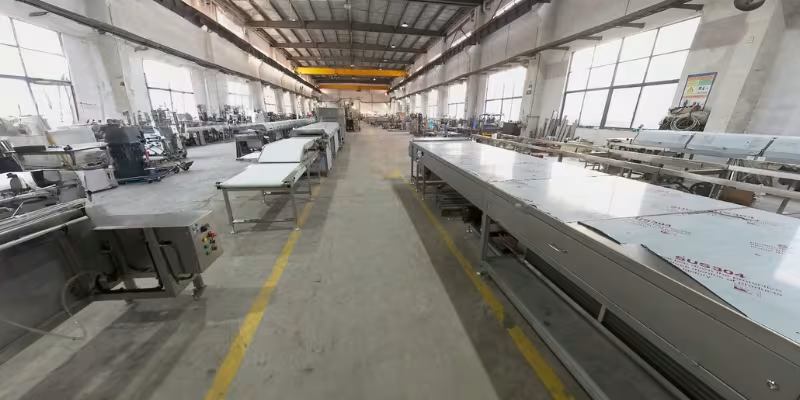
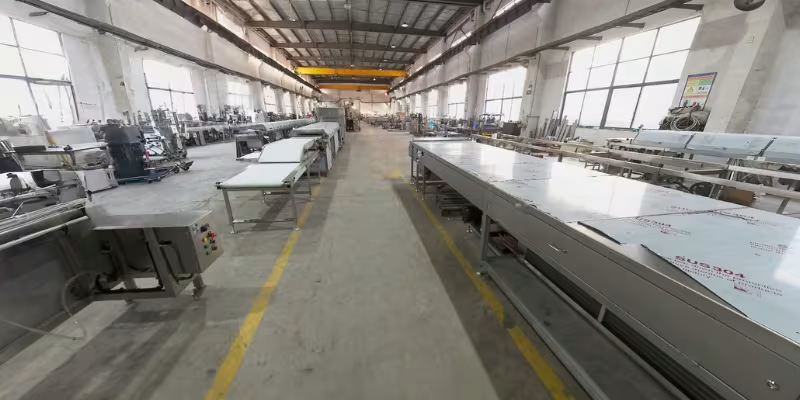
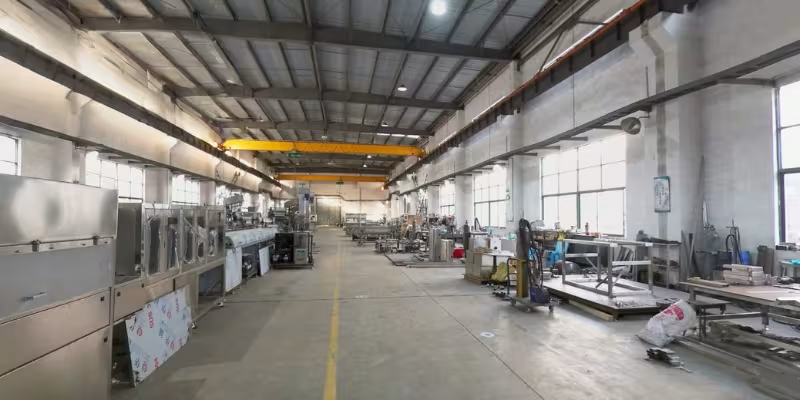
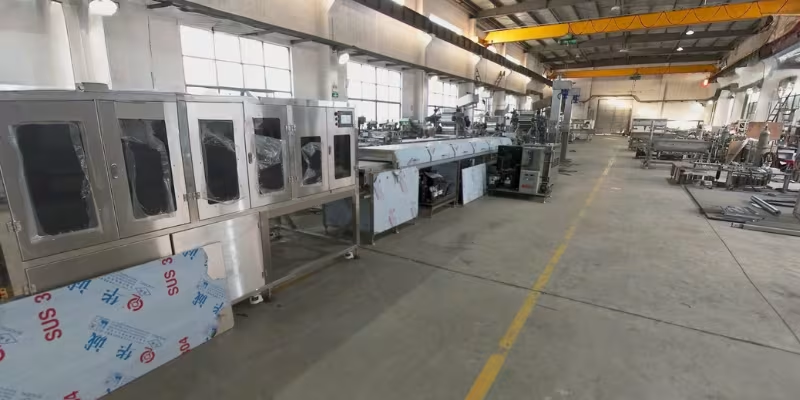
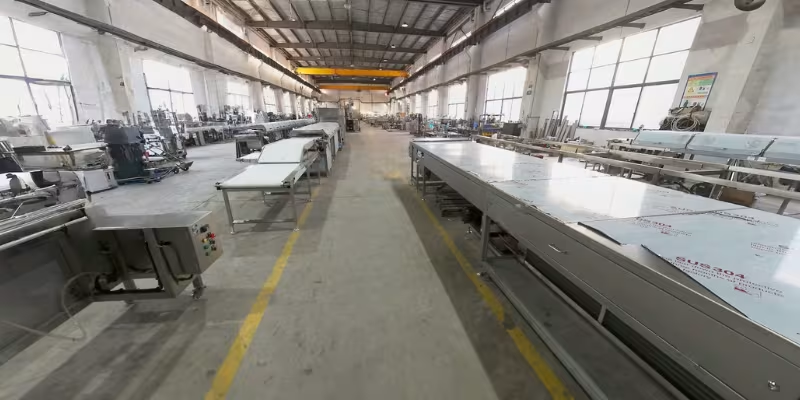
Equipped with modern processing facilities and a dedicated technical team, our 10,000㎡ production base in Shanghai and Jiangsu supports standardized, large-scale manufacturing of chocolate processing equipment.
Every piece of equipment undergoes strict inspection throughout production, from material selection to assembly and finished machine testing, ensuring stable performance and long service life.
Our experienced engineering team also provides professional on-site guidance, process optimization and targeted technical support for your bean-to-bar production line, helping you achieve efficient and reliable operation.
Send Inquiry Every piece of equipment undergoes strict inspection throughout production, from material selection to assembly and finished machine testing, ensuring stable performance and long service life.
Our experienced engineering team also provides professional on-site guidance, process optimization and targeted technical support for your bean-to-bar production line, helping you achieve efficient and reliable operation.
Customization & Comprehensive After-Sales Service
Customization Service
We offer one-to-one customized design for your bean-to-bar production line:
1. Adjust equipment capacity and dimensions based on your workshop layout;
2. Optimize production process to match your product (chocolate mass, cocoa butter, cocoa powder);
3. Customize auxiliary equipment and line integration for seamless production;
Global After-Sales Support
We have a dedicated after-sales team with 5 professional after-sales engineers and 15 foreign trade specialists, providing comprehensive after-sales service for global customers:
1. Overseas on-site installation and commissioning;
2. Professional operation and maintenance training for your staff;
3. Timely supply of spare parts and technical consultation;
4. Long-term after-sales follow-up and production optimization guidance;


FAQs
Q1. How long does a standard chocolate coating cycle take for a full batch?
The coating cycle duration depends on the product type, desired coating thickness, and machine settings. On average, a standard full-batch cycle takes 30 minutes to 2 hours. Adjusting rotation speed, airflow, and temperature can optimize the process for your specific production needs.
Q2. Can I use a chocolate coating pan for sugar-based shells as well?
Yes, chocolate coating pans are highly versatile and suitable for both chocolate and sugar-based shells. The integrated heating system and adjustable rotation speed enable precise application of sugar coatings, ensuring an even, smooth finish on candies, nuts, and other confections.
Q3. What is the ideal room temperature for a panning operation?
The ideal room temperature for panning is 18°C–22°C (64°F–72°F) with low humidity (below 50%). Maintaining these conditions ensures proper cooling and setting of coatings, avoiding issues like melting, blooming, or uneven finishes.
Q4. How do I prevent air bubbles from forming in the chocolate layers?
To avoid air bubbles, ensure chocolate is properly tempered before application. Use a consistent, controlled spray system to apply thin chocolate layers gradually. Optimizing pan rotation speed and airflow also helps achieve a smooth, bubble-free coating.
Q5. Should I use tempered or untempered chocolate in the spray system?
Tempered chocolate is recommended for the spray system. It delivers a glossy finish, better texture, and longer shelf life for coated products. Untempered chocolate leads to a dull appearance, uneven setting, and compromised final quality.
Q6. What batch size is most efficient for a small-scale artisanal producer?
For small-scale artisanal producers, the most efficient batch size is 5kg–20kg. This range allows precise control over the coating process while minimizing waste. Pans with a diameter of 400mm–600mm are ideal for artisanal operations, offering flexibility and consistent results.