

- Home /
- Chocolate Machinery /
- Cocoa Bean Roaster
High-Efficiency Cocoa Bean Roaster for Bean-to-Bar Production
This industrial cocoa bean roaster specializes in high-performance roasting of cocoa and coffee beans, as well as nuts and seeds. Its electric roasting system ensures consistent, efficient heating, making it ideal for bean-to-bar chocolate roasting. The roaster is equipped with modern heat conduction and radiation systems, providing cocoa beans with evenly distributed heat to develop the desired color and aromas.
The spiral drum design allows all materials to roll continuously while avoiding contact with the drum, providing superior roasting. The design of the stainless steel inner drum ensures hygiene and compliance with food industry standards.

Reliable Manufacturer of Chocolate Machinery in China
With more than 35 years of experience, Shanghai Yucho Industrial Co., Ltd. is a reliable manufacturer of chocolate machinery. Our Bean-to-Bar Chocolate Equipment is designed for accuracy, safety, and efficiency, offering automation and food-grade stainless steel. Our services include customized designs. With our ISO 9001 and CE Certificates, we support the entire production lines of our clients across the globe.

Contact Us Now
Enter your inquiry details, We will reply you in 6 hours.
Product Details


Key Specifications
| Specification | Details |
|---|---|
| Capacity | 200KG/H for cocoa beans |
| Motor Power | 35kW |
| Weight | 550kg |
| Voltage | 380V, 50Hz |
| Dimensions | 2500mm x 2200mm x 1700mm |
| Interior Material | Food-grade stainless steel |
Features and Benefits
Uniform Heating
The spiral drum design ensures that cocoa beans are evenly rolled and roasted, preventing uneven heating or burning. This guarantees consistent roasting quality for optimal flavor and aroma development.
Electric Heating
Powered by electricity, the roaster delivers stable and efficient performance. This heating method ensures precise temperature control, which is critical for achieving the desired roasting results.
Reliable Operation
Engineered for continuous and stable production, this roaster is built to handle high-capacity operations without compromising performance or quality.
Food-Grade Safety
The inner drum is made of food-grade stainless steel, ensuring hygienic processing and compliance with food safety standards. This makes it ideal for chocolate production and other food applications.
Energy Efficiency
Designed to minimize energy consumption, the roaster optimizes operational costs while maintaining high performance, making it an eco-friendly choice for manufacturers.
User-Friendly Design
With intuitive controls and a straightforward design, the roaster is easy to operate, clean, and maintain, reducing downtime and improving productivity.
How it works
Transforming raw, bitter seeds into the rich, complex chocolate we all love requires a delicate and precise process. The journey from a raw cacao pod to a finished chocolate bar involves several critical steps, but none are quite as transformative as the roasting phase. During this stage, the raw ingredients develop their signature chocolate flavors.
At the heart of this transformation is the cocoa bean roaster. This specialized equipment plays an essential role in bean-to-bar production, shaping the chocolate’s final taste, aroma, and quality. Understanding how this machine functions offers valuable insight into the art and science of modern chocolate manufacturing.
What is a Cocoa Bean Roaster?
A cocoa bean roaster is specialized industrial equipment that applies uniform, controlled heat to fermented and dried cocoa beans. Using a rotating drum design with precise temperature control, it ensures even roasting without scorching, developing rich chocolate flavor and aroma while ensuring consistent quality batch after batch.
Fully automated operation minimizes human error, improves food safety, and supports high-volume production. It is the core equipment for flavor development in commercial chocolate and cocoa processing lines.
The Importance of Cocoa Bean Roasters
Roasting triggers the Maillard reaction, creating cocoa’s signature color, flavor, and aroma. A precise roasting profile ensures consistent taste, which is essential for brand stability and consumer expectations.
Proper roasting also loosens the bean husk for easier winnowing, reduces moisture, and eliminates bacteria. Modern roasting machines improve yield, reduce waste, and allow chocolate makers to customize flavor profiles for different origins and products.
Key Components
1. Spiral Rotating Drum
Lifts and tumbles beans continuously for even heat exposure and prevents burning.
2. Heating System
Electric, gas, or thermal oil heating provides stable and controllable thermal energy.
3. Food-Grade Stainless Steel Drum
Hygienic, corrosion-resistant, and easy to clean between batches.
4. PLC Temperature Control Panel
Enables programming roasting curves and real-time temperature monitoring.
5. Exhaust & Ventilation System
Removes moisture, acidic fumes, and chaff to ensure proper roasting instead of steaming.
How Does a Cocoa Bean Roaster Work?
1. Preheating & Feeding
The drum preheats to the set temperature, and cocoa beans are loaded into the chamber.
2. Continuous Tumbling
Spiral fins lift and mix beans to ensure uniform heating.
3. Moisture Evaporation
Heat and airflow remove moisture, preparing beans for flavor development.
4. Flavor Development (Maillard Reaction)
Controlled heat creates rich chocolate flavors and aromas.
5. Roast Completion
Beans are roasted to light, medium, or dark profiles based on programmed parameters.
6. Discharge & Rapid Cooling
Hot beans are discharged and quickly cooled to lock in flavor and stop the roasting process.
Advantages
- Consistent Roast QualityUniform heating and tumbling eliminate uneven roasting and burnt beans.
- Precise Temperature ControlSupports custom roasting curves for single-origin and specialty cocoa.
- High Efficiency & ThroughputSuitable for both artisanal batch production and large-scale industrial lines.
- Food-Safe & HygienicStainless steel construction meets global food processing standards.
- Low Labor & Easy OperationAutomated feeding, roasting, and discharge reduce manual work.
- Versatile ApplicationCan also roast coffee beans, nuts, seeds, and other grains.
Applications
1. Bean-to-Bar Chocolate Production
Develops flavor profiles for premium dark, milk, and white chocolate.
2. Industrial Cocoa Powder Processing
Dries and roasts beans in bulk for husk removal and downstream pressing.
3. Coffee Bean Roasting
Suitable for light, medium, and dark coffee roasting.
4. Nut & Seed Processing
strong textRoasts peanuts, almonds, hazelnuts, sunflower seeds, and more for snacks and nut butters.
Our Certifications
We hold international authoritative certifications to ensure our equipment meets global market access standards and production quality requirements.


Our Manufacturing Strength
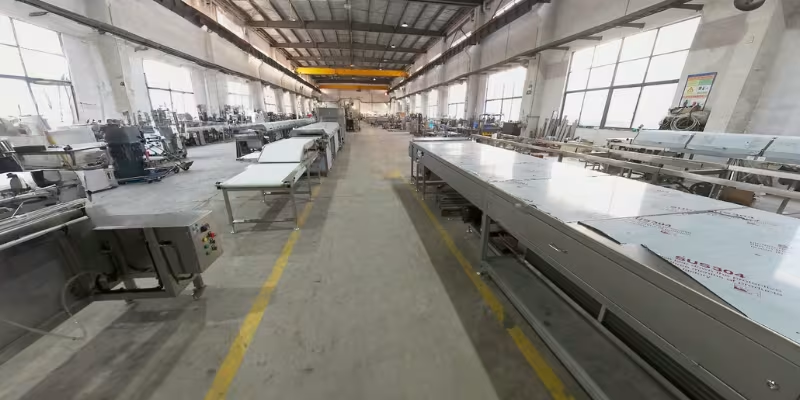
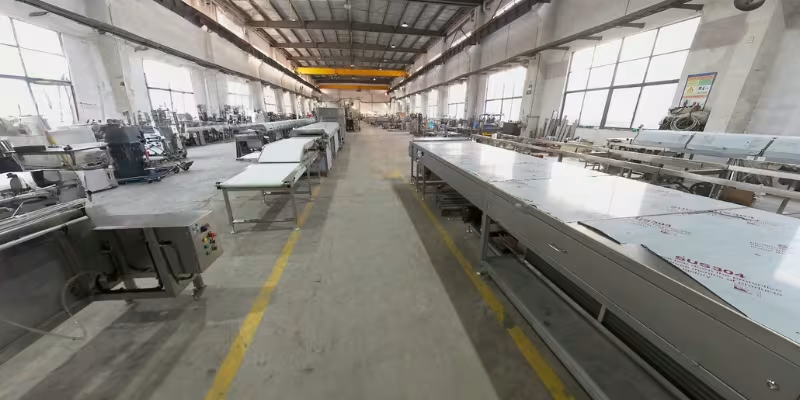
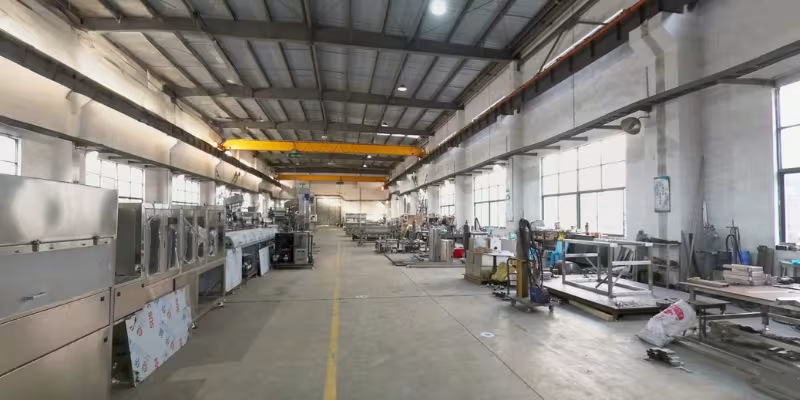
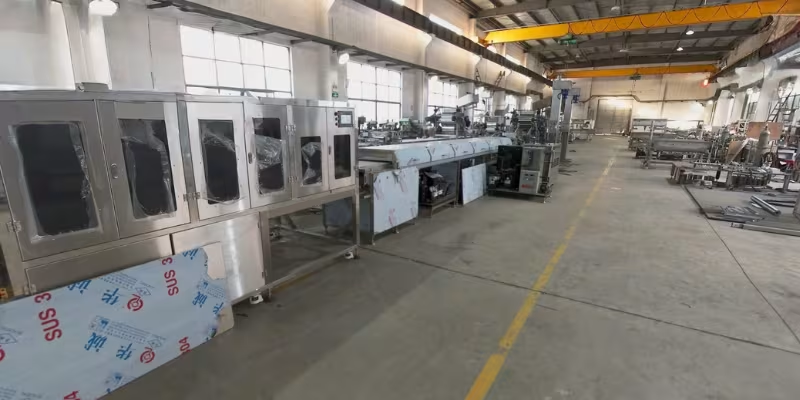
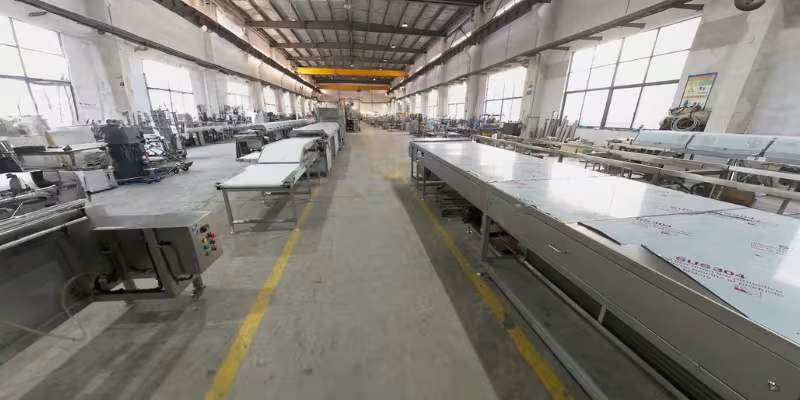
Equipped with modern processing facilities and a dedicated technical team, our 10,000㎡ production base in Shanghai and Jiangsu supports standardized, large-scale manufacturing of chocolate processing equipment.
Every piece of equipment undergoes strict inspection throughout production, from material selection to assembly and finished machine testing, ensuring stable performance and long service life.
Our experienced engineering team also provides professional on-site guidance, process optimization and targeted technical support for your bean-to-bar production line, helping you achieve efficient and reliable operation.
Send Inquiry Every piece of equipment undergoes strict inspection throughout production, from material selection to assembly and finished machine testing, ensuring stable performance and long service life.
Our experienced engineering team also provides professional on-site guidance, process optimization and targeted technical support for your bean-to-bar production line, helping you achieve efficient and reliable operation.
Customization & Comprehensive After-Sales Service
Customization Service
We offer one-to-one customized design for your bean-to-bar production line:
1. Adjust equipment capacity and dimensions based on your workshop layout;
2. Optimize production process to match your product (chocolate mass, cocoa butter, cocoa powder);
3. Customize auxiliary equipment and line integration for seamless production;
Global After-Sales Support
We have a dedicated after-sales team with 5 professional after-sales engineers and 15 foreign trade specialists, providing comprehensive after-sales service for global customers:
1. Overseas on-site installation and commissioning;
2. Professional operation and maintenance training for your staff;
3. Timely supply of spare parts and technical consultation;
4. Long-term after-sales follow-up and production optimization guidance;


FAQs
Q1.What is the ideal temperature for roasting cocoa beans?
The ideal roasting temperature for cocoa beans is generally between 120°C and 150°C (248–302°F). Lower temperatures retain fruity, acidic notes, while higher temperatures develop deeper, richer, more intense chocolate flavors.
Q2. How long does a typical cocoa roasting cycle take?
A full roasting cycle usually lasts 15 to 30 minutes, depending on bean origin, moisture content, batch size, and target roast level. Our industrial cocoa bean roasters ensure stable, repeatable results with precise time and temperature control.
Q3. Can a standard kitchen oven be used for professional cocoa bean roasting?
A standard kitchen oven is only suitable for small‑scale, non‑commercial testing. It cannot provide the uniform heat distribution, continuous tumbling, or precise airflow control of a dedicated cocoa bean roaster, leading to uneven roasting and underdeveloped flavor.
Q4. What is the main difference between a coffee roaster and a cocoa roaster?
Coffee roasters operate at higher temperatures with shorter cycles to develop bold, aromatic coffee flavors.
Cocoa roasters use lower temperatures and longer, gentler cycles to build complex chocolate notes without burning. They also feature drum and airflow designs optimized for cocoa beans’ size, density, and fat content.
Q5. How can I tell if cocoa beans are over-roasted or under-roasted?
Over-roasted beans are very dark, brittle, and taste burnt, bitter, or astringent.
Under-roasted beans appear pale and taste raw, grassy, or overly acidic, lacking typical chocolate flavor.
For best results, monitor bean color, aroma, and temperature throughout the roasting process.
Q6. Why do most manufacturers roast whole cocoa beans instead of nibs?
Whole-bean roasting preserves flavor, moisture, and natural cocoa butter content more effectively. It also ensures more uniform heating, reduces dust and scorching risks, and simplifies handling and hygiene control compared to roasting nibs directly.