

Home / Chocolate Machinery / Chocolate Enrobing Machine
TYJ Chocolate Enrobing Machine: Versatile Chocolate Coating Solution
Provide You with Chocolate Production Line Solutions
Our TYJ Chocolate Enrobing Machine ensures precision and versatility, enabling the production of high-quality chocolate-coated products, including pastries, biscuits, wafers, and candies. With over 35 years of expertise, we deliver tailored solutions to enhance your confectionery production efficiency and product quality.

Trustworthy China Chocolate Machinery Manufacturer
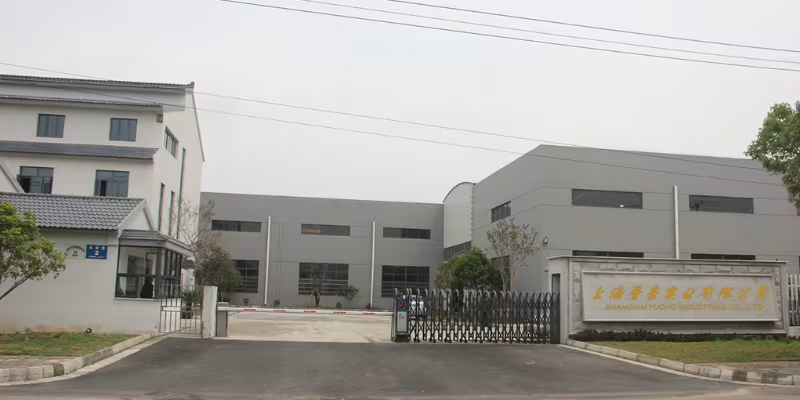
With over 35 years of expertise, SHANGHAI YUCHO INDUSTRIAL CO., LTD. is a trusted leader in chocolate machinery manufacturing. Our TYJ Chocolate Enrobing Machine is crafted with food-grade stainless steel and advanced automation, ensuring precision, hygiene, and efficiency. Certified to ISO 9001 and CE, we provide tailored solutions and reliable support to clients in over 100 countries.
Contact Us Now
Enter your inquiry details, We will reply you in 6 hours.
Product Details
Versatile Chocolate Coating for a Wide Range of Products
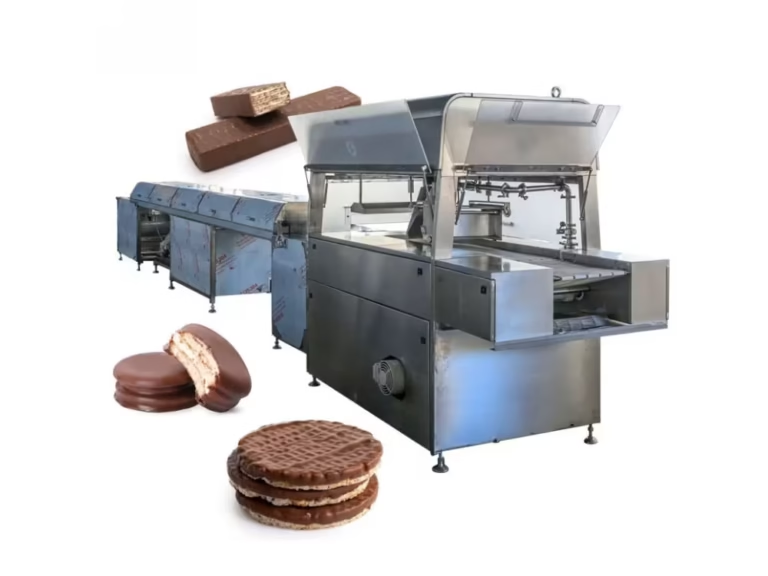
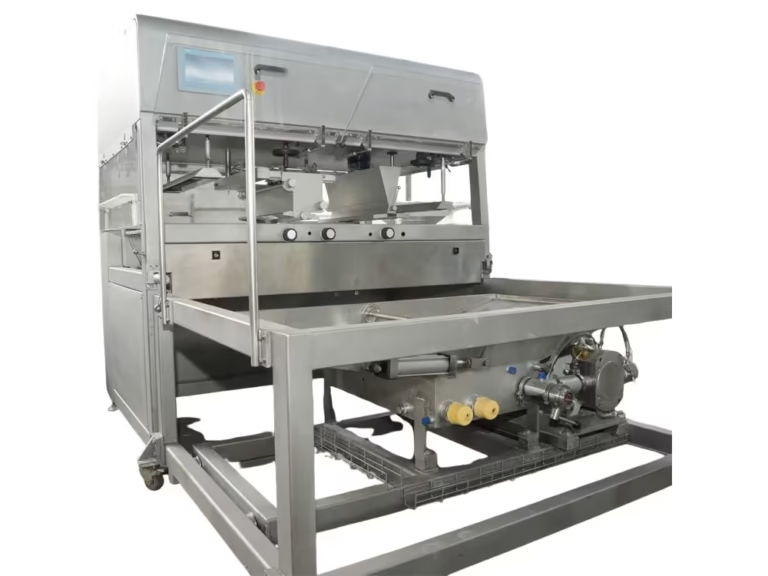
The TYJ Chocolate Enrobing Machine is designed for precision coating of chocolate on various products, including pastries, biscuits, wafers, and candies. It offers multiple coating options, including full, single-sided, and partial coatings, ensuring versatility in production.
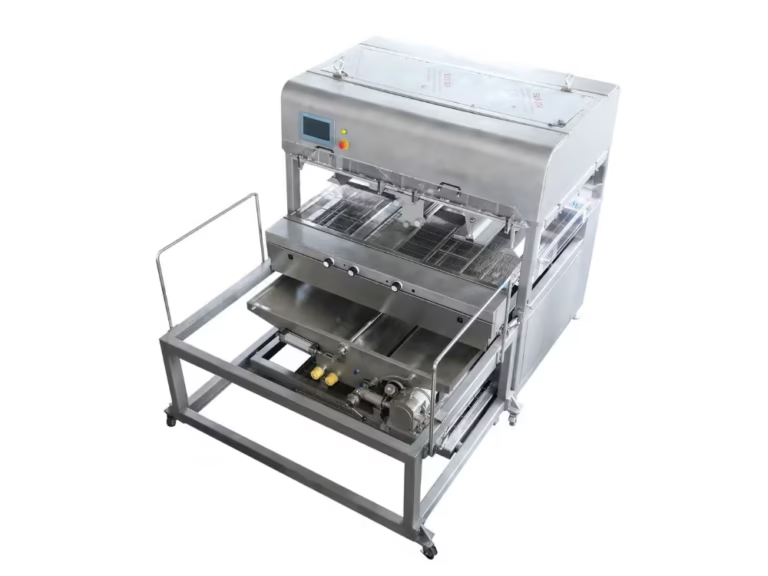
Numerous TYJ Chocolate Enrobing Machines operate worldwide, delivering consistent, high-quality results for chocolate-coated products. The adjustable curtain coating device allows operators to control the thickness of the chocolate layer with ease, while the removable material tank ensures simple cleaning and maintenance. Customizable cooling tunnel options further enhance production efficiency, making the TYJ Chocolate Enrobing Machine an indispensable tool for confectionery manufacturers.
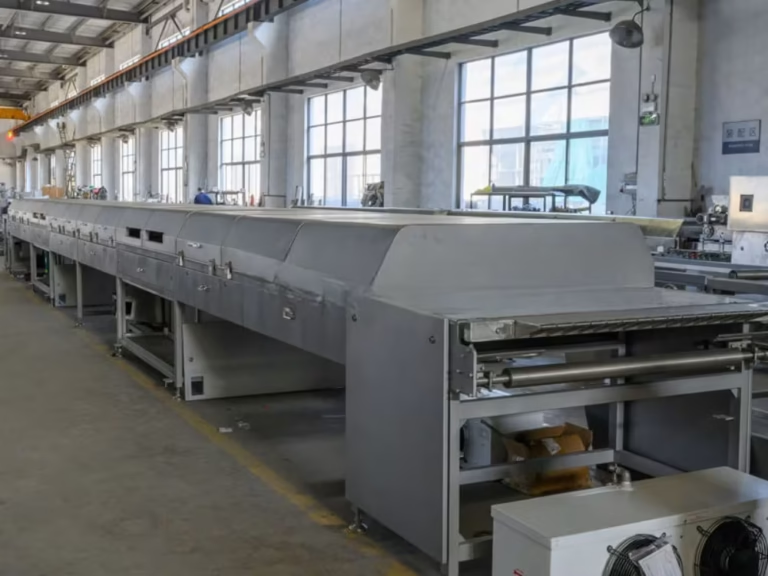
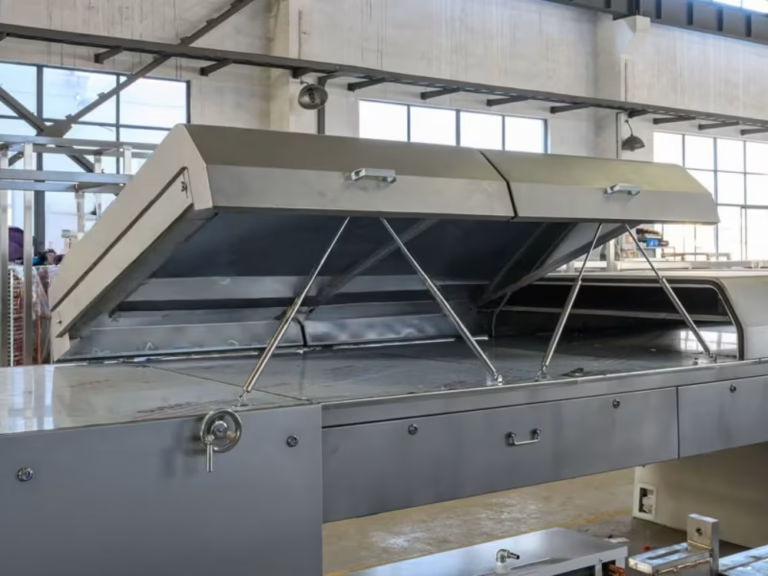
Models & Technical Parameters
| Model | TYJ400 | TYJ600 | TYJ800 | TYJ1000 | TYJ1200 | TYJ1500 | |||||
|---|---|---|---|---|---|---|---|---|---|---|---|
| Conveyor Belt Width (mm) | 400 | 600 | 800 | 1000 | 1200 | 1500 | |||||
| Operation Speed (m/min) | 0-10 | 0-10 | 0-10 | 0-10 | 0-10 | 0-10 | |||||
| Cooling Tunnel Temperature (°C) | 0-8 | 0-8 | 0-8 | 0-8 | 0-8 | 0-8 | |||||
| Cooling Tunnel Length (m) | Customize | ||||||||||
| Outside Dimension (mm) | L×800×1860 | L×1000×1860 | L×1200×1860 | L×1400×1860 | L×1600×1860 | L×1900×1860 | |||||
Area of Applications
The TYJ Chocolate Enrobing Machine is widely used for coating various food products, including:
- Biscuits, cookies, and wafers
- Pastries, cakes, and pies
- Candies, gummies, and nougat
- Nuts, dried fruits, and cereal bars
- Large-scale industrial production
- Artisanal and small-batch manufacturing


Core Features & Benefits
Versatile Coating Modes
Supports whole, single-sided, and partial coating to accommodate diverse product requirements. This flexibility allows for the production of a wide range of chocolate-coated foods, from biscuits to pastries and candies.
Adjustable Coating Thickness
Offers customizable mixers and dosing devices for both continuous and batch-wise preparation, enabling seamless incorporation of ingredients like nuts, biscuits, and cereals to create diverse cluster formulations.
Integrated Cooling Tunnel
Includes a built-in cooling tunnel with adjustable temperature control (0–8°C), ensuring rapid and even solidification of the chocolate coating. This results in a glossy, stable finish that enhances product quality.
Easy-to-Clean Design
The detachable material hopper allows for quick disassembly and thorough cleaning, minimizing downtime between production runs and maintaining high food hygiene standards.
High-Efficiency Continuous Operation
Features an adjustable conveyor speed (0–10 m/min) for stable and continuous chocolate coating. This boosts production efficiency, making it ideal for large-scale confectionery manufacturing.
Food-Grade Stainless Steel Construction
Constructed with SUS304 stainless steel for all product-contact components, ensuring durability, corrosion resistance, and compliance with global food safety standards.
How it works
Chocolate enrobing machines are used to coat different foods with chocolate (or chocolate-like) coatings. These machines use a conveyor belt that moves food through a waterfall of chocolate. After the product is enrobed in chocolate, excess chocolate drains off to ensure a uniform coat remains.
These machines are vital to the simple joy of eating a chocolate-covered product. They are used to coat the bottom of each product, as with the top, using a bottom-pooling mechanism that coats the bottom before it is covered in running chocolate.
These machines are essential to the production of mass chocolate-coated items. They provide the same (or better) finish as competitors at a rate of thousands of units per hour. This helps ensure the same standard of quality and appearance is maintained throughout production.
What is a Chocolate Enrobing Machine?
A chocolate enrobing machine is a specialized piece of equipment designed to coat food items with a layer of liquid chocolate. The term "enrobing" simply means to clothe or wrap, which accurately describes how the machine covers a center—such as a cookie, caramel, or nut cluster—in a continuous waterfall of melted chocolate.
These machines replace the labor-intensive hand-dipping process. They use a wire-mesh conveyor belt to transport items through a curtain of tempered chocolate. The excess chocolate drips through the mesh, leaving a smooth, even coating on the product before it moves into a cooling phase.
The Significance of Chocolate Enrobing Machines in Confectionery Production
Scaling a confectionery business is nearly impossible without automated coating technology. Chocolate enrobing machines provide the speed and reliability necessary to meet high consumer demand. They eliminate the bottlenecks associated with manual labor, allowing factories to output thousands of pieces per hour.
Beyond sheer volume, these machines guarantee product uniformity. A consistent chocolate-to-center ratio is vital for maintaining flavor profiles and meeting nutritional packaging requirements. Furthermore, a perfectly sealed chocolate layer protects the inner filling from moisture loss or air exposure, significantly extending the shelf life of the finished product.
Key Elements of a Chocolate Enrobing Machine
A high-quality chocolate enrobing machine consists of several interconnected systems working in harmony.
Curtain Coating Device
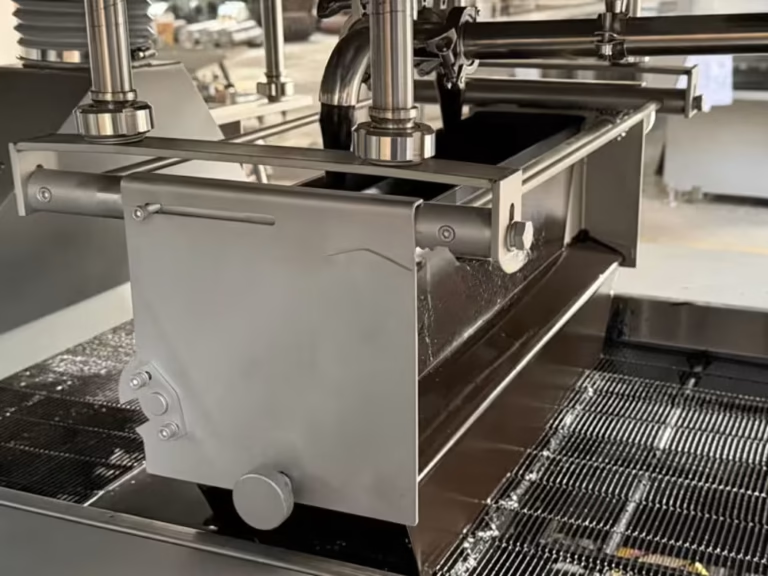
The curtain coating device, or flow pan, creates a continuous waterfall of liquid chocolate. As products pass underneath on the wire mesh belt, this device ensures they receive an even top and side coating. Many machines also include a bottom-coating mechanism to ensure the underside of the treat is fully covered.
Material Tank
The material tank stores the liquid chocolate before it is pumped to the coating device. This tank features a double-jacketed design with heated water circulating through the walls. This precise temperature control keeps the chocolate perfectly tempered and prevents it from solidifying prematurely.
Cooling Tunnel
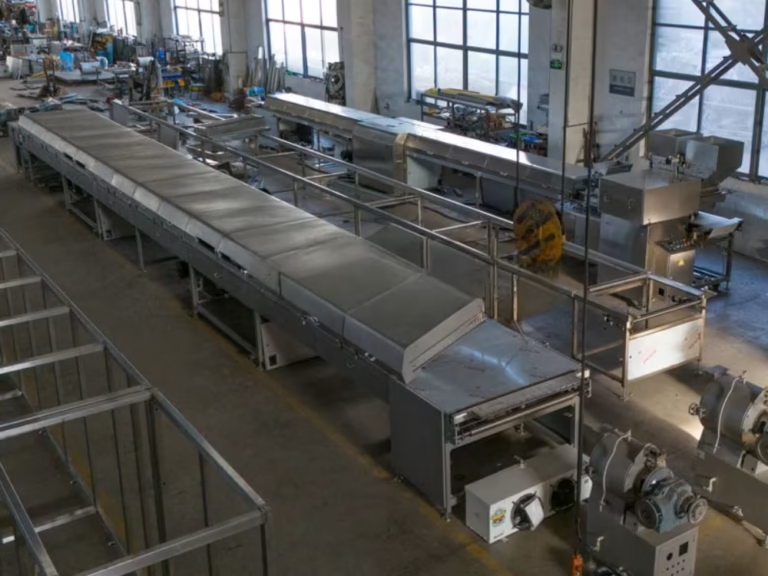
Once the products are coated, they immediately enter the cooling tunnel. This insulated enclosure uses cold air circulation to rapidly set the chocolate. The length and temperature of the cooling tunnel are carefully calibrated to ensure the chocolate develops a glossy finish and a crisp snap without blooming.
Speed Control Mechanism
Different products require different exposure times to the chocolate curtain and cooling air. The speed control mechanism allows operators to adjust the pace of the wire mesh conveyor belt. Slowing the belt down creates a thicker coating, while speeding it up results in a thinner, more delicate chocolate shell.
Control Panel
The control panel acts as the brain of the enrobing machine. Through a touchscreen interface, operators can program recipes, monitor temperatures, and adjust pump speeds. This centralized hub makes it easy to switch between different production runs with minimal downtime.
How Does a Chocolate Enrobing Machine Work?
The journey from a bare center to a finished chocolate treat involves a highly synchronized sequence of events.
Material Feeding
The process begins with the material feeding stage. Workers or automated feeders place the uncoated centers onto the infeed conveyor belt. Proper spacing is critical here; if the items are too close together, they may fuse during the coating process.
Coating Application
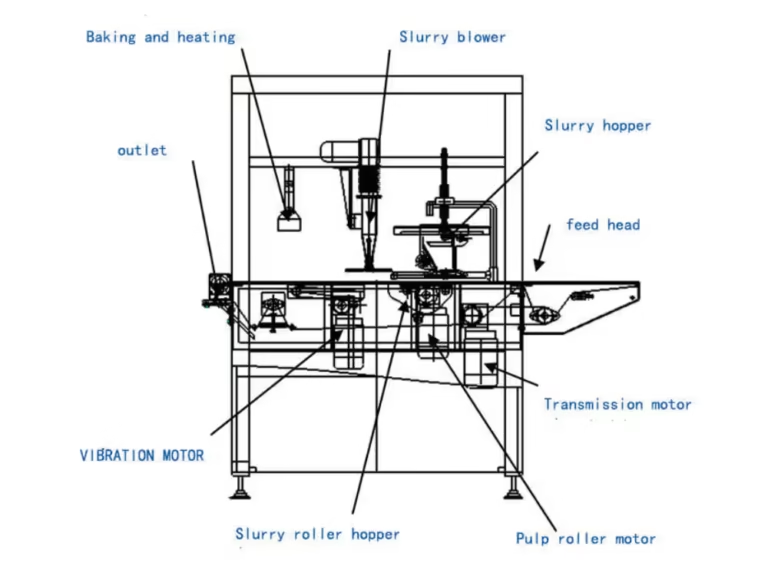
As the products transition onto the wire mesh belt, they pass through the chocolate curtain. A blower fan often sits just past the curtain to blow off excess chocolate, while a vibrating mechanism shakes the belt to ensure an even distribution and remove air bubbles. A detailing roller at the end of the mesh belt smooths out the bottom footprint, removing any trailing tails of chocolate.
Cooling and Setting
The coated items are then transferred onto a solid polyurethane belt and travel through the cooling tunnel. The controlled drop in temperature forces the cocoa butter crystals to contract and solidify. This step must be gradual enough to prevent thermal shock, which can cause the chocolate to crack or turn gray.
Adjustments and Customization
Operators constantly monitor the process and make adjustments via the control panel. If a specific batch of cookies requires a thicker coating, the operator might increase the pump speed or lower the blower fan intensity. This flexibility allows one machine to handle dozens of different product lines.
Output and Quality Control
Finished products emerge from the cooling tunnel ready for packaging. Quality control sensors or human inspectors check the items for blemishes, exposed centers, or uneven bottoms. Because the machine handles the tempering and application automatically, the rejection rate remains incredibly low.
Advantages of Chocolate Enrobing Machines
Investing in an enrobing machine completely transforms a confectionery operation. The primary advantage is a drastic increase in production efficiency. Factories can process massive quantities of treats in a fraction of the time it would take a team of hand-dippers.
Material savings represent another significant benefit. The machine recirculates all excess chocolate that drips through the wire mesh back into the material tank. This closed-loop system virtually eliminates product waste. Additionally, the precise control over coating thickness means manufacturers use exactly the right amount of chocolate per item, protecting profit margins.
Our Certifications
We hold international authoritative certifications to ensure our equipment meets global market access standards and production quality requirements.


Our Manufacturing Strength
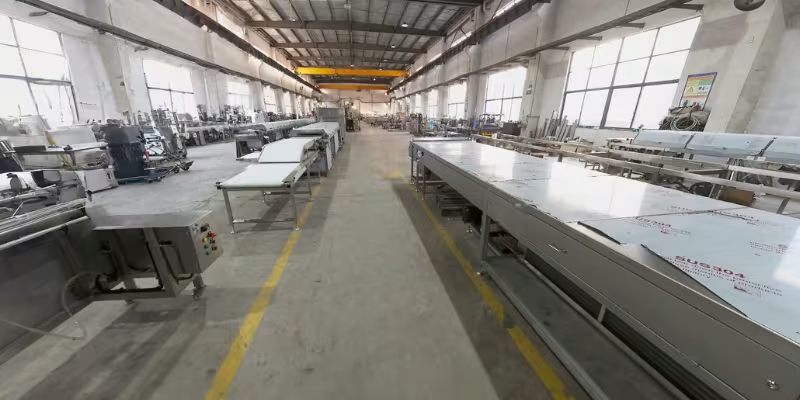
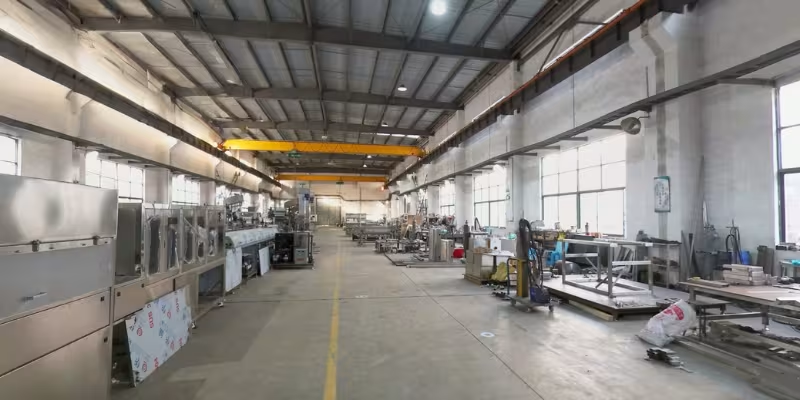
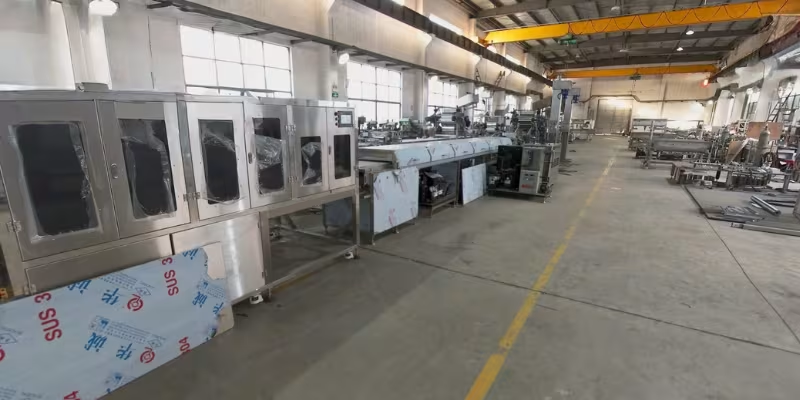
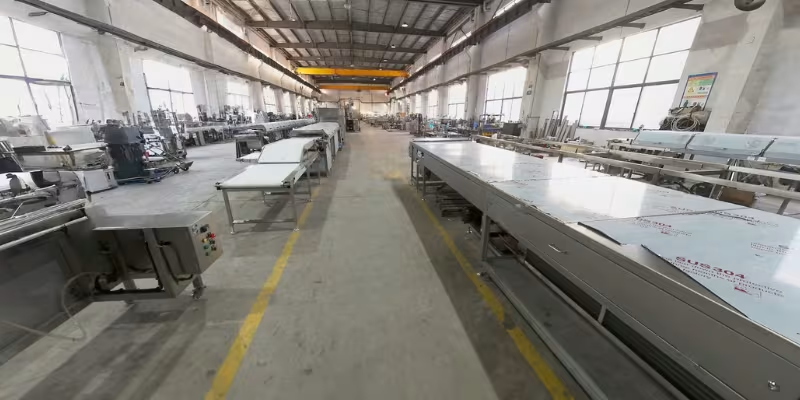
Equipped with modern processing facilities and a dedicated technical team, our 10,000㎡ production base in Shanghai and Jiangsu supports standardized, large-scale manufacturing of chocolate processing equipment.
Every piece of equipment undergoes strict inspection throughout production, from material selection to assembly and finished machine testing, ensuring stable performance and long service life.
Our experienced engineering team also provides professional on-site guidance, process optimization and targeted technical support for your bean-to-bar production line, helping you achieve efficient and reliable operation.
Send Inquiry Every piece of equipment undergoes strict inspection throughout production, from material selection to assembly and finished machine testing, ensuring stable performance and long service life.
Our experienced engineering team also provides professional on-site guidance, process optimization and targeted technical support for your bean-to-bar production line, helping you achieve efficient and reliable operation.
Customization & Comprehensive After-Sales Service
Customization Service
We offer one-to-one customized design for your bean-to-bar production line:
1. Adjust equipment capacity and dimensions based on your workshop layout;
2. Optimize production process to match your product (chocolate mass, cocoa butter, cocoa powder);
3. Customize auxiliary equipment and line integration for seamless production;
Global After-Sales Support
We have a dedicated after-sales team with 5 professional after-sales engineers and 15 foreign trade specialists, providing comprehensive after-sales service for global customers:
1. Overseas on-site installation and commissioning;
2. Professional operation and maintenance training for your staff;
3. Timely supply of spare parts and technical consultation;
4. Long-term after-sales follow-up and production optimization guidance;


FAQs
Q1. What does a chocolate enrobing machine do?
A chocolate enrobing machine coats products like pastries, biscuits, wafers, and candies with a layer of chocolate or compound coating. It supports full coating, single-sided coating, and partial coating, ensuring high precision and consistency in production.
Q2. How is enrobing different from dipping or molding?
Enrobing is an automated process where products pass through a continuous chocolate curtain for uniform coating. Dipping involves manually submerging items in chocolate, while molding pours chocolate into molds to form solid or filled chocolate products.
Q3. Can an enrober handle both real chocolate and compound coating?
Yes, most chocolate enrobing machines work with both real chocolate and compound coatings. Real chocolate requires proper tempering to maintain a glossy finish and crisp snap, while compound coatings do not need tempering.
Q4. Do chocolate enrobing machines need a tempering unit?
A tempering unit is required when using real chocolate, to stabilize cocoa butter crystals and ensure a smooth, glossy finish. For compound coatings, a tempering unit is not necessary.
Q5. What products work best with an enrober?
Chocolate enrobing machines are ideal for biscuits, wafers, pastries, candies, nuts, and other bakery items. Products with a firm, dry structure perform best to ensure even coating without breakage.
Q6. How much chocolate does enrobing use per product?
Chocolate consumption depends on product size, coating thickness, and coating style (full or partial). On average, chocolate usage accounts for 10% to 30% of the product’s weight.
Q7. What causes tails, bloom, or uneven coating?
- Tails: Caused by excess dripping chocolate; can be improved by adjusting airflow or vibration.
- Bloom: Results from improper tempering or poor temperature control, forming fat or sugar crystals on the surface.
- Uneven Coating: Usually caused by unstable chocolate flow or incorrect machine settings; regular calibration helps prevent this.
Q8. How do you clean a chocolate enrobing machine?
Detachable parts such as the chocolate tank, scrapers, and belts can be removed for thorough cleaning. Use warm water and food-safe detergents to remove chocolate residue. Regular cleaning ensures hygiene and consistent coating quality.
Q9. What size enrober should a small business buy?
For small-scale and artisanal producers, an enrober with a belt width of 200mm to 400mm is recommended. It offers balanced capacity and space efficiency, perfect for small-batch production.
Q10. Can bakery products go through a chocolate enrober?
Yes, bakery products such as cookies, cakes, and pastries can be coated in an enrober. For best results, ensure products are firm, dry, and stable during the coating process.
Q11. What should buyers ask before choosing a supplier?
Key points to clarify include:
- Compatibility with real chocolate and compound coatings
- Customization options (cooling tunnel, belt width, etc.)
- Maintenance and cleaning requirements
- Warranty and after-sales support
- Production capacity and scalability
- Delivery time and installation services