

Home / Chocolate Machinery / Cocoa Bean Grinding Machine
High-Efficiency Cocoa Bean Grinding Machine for Coarse & Fine Grinding
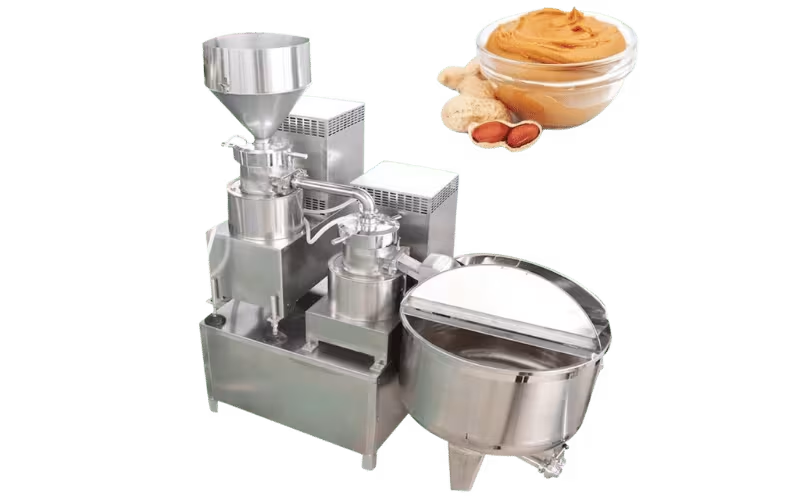
This advanced cocoa bean grinding machine combines coarse and fine grinding in a single unit, making it an essential tool for medium- and large-scale bean-to-bar chocolate production lines. It processes cocoa beans into uniform chocolate mass with exceptional consistency, ensuring the highest quality for chocolate production.
Equipped with a powerful industrial motor and a stable, durable structure, the machine guarantees continuous and efficient operation. Its ability to achieve particle sizes ranging from 150 μm to 300 μm (50–100 mesh) makes it ideal for producing smooth, consistent chocolate mass, meeting the demands of high-quality chocolate manufacturing.
Reliable Manufacturer of Chocolate Machinery in China
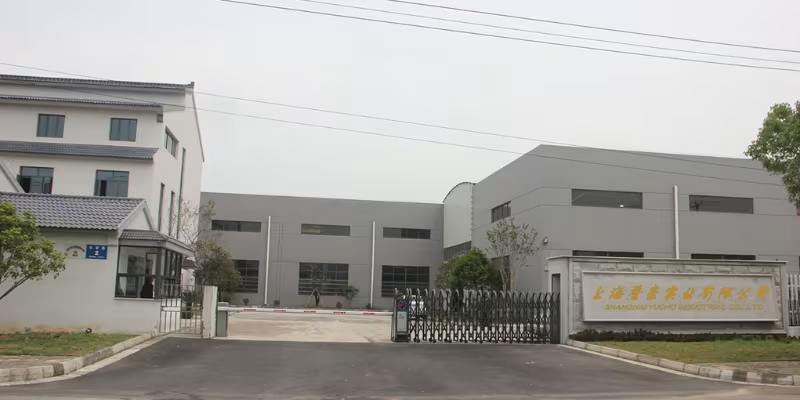
With more than 35 years of experience, Shanghai Yucho Industrial Co., Ltd. is a reliable manufacturer of chocolate machinery. Our Bean-to-Bar Chocolate Equipment is designed for accuracy, safety, and efficiency, offering automation and food-grade stainless steel. Our services include customized designs. With our ISO 9001 and CE Certificates, we support the entire production lines of our clients across the globe.
Contact Us Now
Enter your inquiry details, We will reply you in 6 hours.
Product Details


Key Specifications
| Model | Capacity | Power | Fineness | Motor Speed | Weight | Dimension |
|---|---|---|---|---|---|---|
| JMS-50 | 10-20 kg/h | 1.5 kW | 50-100 mesh (~300-150μm) | 2880 rpm | 50 kg | 530 × 260 × 580 mm |
| JMS-80 | 30-80 kg/h | 4 kW | 50-100 mesh (~300-150μm) | 2880 rpm | 150 kg | 640 × 410 × 900 mm |
| JMS-110 | 150-200 kg/h | 7.5 kW | 100-200 mesh (~150-75μm) | 2880 rpm | 175 kg | 700 × 430 × 980 mm |
| JMS-130 | 300-500 kg/h | 15 kW | 100-200 mesh (~150-75μm) | 2880 rpm | 285 kg | 830 × 440 × 1100 mm |
| JMS-180 | 800-1000 kg/h | 22 kW | 100-200 mesh (~150-75μm) | 2880 rpm | 340 kg | 830 × 490 × 1100 mm |
| JMS-240 | 1500-2000 kg/h | 45 kW | 100-200 mesh (~150-75μm) | 2880 rpm | 1300 kg | 1320 × 600 × 1280 mm |
| JMS-300 | 3000-4000 kg/h | 75 kW | 60-200 mesh (~250-75μm) | 2880 rpm | 1600 kg | 1500 × 800 × 1120 mm |
Features and Benefits
Integrated Coarse & Fine Grinding
This machine integrates both coarse and fine grinding into one efficient unit, simplifying your production workflow. By combining two processes in a single machine, it reduces equipment cost and saves valuable floor space in your processing facility.
Uniform Particle Size Control
With a grinding fineness range of 50–200 mesh (75–300 μm), this grinder produces consistent, even particles ideal for further chocolate processing. The stable particle size ensures smooth downstream pressing and milling, supporting high-quality cocoa and chocolate production.
Powerful & Efficient Motor
Equipped with a heavy-duty industrial motor matched to your production capacity, the machine delivers strong, reliable grinding performance. It maintains consistent efficiency even during long-hour continuous operation, making it suitable for medium to large-scale cocoa processing lines.
Stable & Durable Structure
Built with a rugged, industrial-grade frame, the grinder is designed for heavy daily use. Its stable structure ensures low vibration, long service life, and minimal downtime, supporting uninterrupted production.
Low-Noise Operation
Engineered with quiet-running components, the machine operates at reduced noise levels to create a more comfortable working environment while maintaining high grinding efficiency.
Ideal for Cocoa & Chocolate Mass Processing
Specifically designed for medium and large-scale chocolate production lines, this machine delivers consistent grinding results for bean-to-bar operations, cocoa liquor preparation, and industrial mass production.
How it works
Transforming raw cocoa beans into smooth, rich chocolate requires extreme precision and highly specialized equipment. Long after roasting and winnowing have isolated the valuable inner nibs, the solid material must go through a critical processing step. The dry nibs are carefully crushed and refined into a fluid paste known as cocoa liquor. Doing this manually is labor-intensive and inefficient for modern commercial production.
This is where industrial machinery steps in to streamline the workflow. A specialized grinding system automates the physical breakdown of cocoa nibs, releasing trapped cocoa butter and turning solid fragments into a uniform, flowing mass. By reducing particle size to a consistent, controllable range, manufacturers ensure their final chocolate products are free of bitter, gritty textures that could compromise quality.
What is a Cocoa Bean Grinding Machine?
A cocoa bean grinding machine is specialized industrial equipment designed to process, crush, and refine roasted cocoa nibs into smooth, liquid cocoa liquor or chocolate mass. Unlike manual tools, modern automated grinders use a motorized milling system to complete the entire size-reduction process in one continuous operation.
The machine’s structure enables efficient crushing, uniform particle reduction, and precise homogenization. Internal grinding components create synchronized shearing action to break down cocoa nibs and release trapped cocoa butter, preventing material buildup and ensuring consistent fluid output. This is especially effective for dense, fat-rich materials like roasted nibs, which require sufficient friction to form a smooth liquid paste.
By automating the process from raw nibs to finished chocolate mass, the machine reduces human error, increases production capacity, and maintains strict food hygiene standards. It has become core equipment for modern commercial bean-to-bar chocolate production lines worldwide.
The Importance of Cocoa Bean Grinding Machines in Chocolate Production
In large-scale and premium bean-to-bar chocolate production, the cocoa bean grinding machine is essential for converting raw materials into high-quality chocolate mass. Automated grinding parts deliver stable shear forces to fully break down nibs and release cocoa butter, creating homogeneous, smooth fluid mass for producing chocolate bars, truffles, and bulk cocoa liquor.
Modern consumers demand smooth, non-gritty chocolate with excellent melting behavior. This requires strictly controlled particle size, which modern grinding machines achieve through precise refining systems to ensure consistent quality across different recipes and batches.
Automated grinding equipment also supports production scaling, lowers labor costs, and improves hourly throughput. Stable viscosity, texture, and flavor in every batch protect brand reputation and ensure compliance with quality standards. With reliable grinding systems, chocolate producers can quickly respond to market trends and maintain efficient, profitable production.
Key Components of a Cocoa Bean Grinding Machine
1. High-Speed Motor and Drive System
A heavy-duty industrial motor provides powerful rotational force for crushing roasted cocoa nibs. The drive system ensures stable, consistent rotation speed for continuous production even under heavy loads.
2. Feeding Hopper
An automated feeding hopper with controlled intake delivers steady, even flow of cocoa nibs into the grinding chamber, preventing jamming and overloading.
3. Grinding Chamber and Rotors
High-speed rotors with stainless steel grinding teeth or colloidal blades impact and shatter cocoa nibs, efficiently reducing particle size and releasing cocoa butter.
4. Stator and Shearing Gap
A stationary grooved stator surrounds the rotor. The adjustable gap between rotor and stator creates intense shearing to refine particles, allowing operators to control final fineness.
5. Discharge Pump and Valve
A discharge pump smoothly transfers thick cocoa liquor to collection tanks, tempering vats, or downstream ball mills for further processing.
How Does a Cocoa Bean Grinding Machine Work?
1. Material Feeding and Intake
Roasted and winnowed cocoa nibs are fed into the hopper, and an automated system delivers a consistent flow into the grinding chamber.
2. Initial Crushing and Impact
High-speed rotors strike nibs with strong impact force, breaking them into small pieces and starting to release natural cocoa butter.
3. Intense Shearing and Liquefaction
Particles are trapped in the shearing gap between rotor and stator, where intense friction and shearing fully liquefy the mixture into thick cocoa mass.
4. Thermal Regulation
The water-cooling jacket controls chamber temperature to prevent overheating, preserving flavor and avoiding burnt notes.
5. Micron Size Calibration
Operators adjust the shearing gap to reach target fineness. Smaller gaps produce smoother paste; larger gaps suit rustic-style chocolate.
6. Continuous Discharge
Finished cocoa liquor is pumped out automatically for further mixing, conching, molding, or secondary refining.
Advantages of Cocoa Bean Grinding Machines
- Superior Fineness & Consistency: Precise rotor-stator structure ensures uniform particle size and smooth, non-gritty mouthfeel.
- High Throughput & Efficiency: Powerful motors and continuous discharge greatly improve output compared to traditional melangeurs.
- Wide Material Compatibility: Processes cocoa nibs, nut pastes, praline mixes, and vegan chocolate formulations.
- Precise Temperature Control: Cooling system prevents overheating and preserves delicate cocoa aromas.
- Food Safety & Hygiene: Food-grade stainless steel and enclosed design reduce contamination risks.
- Lower Labor Costs: Automated feeding and discharging reduce manual operation.
- Flexible & Easy to Integrate: Space-saving design integrates easily into production lines and matches with ball mills.
Applications of Cocoa Bean Grinding Machines
1. Bean-to-Bar Chocolate Production
Converts roasted nibs into chocolate mass for producing dark, milk, and white chocolate bars.
2. Bulk Cocoa Liquor Production
Processes large volumes of cocoa beans into unsweetened cocoa liquor for bakeries, ice cream, and snack manufacturers.
3. Nut Paste & Praline Production
Grinds hazelnuts, almonds, and other nuts into smooth pastes for truffle fillings, pralines, and spreads.
4. Vegan & Alternative Chocolate Production
Processes plant-based ingredients such as coconut solids, oat powder, and alternative fats to create smooth vegan chocolate products.
Our Certifications
We hold international authoritative certifications to ensure our equipment meets global market access standards and production quality requirements.


Our Manufacturing Strength
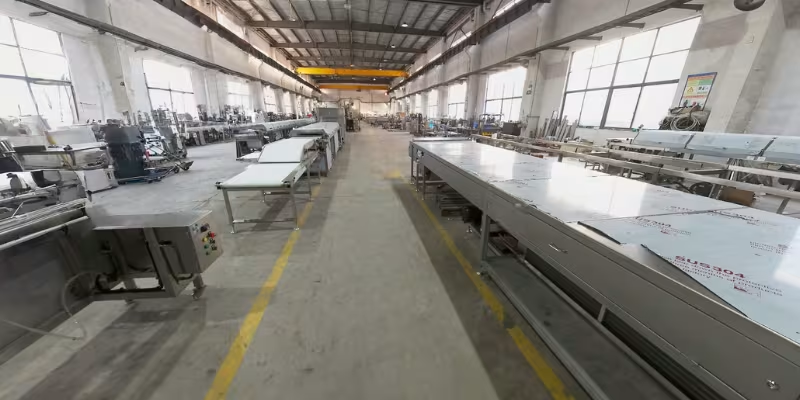
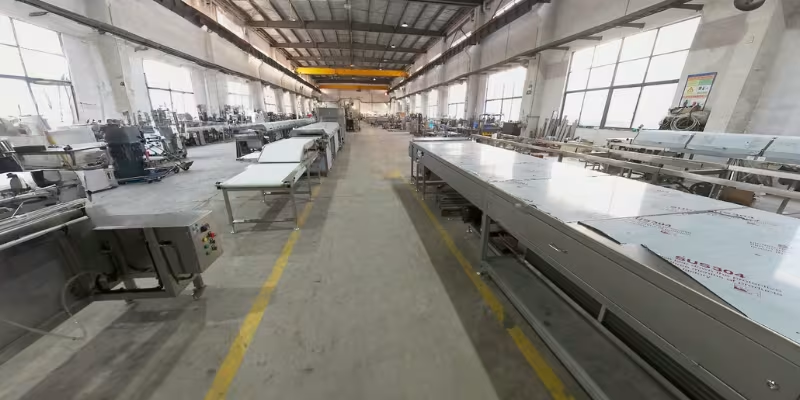
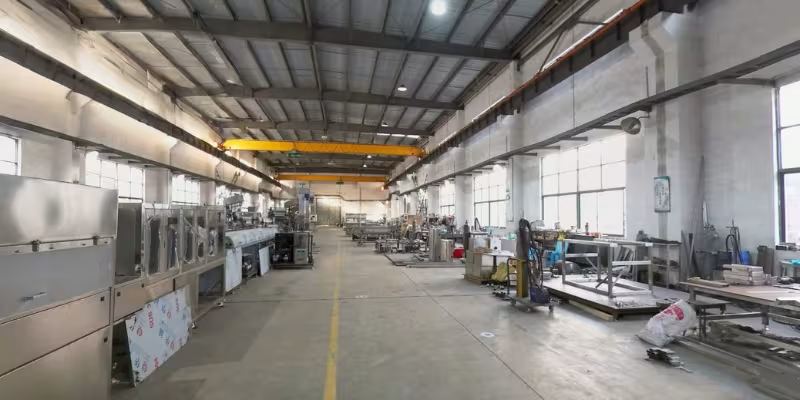
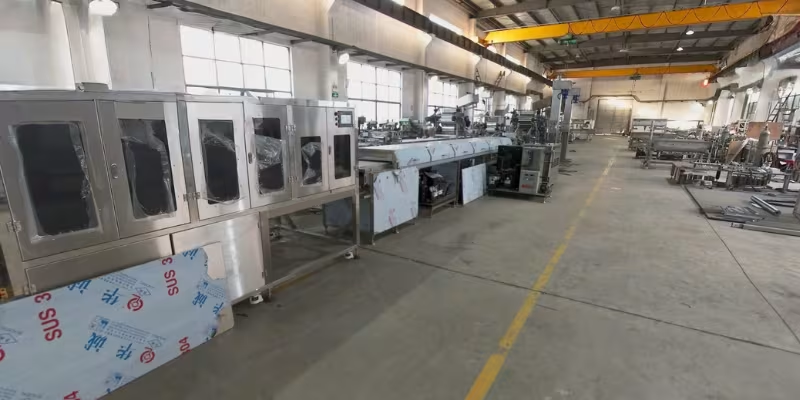
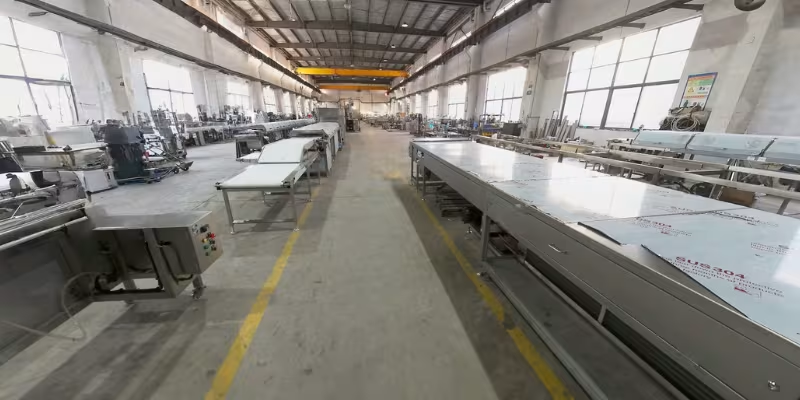
Equipped with modern processing facilities and a dedicated technical team, our 10,000㎡ production base in Shanghai and Jiangsu supports standardized, large-scale manufacturing of chocolate processing equipment.
Every piece of equipment undergoes strict inspection throughout production, from material selection to assembly and finished machine testing, ensuring stable performance and long service life.
Our experienced engineering team also provides professional on-site guidance, process optimization and targeted technical support for your bean-to-bar production line, helping you achieve efficient and reliable operation.
Send Inquiry Every piece of equipment undergoes strict inspection throughout production, from material selection to assembly and finished machine testing, ensuring stable performance and long service life.
Our experienced engineering team also provides professional on-site guidance, process optimization and targeted technical support for your bean-to-bar production line, helping you achieve efficient and reliable operation.
Customization & Comprehensive After-Sales Service
Customization Service
We offer one-to-one customized design for your bean-to-bar production line:
1. Adjust equipment capacity and dimensions based on your workshop layout;
2. Optimize production process to match your product (chocolate mass, cocoa butter, cocoa powder);
3. Customize auxiliary equipment and line integration for seamless production;
Global After-Sales Support
We have a dedicated after-sales team with 5 professional after-sales engineers and 15 foreign trade specialists, providing comprehensive after-sales service for global customers:
1. Overseas on-site installation and commissioning;
2. Professional operation and maintenance training for your staff;
3. Timely supply of spare parts and technical consultation;
4. Long-term after-sales follow-up and production optimization guidance;


FAQs
Q1. What is the difference between a cocoa nib grinder and a chocolate refiner?
A cocoa nib grinder performs initial size reduction, processing roasted cocoa nibs into fluid cocoa liquor.
A chocolate refiner then further reduces particle size to achieve ultra-fine, smooth chocolate mass suitable for molding and enrobing.
The grinder focuses on liquefaction; the refiner ensures consistent, mouthfeel-ready finesse.
Q2. How long does it take to grind cocoa nibs into smooth chocolate mass?
For industrial cocoa bean grinders, the cycle typically ranges from 1–3 hours depending on model, batch size, and target fineness.
Our machines produce consistent chocolate mass with a particle size of 75–300μm (50–200 mesh) to support efficient, continuous production.
Q3. Can a standard spice grinder be used for cocoa beans?
No, standard spice grinders are not designed for cocoa beans.
Cocoa beans are dense, high in cocoa butter, and will quickly clog, overheat, or damage domestic spice grinders.
Commercial cocoa grinders are specially engineered to handle high-fat, high-friction materials reliably.
Q4. What micron size is ideal for professional chocolate production?
For initial liquor grinding, a particle size of 75–300μm (50–200 mesh) is standard for efficient downstream processing.
For final molded chocolate, a further refining stage to 15–25μm is typically used to achieve a smooth, non-gritty mouthfeel.
Q5. How do you clean a commercial cocoa grinding machine?
Remove leftover cocoa mass before cleaning.
Wipe the grinding chamber, rotor, stator, and hopper with food-safe cleaner or warm water.
For fat residue, use a small amount of food-grade neutral detergent if permitted by the machine design.
Dry all parts completely to avoid moisture affecting next batch quality.
Regularly check wearing parts such as rotors and stators to ensure stable performance.
Q6. Why does the temperature of cocoa mass rise during grinding?
Temperature increases naturally due to friction and shearing forces during high-speed grinding. This heat can melt cocoa butter and affect flavor stability.
Our industrial grinders are designed with sturdy structure and stable operation to minimize excessive temperature rise during processing.