
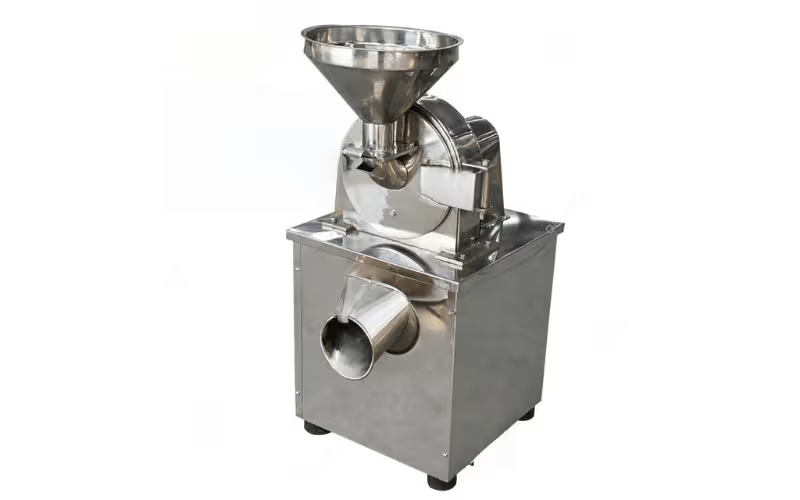
Cocoa powder grinding machines are essential pieces of processing equipment used widely across the food and confectionery industries. Transforming raw cocoa beans into a rich, fine powder requires precision, and these machines handle the crucial step of reducing cocoa nibs into a smooth, usable consistency.
Achieving the perfect texture is vital for food manufacturers. A high-quality grinding machine ensures consistent particle sizes, which directly impacts the flavor release, mouthfeel, and overall quality of the final chocolate product. Without reliable grinding equipment, manufacturers struggle with uneven textures and inefficient production cycles.
This article explores the basics of cocoa powder grinding machines, the most common configurations on the market, their diverse applications across industries, and the specific benefits they deliver to modern production lines.
What is a Cocoa Powder Grinding Machine?
A cocoa powder grinding machine is specialized industrial equipment designed to process roasted and crushed cocoa beans (cocoa nibs) into a highly refined powder. During this process, the machine applies intense mechanical force to break down the cellular structure of the nibs. This action releases natural cocoa butter and reduces solid particles to a microscopic size. The resulting product is a smooth, liquid cocoa mass or fine powder that serves as the foundational ingredient for countless chocolate and confectionery products.
A typical cocoa powder grinding machine consists of several key components working together. The feeding system uses a hopper to deliver cocoa nibs to the machine at a controlled rate. Inside, the grinding chamber houses the main mechanical parts, such as blades, rollers, or pins, which perform the actual crushing. Because grinding generates significant friction and heat, a robust cooling system—often using circulating water—is integrated to prevent the cocoa butter from burning or degrading. Finally, a computerized control panel allows operators to adjust speed, temperature, and feed rates to ensure optimal processing conditions.
The working principle relies on high-speed kinetic energy and mechanical shear. As the cocoa nibs enter the grinding chamber, high-speed rotating blades or heavy crushing rollers forcefully compress and shear the material. This continuous mechanical action breaks the nibs down into progressively smaller particles until they reach the desired micron size, transforming solid pieces into a uniform, fine powder ready for further processing.
Types of Cocoa Powder Grinding Machines
Cocoa powder grinding machines are categorized based on their internal mechanical design and specific functionality.
Blade Grinders
Blade grinders use high-speed rotating blades to chop and shear cocoa nibs into smaller particles. They are incredibly straightforward to use and maintain. Because of their compact size and lower throughput, blade grinders are well-suited for small-scale production facilities, artisan chocolate makers, or laboratory environments where researchers test new flavor profiles before mass production.
Roller Grinders
Roller grinders utilize a series of heavy, cylindrical rollers that crush the cocoa nibs as they pass through narrow gaps. You can adjust the distance between these rollers to achieve highly precise particle sizes. These robust machines are built for durability and continuous operation, making them the preferred choice for large-scale industrial production where consistency and high-volume output are absolutely critical.
Pin Mills
Pin mills feature two rotating disks embedded with interlocking metal pins. As the cocoa nibs enter the center of the disks, centrifugal force pushes them outward, where they are repeatedly struck by the high-speed pins. This intense impact makes pin mills exceptionally effective at producing ultra-fine cocoa powder. They are ideal for manufacturers who require the smoothest possible texture for premium chocolate products and instant cocoa beverages.
Benefits of Cocoa Powder Grinding Machines
Consistent Quality
Using a dedicated cocoa powder grinding machine guarantees strict control over particle size and texture. The automated nature of these machines ensures uniform grinding across every single batch. This consistency is crucial for manufacturers, as it prevents gritty textures in chocolate bars and ensures that cocoa powder dissolves perfectly in beverages, ultimately protecting the brand’s reputation for high quality.
Efficiency
Modern grinding machines are engineered for maximum throughput and operational efficiency. They process large volumes of cocoa nibs in a fraction of the time it would take using older, traditional methods. Furthermore, advanced motor designs and integrated cooling mechanisms make these machines highly energy-efficient, helping production facilities lower their overall electricity consumption while maintaining continuous, high-speed output.
Versatility
These machines offer incredible versatility, easily handling a range of cocoa bean varieties and roast profiles. Operators can quickly adjust settings via the control panel to switch from producing coarse cocoa mass to ultra-fine powder. Additionally, the scalable nature of these machines means they can accommodate everything from boutique, low-volume artisan runs to massive, multi-ton industrial production schedules without compromising on the final product’s integrity.
Applications of Cocoa Powder Grinding Machines
Confectionery Industry
The confectionery industry is the primary user of cocoa powder grinding machines. They are absolutely essential for producing the smooth cocoa mass required to make chocolate bars, truffles, and pralines. Additionally, the fine powder produced is a staple ingredient in hot cocoa drinks, chocolate syrups, and a wide variety of baked goods, such as cakes and brownies.
Cosmetics and Pharmaceuticals
Beyond food, fine cocoa powder and extracted cocoa butter are highly valued in the cosmetics and pharmaceutical sectors. Grinding machines help process cocoa for use in nourishing skincare products, lip balms, and lotions due to its high antioxidant content. The pharmaceutical industry also utilizes refined cocoa components as natural flavoring agents for medicinal products.
Specialty Foods
The rise of health-conscious consumers has expanded the use of grinding machines in the specialty foods market. They process raw, unroasted beans to create organic, nutrient-dense cacao powder. This fine powder is widely used in protein shakes, vegan health foods, and artisanal dietary supplements that demand high-quality, minimally processed ingredients.
Conclusion
Cocoa powder grinding machines are indispensable processing tools that provide the precision, efficiency, and versatility required to transform raw cocoa nibs into high-quality powder. From ensuring consistent texture in the confectionery industry to supporting the creation of specialty health foods and cosmetics, these machines deliver unmatched reliability. They allow producers to scale their operations while maintaining strict quality control.
Understanding the different types of grinders—whether blade, roller, or pin mills—enables businesses to optimize their specific manufacturing processes. We strongly encourage manufacturers to carefully evaluate their production volume and texture requirements before investing in the right equipment.
If you are ready to elevate your chocolate production, contact our experts today to explore advanced grinding solutions tailored perfectly to your cocoa processing requirements.