
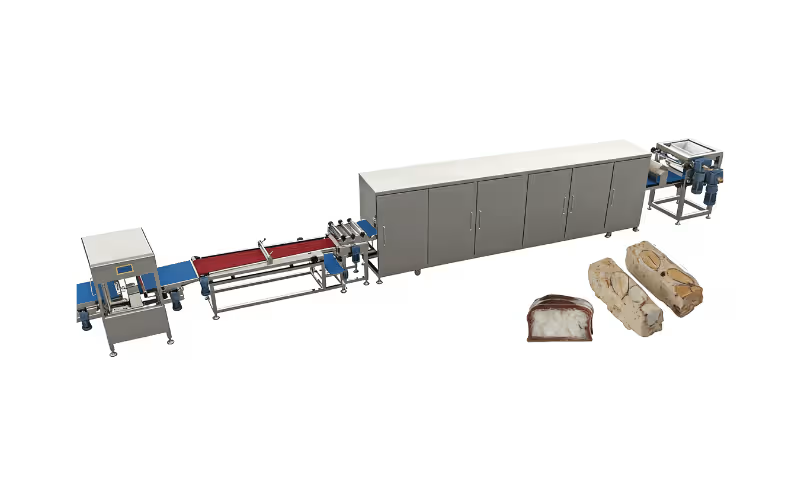
In this article, we will explore the main characteristics of a candy bar production line, how it works, and in detail what happens during the automated manufacturing process.
Let’s start with a clear definition: a candy bar production line is a comprehensive system of industrial machinery used to produce confectionery bars. This technology forms the foundation of modern sweet manufacturing and plays a crucial role in creating the popular treats we consume every day.
Automated candy production is a process in which raw ingredients are mixed, cooked, shaped, and cooled to create a continuous product with a specific form and texture. These materials are fed into specialized interconnected units that push the product through the system seamlessly.
The heart of the operation is the automated transition from raw ingredients to packaged goods. During the process, the machinery heats, blends, and shapes the material as it moves along a continuous conveyor system. This critical step enables strict quality control and product consistency.
The applications of this technology are surprisingly vast. In the modern confectionery industry, production lines are used to manufacture chocolate bars, protein snacks, nougat, caramel layers, and nutritional bars. The versatility of the equipment makes it an indispensable tool for meeting massive consumer demand.
What is a Candy Bar Production Line?
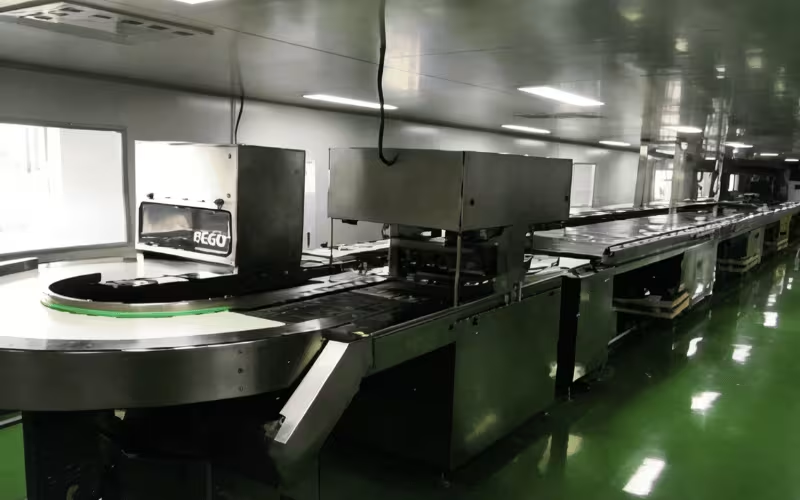
These industrial systems are fitted with multiple synchronized machines that work in tandem to replace manual labor. The main configurations of a candy bar production line handle the entire journey of the product, moving rapidly from initial ingredient mixing to final packaging.
Automated candy bar production lines:
- In an automated candy bar production line, the machinery takes over the tedious tasks of creating confectionery, systematically managing everything from raw material feeding to wrapping.
- This configuration is the most common in the modern food industry and offers unparalleled efficiency in producing high volumes of consistent, high-quality snacks.
- Operating in a continuous flow helps maintain exact temperature and mixing controls, contributing to improved consistency and superior taste in the final product.
Manual versus automated production methods:
- In manual production, workers must weigh, cook, and shape the candy by hand.
- This manual configuration is much slower, highly labor-intensive, and prone to human error or inconsistent batch quality.
- Transitioning to an automated line significantly improves manufacturing efficiency, contributing to better ingredient dispersion and more uniform product weight.
In general, the decision to implement a full candy bar production line depends on the required production volumes and the type of confectionery being produced. Both small-scale and large-scale lines offer distinct advantages, and the selection will depend on factors such as the viscosity of the candy mass, the required daily output, and the desired properties of the final snack bar.
Key Components of a Candy Bar Production Line
Now let’s look—in a clear and simple way—at the essential components that make up the system:
- Mixing and Cooking Unit: The raw materials, including sugars, syrups, and flavorings, are fed into large industrial mixers and cookers. These machines apply precise heat to dissolve sugars and blend the ingredients into a uniform candy base. Accurate temperature control is vital for guaranteeing the correct texture, whether making chewy caramel or hard nougat.
- Forming and Shaping Unit: The prepared candy mixture is transferred to the forming section, which houses custom molds or heavy-duty compression rollers. Bausano and similar manufacturers utilize advanced engineering to ensure the sticky material does not adhere to the machinery. This pressure shapes the fluid mass into a continuous slab or individual bar shapes, depending on the specific product requirements.
- Cooling and Solidifying Unit: Once shaped, the hot candy must be stabilized. The products pass through extended cooling tunnels equipped with powerful refrigeration systems. This rapidly lowers the candy’s temperature, solidifying the material and fixing its shape so it can be handled without deforming.
- Coating and Enrobing Unit: For bars requiring a chocolate layer, the solidified centers pass through an enrobing machine. A continuous curtain of tempered liquid chocolate coats the bars evenly, followed immediately by another brief cooling stage to set the chocolate shell perfectly.
- Packaging Unit: The final result is a finished candy bar that enters the automated packaging unit. High-speed flow wrappers seal the products in protective foil or plastic films, ensuring freshness and extending shelf life before they are boxed for distribution.
How Does a Candy Bar Production Line Work?
The step-by-step process requires precise timing and perfect synchronization between every unit on the factory floor.
First is the ingredient feeding stage. Raw materials, often in the form of liquid syrups, dry powders, and fats, are automatically pumped or dropped into the primary mixing hoppers. This ensures a consistent and controlled flow of material into the cooking chamber without requiring manual heavy lifting.
Next comes the cooking and mixing phase. As the ingredients enter the heated vats, industrial agitators continuously stir the mixture. The combination of precise thermal energy and mechanical blending transforms the raw ingredients into a homogeneous, molten candy base. This step cooks off excess moisture to achieve the exact moisture content necessary for the required chewiness or crunch.
The shaping and forming stage follows immediately. The hot candy mass is pumped onto forming rollers or into precise molds. The rollers flatten the mixture into a uniform sheet of uniform thickness, while rotary cutters slice the continuous slab into perfectly proportioned individual rectangular bars.
Cooling and solidifying form the critical next step. The freshly cut, soft bars move along a conveyor belt straight into a cooling tunnel. Circulating chilled air rapidly reduces their core temperature, hardening the structure so the bars do not lose their distinct shape or stick together during the final stages of production.
Finally, the packaging and final output stage completes the cycle. The hardened bars are precisely aligned and fed into a high-speed flow wrapping machine. Each bar is instantly sealed in airtight packaging, protecting the food from moisture and contamination and rendering it ready for retail display and global shipment.
Applications and Benefits of Candy Bar Production Lines
The applications of candy bar production lines extend across multiple facets of the food and beverage industry. In large-scale confectionery manufacturing, these machines are absolute necessities. They allow major international brands to produce millions of identical chocolate and caramel bars every single week, meeting staggering global consumer demands. Beyond traditional sweets, these highly adaptable production lines are increasingly used in the health and wellness sector to manufacture protein bars, energy snacks, and specialty organic dietary products.
The primary benefit of utilizing an automated production line is the massive increase in operational efficiency. These systems run continuously with minimal human intervention, drastically lowering long-term labor costs. Furthermore, the precision engineering ensures absolute product consistency. Every single bar comes out with the exact same weight, dimensions, and texture, which is crucial for passing strict quality control standards and maintaining consumer trust.
Conclusion
In the current highly competitive food industry, maintaining maximum efficiency and unwavering product quality is a demanding and urgent issue that involves every manufacturer. To tackle this challenge, it is key to focus our efforts on upgrading outdated manual systems to fully automated machinery.
Aware of this requirement, modern equipment manufacturers are actively committed to developing advanced candy bar production lines. We have seen new cutting-edge technologies, such as improved cooling tunnels and precision forming rollers, designed to handle everything from sticky nougat to dense protein masses effortlessly.
Our mission is to help optimize your factory floor through advanced automated solutions. This is why we are committed to offering more options to reduce waste, increase throughput, and ensure perfect consistency in your confectionery products.
Join the future of confectionery manufacturing. Invest in automated production line solutions that not only meet your current output requirements but actively help you scale your business for future generations of candy lovers.