

Did you know that optimizing your chocolate production process can drastically reduce waste and significantly increase your overall profit margins? Imagine turning a labor-intensive, inconsistent manufacturing process into a highly streamlined operation that produces flawless confections every single time. By selecting the right machinery, you can easily scale your business, reduce costly manual labor, and implement sustainable practices that benefit both your bottom line and the environment. Efficient setups allow you to focus on flavor innovation and brand growth while the equipment handles the heavy lifting of melting, tempering, and coating.
These machines, ranging from compact tabletop temperers to fully automated enrobing lines, are specifically designed for efficient, continuous chocolate production. By processing raw chocolate efficiently directly at your facility, confectioners can eliminate the need for expensive third-party processing and create premium retail-ready goods. Whether you run a boutique bakery or a large-scale candy factory, understanding the different setup types helps you choose the perfect equipment for your specific needs. In this comprehensive guide, we will explore the best setups to elevate your chocolate manufacturing capabilities.
Most Common Chocolate Machines: Tempering vs Enrobing
Tempering Machines
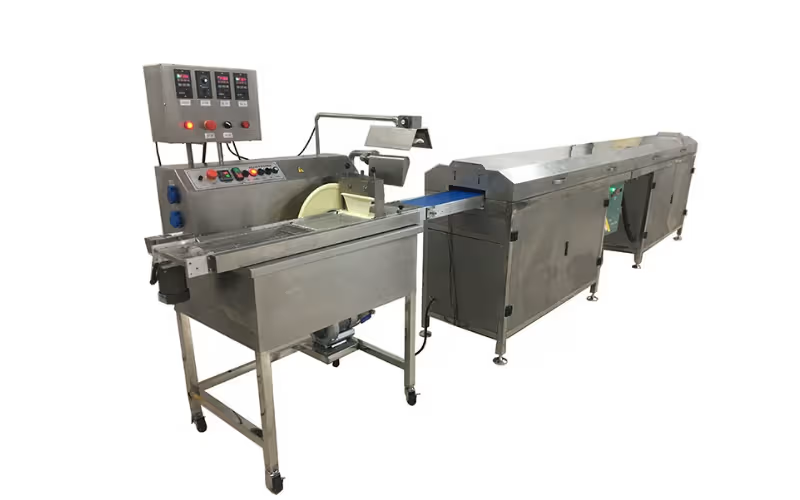
Tempering machines are specialized thermal-regulation units designed to heat and cool liquid chocolate with absolute precision. Their primary purpose is to safely melt solid chocolate and manipulate its temperature curve while maintaining constant mechanical agitation. This exact sequence of heating, rapid cooling, and gentle reheating forces the cocoa butter molecules to align into a highly stable crystal structure. Without this crucial process, melted chocolate would cool into a dull, crumbly mess that melts too easily at room temperature. These machines eliminate the tedious, inconsistent nature of manual hand-tempering on marble slabs, providing a continuous flow of perfectly stabilized chocolate ready for immediate use.
The key benefits of using a dedicated tempering machine include achieving visual perfection and ensuring long-term product stability. Properly tempered chocolate has a brilliant, mirror-like gloss and delivers a satisfying, crisp snap when broken. Furthermore, this machine entirely prevents fat bloom—the unappealing white, powdery streaks that form when cocoa butter separates and rises to the surface over time. By guaranteeing this structural stability, confectioners ensure their products maintain an extended shelf life and a premium appearance. This level of consistency is absolutely vital for maintaining customer trust and commanding higher retail prices for artisanal and commercial chocolate goods.
In commercial chocolate production, tempering machines are used at almost every stage that requires liquid chocolate. They are the essential precursor step before injecting chocolate into polycarbonate molds to create solid candy bars, intricate truffles, or hollow seasonal figures. Additionally, they serve as the foundational supply unit for larger enrobing lines, continuously pumping perfectly stabilized chocolate into the coating system. Whether a chocolatier is hand-dipping strawberries in a small retail shop or a massive factory is churning out thousands of identical chocolate chips for industrial baking, tempering machines act as the indispensable heart of the operation.
Enrobing Machines
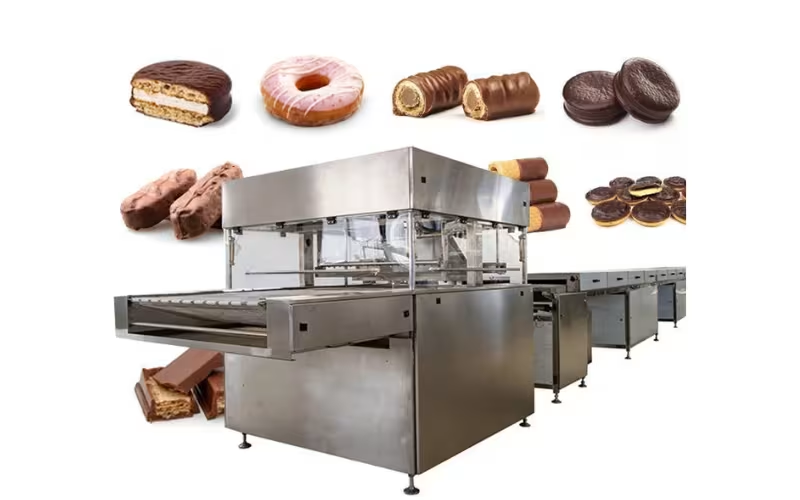
Enrobing machines are sophisticated automated coating systems engineered to cover various confectionery centers with a perfectly uniform layer of liquid chocolate. Their fundamental purpose is to entirely replace the slow, labor-intensive method of hand-dipping individual items using a fork. These machines feature a continuously moving wire mesh conveyor belt that transports naked product centers—such as nuts, caramels, cookies, or nougat—through a cascading curtain of tempered chocolate. As the items pass through this waterfall, a bottoming roller simultaneously coats their undersides, ensuring total 360-degree coverage without any thin spots or missed edges.
The key benefits of enrobing machines include unparalleled coating efficiency, incredible production speed, and immense operational versatility. By utilizing integrated air blowers, these machines gently strip away excess chocolate from the coated items, allowing operators to precisely control the final thickness and weight of the chocolate shell. This precision minimizes expensive material waste and ensures that every single product meets strict packaging weight regulations. Furthermore, enrobing lines handle delicate or oddly shaped centers that would easily be crushed or deformed by traditional volumetric molding equipment, thereby expanding a brand’s creative possibilities.
The applications of enrobing machines span across the entire bakery and confectionery manufacturing spectrum, facilitating the creation of globally beloved treats. In the commercial baking industry, they are used to coat biscuits, wafers, and sponge cakes, adding a premium chocolate finish and serving as a moisture barrier to extend shelf life. In candy manufacturing, enrobers are directly responsible for producing massive volumes of chocolate-covered pretzels, caramel-filled candy bars, and soft truffles. Their ability to seamlessly process thousands of distinct items per hour makes them a mandatory investment for any business looking to reliably mass-produce coated confections.
What is the Best Chocolate Machine Setup for Your Business?
Small-Scale Setup: The Beginner
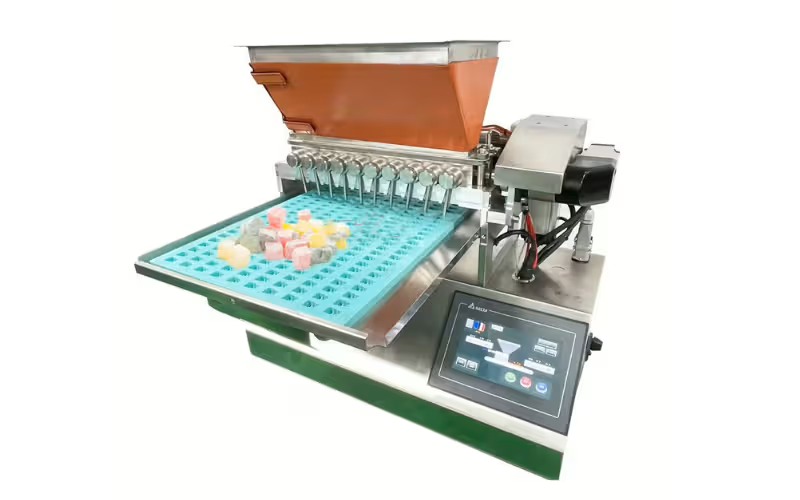
This compact setup is absolutely ideal for small artisanal businesses, boutique bakeries, or ambitious startups taking their first steps into professional chocolate production. When you are transitioning away from entirely manual processes, space and budget are usually the primary constraints dictating your equipment choices. This beginner-tier configuration focuses on maximizing output within a very small physical footprint while maintaining exceptional product quality. It provides the perfect balance of affordability and functionality, allowing new confectioners to scale their daily production volume significantly without requiring a massive initial capital investment or an industrial facility.
The recommended machinery for this introductory level revolves around compact, continuous tempering machines, typically boasting a bowl capacity of 10 to 25 kilograms. These tabletop or freestanding units often feature pedal-operated dispensing nozzles, making it incredibly easy to rapidly fill molds or hand-dip individual items. To complement the temperer, a small vibrating table is often integrated to help settle the chocolate into molds and remove trapped air bubbles. This straightforward, highly effective combination serves as the perfect foundation for a small business looking to produce professional-grade chocolate bars, solid figures, and basic filled pralines.
The benefits of this small-scale setup are numerous, primarily highlighting affordability, ease of use, and immediate improvements in product consistency. Operators can learn to use these intuitive machines within hours, completely eliminating the steep learning curve and physical exhaustion associated with traditional hand-tempering. The continuous availability of perfectly tempered chocolate means a single worker can double or triple their daily output, directly increasing potential revenue. Additionally, these machines run on standard electrical currents and require minimal maintenance, making them a stress-free, highly profitable addition to any growing artisanal chocolate or pastry business.
Mid-Sized Setup: The Intermediate
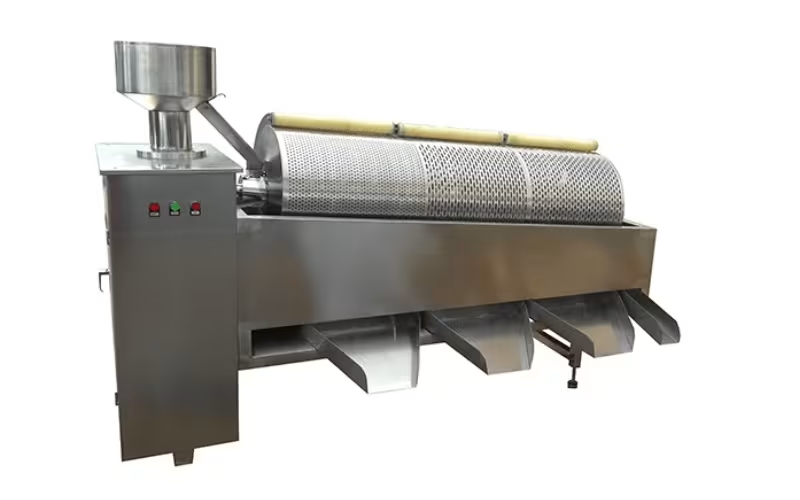
The mid-sized machine setup is perfectly suited for growing businesses that have outgrown their entry-level equipment and need to fulfill larger wholesale orders. At this stage, manual molding and hand-dipping become critical bottlenecks that severely limit revenue growth and operational expansion. This intermediate configuration introduces automated coating and faster deposition capabilities, bridging the gap between small-batch craft chocolate and true commercial manufacturing. It requires a slightly larger production space and a dedicated team, but it provides the necessary technological leap to compete with regional brands and supply multiple retail locations efficiently.
The recommended machinery for this crucial growth phase is a versatile tempering-and-enrobing combo unit. This setup typically pairs a larger continuous tempering machine (ranging from 50 to 100 kilograms in capacity) with a detachable enrobing belt attachment. The enrobing belt features an adjustable chocolate curtain, a detailing tail-cutter to prevent messy chocolate trails, and a blower to control coating thickness. This modular approach allows the facility to switch seamlessly between high-volume mold filling operations in the morning and continuous candy bar enrobing in the afternoon, maximizing the utility of the primary tempering engine.
The benefits of the mid-sized setup include vastly increased production capacity, enhanced product uniformity, and significant labor cost reductions per unit. By automating the coating process, businesses can produce thousands of identical truffles or coated cookies per hour, an impossible feat with manual labor alone. This consistent throughput allows brands to confidently pitch to larger distributors and supermarkets, knowing they can meet strict inventory demands. Furthermore, the modular nature of the combo unit means the business retains incredible product flexibility, adapting quickly to seasonal trends without needing to purchase entirely separate, highly specialized machines.
Large-Scale Setup: The Expert
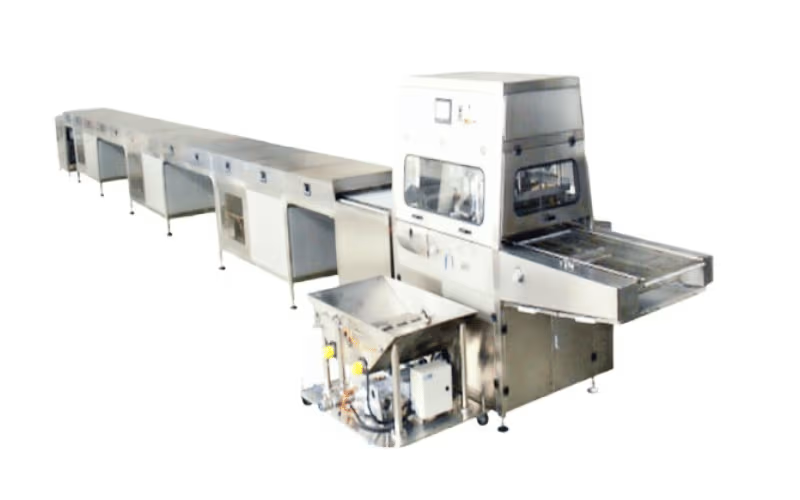
This advanced setup is explicitly designed for high-volume, continuous commercial production where maximizing hourly throughput and minimizing human intervention are the ultimate goals. Aimed at established multinational brands, massive regional factories, and major industrial bakeries, this tier of machinery requires significant capital investment and a vast manufacturing floor. The expert setup focuses on total automation, seamlessly integrating multiple complex machines into one continuous, highly synchronized production line. At this level, efficiency, hygienic design, and microscopic precision are paramount to maintaining profitability across millions of identical consumer products.
The recommended machinery for this industrial scale is a fully automated enrobing line paired with immense continuous tempering systems and integrated cooling tunnels. These lines often feature tempering units capable of processing hundreds of kilograms of chocolate per hour, feeding directly into an extra-wide enrobing wire belt. Following the coating curtain, the products enter a multi-zone, climate-controlled cooling tunnel that precisely solidifies the chocolate shell as they pass. Sensors, programmable logic controllers, and automated scrapers constantly monitor and adjust the machinery in real time without requiring continuous human oversight.
The benefits of this large-scale setup are profound, delivering unmatched automation, astronomical product throughput, and incredibly low per-unit operating costs. A fully automated line can process tens of thousands of candy bars or coated biscuits in a single shift, ensuring massive wholesale contracts are fulfilled flawlessly. Because the system is entirely enclosed and automated, food safety risks are drastically reduced, and product consistency is mathematically guaranteed. This setup transforms raw materials into retail-ready packaged goods with terrifying efficiency, providing the ultimate competitive advantage in the global confectionery market.
Top 3 Chocolate Machine Setups
Compact Tempering Machine Setup for Small Businesses
This beginner-friendly setup centers on a high-quality tabletop or small freestanding continuous tempering machine, marking the first major step toward professional automation. It is designed specifically to fit into cramped commercial kitchens, small retail shops, or boutique bakery spaces where square footage is at an absolute premium. The core philosophy of this configuration is to provide continuous access to perfectly crystallized chocolate, eliminating the frustrating downtime associated with batch melting and manual cooling. It empowers a single artisan or a very small team to produce retail-ready bars, bonbons, and dipped fruits with remarkable speed and visual perfection.
The key features of this setup include a heated melting bowl (typically 10kg to 25kg capacity), a continuous internal auger pump, and a highly precise digital thermostat. The auger draws melted chocolate from the heated bowl, pushes it up through a sophisticated cooling pipe to crystallize the cocoa butter, and delivers it out of a convenient dispensing spout. Many of these compact units also feature a volumetric foot pedal, allowing the operator to deposit exact amounts of chocolate directly into molds hands-free. A small, heated, vibrating table is usually attached to the side, serving as an essential tool for shaking out air bubbles immediately after molding.
The benefits for small-scale production are instantly noticeable, drastically reducing the physical strain and intense focus required for manual chocolate work. By delegating the complex chemistry of tempering to a reliable machine, the chocolatier can focus entirely on flavor development, mold design, and packaging. This setup significantly reduces wasted, bloomed chocolate and ensures every single product meets professional retail standards. The relatively low initial investment pays for itself quickly through increased daily output and the ability to confidently take on larger catering orders, corporate gifts, or wedding favors without worrying about production bottlenecks.
A perfect example use case for this compact setup is a small, family-owned craft chocolate shop that specializes in origin-specific chocolate bars and hand-painted truffles. During the busy holiday season, the shop owner can load the machine with 20 kilograms of dark chocolate in the morning and have a perfect temper maintained all day. Utilizing the foot pedal, they can rapidly fill hundreds of polycarbonate bar molds in a fraction of the time it previously took. The vibrating table ensures flawless, bubble-free surfaces, allowing the shop to double its seasonal revenue while reducing the total hours staff work.
Mid-Sized Tempering and Enrobing Combo Setup
The mid-sized combo setup is a highly strategic investment for mid-sized businesses looking to maximize equipment versatility while significantly boosting output. This configuration acts as a hybrid manufacturing station, combining the heavy-duty melting and stabilizing power of a medium-capacity temperer with the automated coating capabilities of an enrober. It is engineered to handle substantial daily production runs while remaining flexible enough to switch quickly between product lines. This setup requires a dedicated production room but remains highly accessible to growing brands expanding their wholesale footprint or opening multiple retail storefronts.
Key features of this intermediate setup include a larger continuous tempering unit—typically holding 50-100kg of chocolate—paired with a removable wire-mesh enrobing belt. The tempering engine provides a massive, uninterrupted flow of stable chocolate, while the enrobing attachment features an adjustable double curtain, a bottoming roller, and a variable-speed air blower. This air blower acts as a pneumatic knife, cleanly slicing away excess chocolate to leave a perfectly uniform shell. Furthermore, this setup typically incorporates an extended paper take-off belt, allowing coated products to be safely transferred and staged on racks for ambient or refrigerated cooling.
The benefits of medium-scale production center on incredible operational flexibility and the elimination of manual coating bottlenecks. When the enrobing belt is attached, the business can seamlessly coat thousands of truffles, caramels, or cookies per hour with absolute uniformity. When the belt is removed, the powerful tempering machine reverts to a high-speed mold-filling station. This dual functionality means the business does not have to purchase two separate, expensive industrial machines. It dramatically lowers labor costs per unit while elevating the aesthetic consistency of the entire product catalog, preparing the brand for significant commercial expansion.
An excellent example use case is a growing regional bakery that wants to launch a new line of premium chocolate-dipped macaroons and coated butter cookies for local grocery stores. Manually dipping these delicate items would be prohibitively slow and result in messy, inconsistent coatings. By implementing the combo setup, the bakery staff simply place the baked cookies onto the enrobing belt, and the machine perfectly coats hundreds of them per minute. The air blower ensures the chocolate layer is thin enough to maintain the cookie’s crunch, allowing the bakery to fulfill massive weekly grocery orders efficiently and profitably.
Fully Automated Enrobing Line for Large-Scale Production
The fully automated enrobing line is the pinnacle of commercial chocolate manufacturing, designed strictly for massive industrial operations where continuous, high-speed output is mandatory. This setup is a permanent, sprawling installation that seamlessly integrates multiple stages of processing into a unified, nonstop conveyor system. It is engineered to operate 24 hours a day, handling immense volumes of raw materials and transforming them into finished, retail-ready products with zero manual intervention. This expert-level configuration prioritizes absolute consistency, extreme food safety, and maximum profitability for multinational brands pushing millions of units globally.
The key features and specifications of this massive setup are staggering in their complexity and scale. It begins with a gigantic, dedicated continuous tempering machine capable of processing 300kg to over 1000kg of chocolate per hour. This feeds into a wide, industrial-grade enrobing belt equipped with multiple chocolate curtains, advanced bottom-coating rollers, and high-pressure detailing blowers. Immediately following the coating zone, the products enter a massive, multi-tiered polyurethane cooling tunnel. These tunnels utilize precisely zoned thermodynamic controls to gently solidify the cocoa butter crystals as the products travel, ensuring a flawless, high-gloss snap upon exiting the line.
The benefits of large-scale production include unparalleled throughput, microscopic quality control, and the virtual elimination of human error. A fully automated line guarantees that every single candy bar out of a hundred thousand looks, weighs, and tastes exactly the same, which is critical for complying with strict international packaging laws. By automating the entire coating and cooling process, factories drastically reduce their dependence on manual labor, significantly reducing long-term operational costs. The integrated sensors and digital diagnostics prevent major breakdowns, ensuring maximum uptime and an incredibly fast return on investment for the corporation.
A classic use case is a major multinational confectionery company producing a globally recognized peanut-and-caramel chocolate bar. The factory uses this automated setup to continuously process the formed peanut-caramel centers. The centers travel down the wide wire belt, receive a perfect, mathematically precise coating of milk chocolate, and immediately pass through the 20-meter cooling tunnel. As they exit the tunnel, the fully hardened bars are routed directly into automated flow-wrapping machines. This seamless setup allows the factory to produce, coat, cool, and package hundreds of thousands of identical candy bars every single day.
Why Every Chocolate Business Needs the Right Machine Setup
Investing in the correct chocolate machine setup yields significant cost savings by drastically streamlining your entire daily production cycle. When relying on manual labor for tempering or coating, you lose countless hours to tedious tasks, human error, and inconsistent batch results. Automated and semi-automated machines operate continuously without fatigue, vastly reducing the number of paid labor hours required to produce a specific volume of goods. Furthermore, these machines precisely control coating thickness and depositing weights, practically eliminating expensive raw material waste and ensuring you maximize the profit margin on every single kilogram of chocolate processed.
Implementing the right machinery immediately guarantees vastly improved product quality and uncompromised structural consistency across all your confections. Hand-tempering is incredibly sensitive to ambient room conditions and human technique, often resulting in bloomed, streaky, or crumbly chocolate that cannot be sold. Dedicated machines utilize advanced microprocessors to execute flawless thermal curves, ensuring perfectly stable Beta V crystals every time. This guarantees that your final products will always feature a brilliant shine, a satisfying snap, and an extended, stable shelf life, which is absolutely critical for building customer loyalty and a premium brand reputation.
The correct machine setup provides enhanced scalability and operational flexibility, allowing your business to confidently say yes to larger, more lucrative opportunities. A well-chosen tempering and enrobing combo unit easily transitions from producing delicate artisanal truffles to pumping out thousands of coated cookies, adapting instantly to seasonal demands. This flexibility ensures that you are never bottlenecked by equipment limitations when a major wholesale contract or corporate gifting order arises. As your brand footprint grows, having reliable, high-capacity machinery already in place means you can scale your output exponentially without enduring painful growing pains or scrambling to upgrade infrastructure.
Ultimately, equipping your facility with the right technology gives you a significant competitive advantage in a highly saturated market. When you can produce beautiful, premium-quality chocolate goods faster, cheaper, and more consistently than your manually operating competitors, you command the local industry. This efficiency allows you to aggressively price your wholesale products, aggressively expand your retail lines, and confidently pitch to major distributors. By demonstrating superior manufacturing capabilities and flawless product consistency, your business positions itself as a highly reliable, professional brand ready to dominate the commercial confectionery landscape.
Conclusion
Choosing the right chocolate machine setup is a critical strategic decision that fundamentally dictates the efficiency, profitability, and scalability of your confectionery business. Whether you are a boutique startup utilizing a compact tabletop temperer or a massive factory operating a fully automated enrobing line, aligning your equipment with your exact production goals is vital. The right machinery eliminates costly material waste, drastically reduces grueling manual labor, and guarantees that every single product meets the highest standards of visual and structural perfection. By investing wisely in technology, you lay a robust foundation for sustainable, long-term brand growth.
We highly encourage every chocolate manufacturer to carefully evaluate their current production bottlenecks, budget constraints, and future expansion plans before purchasing new equipment. Assess whether a small tempering unit, a versatile combo machine, or an industrial enrobing line best serves your immediate needs and long-term vision. Transitioning from manual methods to mechanical precision is a transformative step that will instantly elevate the quality of your confections and streamline your daily operations. Equip your business with the right tools today, and watch your chocolate manufacturing capabilities reach extraordinary new heights.