

Chocolate conches are among the most vital processing machines used in the confectionery industry. They provide the precise mechanical action and aeration needed to transform gritty cocoa paste into smooth, luxurious chocolate. A chocolate conche offers superior mixing, enhanced flavor development, and reliable scalability, making it an indispensable tool for manufacturers where taste and consistency are critical.
This crucial step directly determines the final texture, aromatic profile, and mouthfeel of the chocolate. By continuously grinding and kneading the ingredients under controlled heat, the conche effectively refines the product to meet exact specifications.
This article explores the basics of a chocolate conche, common machine configurations, their diverse applications across the food industry, and the essential benefits they deliver to chocolate makers.
What is a Chocolate Conche?
A chocolate conche uses a combination of heat, continuous movement, and aeration inside a specialized vessel to continuously mix, refine, and process chocolate mass. Depending on the machine’s configuration, the conche can provide intense shearing, gentle kneading, or efficient flavor development. Unlike basic grinders that merely reduce particle size, chocolate conches are engineered for complex flavor modulation, including the evaporation of unwanted volatile acids and the even coating of solid particles with cocoa butter.
A chocolate conche consists of the conching chamber, agitation elements like rollers or mixing arms, a drive motor, a heating and cooling system, venting ports, and controls. The conching chamber is a robust housing that contains the heavy chocolate mass. Inside, the rollers or mixing arms continuously knead the mixture. Heating and cooling elements are an essential part of the chamber design, maintaining precise temperature control throughout the lengthy process. Circulating water prevents the cocoa butter from degrading while keeping the mass fluid enough for proper aeration. The drive system, consisting of a powerful motor and gearbox, provides the necessary torque to push through the highly viscous chocolate.
The significance of the conching process cannot be overstated. It actively removes unwanted acidity, moisture, and harsh bitterness from the raw cocoa. Simultaneously, it perfectly rounds the sugar and cocoa particles, dramatically improving the chocolate’s final mouthfeel and ensuring a silky, melt-in-your-mouth experience.
Learn More about the Product: Fourth-Generation Chocolate Refiner | Chocolate Conche Machine
Types of Chocolate Conches
Chocolate conches are categorized based on their mechanical movement, internal geometry, and processing scale.
Longitudinal Conches
Longitudinal conches represent the traditional design first invented in the nineteenth century. These machines feature a rectangular, trough-like chamber where heavy rollers move back and forth in a linear motion, aggressively pushing the chocolate mass against the granite or steel bed. This prolonged, rhythmic sloshing exposes the chocolate to air, facilitating excellent flavor development and acid evaporation. Due to their extended processing times and unique flavor-enhancing properties, longitudinal conches remain the preferred choice for artisan chocolate production and premium, small-batch manufacturers looking to honor classic chocolate-making traditions.
Rotary Conches
In contrast to the linear movement, rotary conches use powerful rotating shafts equipped with scraping blades and mixing arms inside a circular or cylindrical tank. This generates strong shearing forces while applying continuous, intense mechanical energy to the chocolate mass. Rotary conches are especially well-suited for rapidly processing high volumes of chocolate. Their efficient design reduces conching time significantly compared to longitudinal models. Consequently, rotary conches are widely preferred for large-scale industrial production, where high throughput and reliable consistency are paramount for mass-market brands.
Modern Conches
Modern conches build upon rotary designs by integrating advanced automation and highly energy-efficient motors. They feature computerized interfaces to automate temperature profiling and precise airflow adjustments. These advanced machines cater to highly technical production needs, adapting instantly to varying formulations.
Benefits of Chocolate Conches
Improved Texture and Flavor
Chocolate conches are highly versatile, making them perfectly suited for transforming rough ingredients into a culinary masterpiece. The intense kneading action smooths the microscopic edges of sugar crystals and cocoa solids, ensuring the mixture feels completely smooth on the palate. Furthermore, the constant aeration and controlled heating drive off volatile astringent compounds. This action simultaneously promotes the Maillard reaction, developing the deep, complex flavor profile associated with premium chocolate. The result is a richer, more balanced taste that raw chocolate mass simply cannot achieve.
Consistency and Quality
Chocolate conches can be tailored to diverse recipes through precise operational control. Advanced temperature zones across the chamber, combined with adjustable mixing speeds, enable precise process control. This level of control ensures that every batch of chocolate meets the manufacturer’s specific viscosity and flavor standards. Whether producing milk, dark, or white chocolate, the conche guarantees consistent dispersion of cocoa butter, preventing fat bloom and ensuring uniform product quality across hundreds of separate production runs.
Efficiency
Modern chocolate conches operate with remarkable speed and mechanical reliability, minimizing downtime and delivering greater energy efficiency compared to historical models. This advanced capability accelerates production schedules by enabling faster processing cycles, reducing overall labor costs, and boosting factory output.
Applications of Chocolate Conches
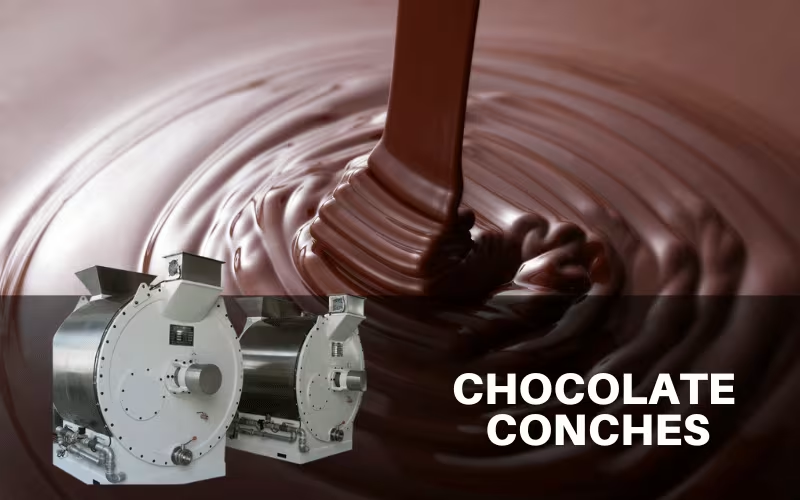
Chocolate conches are central to food industries where precise mixing, flavor development, and efficiency are essential.
In artisan chocolate production, craft makers rely heavily on small-scale conches. These machines allow artisans to create premium, small-batch chocolates by carefully monitoring extended conching times to draw out the unique flavor notes of specialty cocoa beans.
For industrial chocolate manufacturing, massive rotary conches process several tons of chocolate mass simultaneously. They integrate directly into large-scale production lines, supplying the necessary volume of smooth chocolate base for manufacturing mass-market candy bars, baked goods, and affordable confectionery products.
Furthermore, conches play a vital role in producing specialty chocolate products. Manufacturers adjust the conching parameters to perfect the unique textures and subtle aromatic profiles required for high-end single-origin chocolates, organic selections, and delicately flavored truffle coatings.
Conclusion
Chocolate conches are advanced processing tools that provide unmatched control, flexibility, and scalability in confectionery manufacturing. Whether used in artisan boutique shops or massive industrial factories, they deliver consistent results, perfect the product’s texture, and ensure superior flavor development. By understanding the different types of chocolate conches, their applications across the industry, and the benefits they offer, manufacturers can select the right configuration to optimize their production efficiency and product quality. Invest in the ideal conching equipment to elevate your chocolate manufacturing today. Explore advanced chocolate conche solutions perfectly tailored to meet your unique production requirements.