
Most buyers searching this term aren’t starting from scratch. They already make chocolate bars—manually, in small batches, or on a line that’s no longer keeping pace—and they need to know whether the next equipment decision will actually solve the problem or just create a more expensive version of it.
The machine you choose affects three things that compound over time: product quality (gloss, snap, shelf life), throughput, and the labor cost to sustain both. Get the fit wrong, and none of those improve much, regardless of what the spec sheet said.
This guide covers what chocolate bar-making machines do, how they differ by scale, which features actually drive results, how the production process works, and how to choose without buying the wrong number.
What Is a Chocolate Bar Making Machine?
A chocolate bar-making machine is equipment—either a single unit or an integrated system—that takes finished, flowable chocolate and turns it into molded, solid bars ready for wrapping. That’s the boundary: it starts where good chocolate already exists.
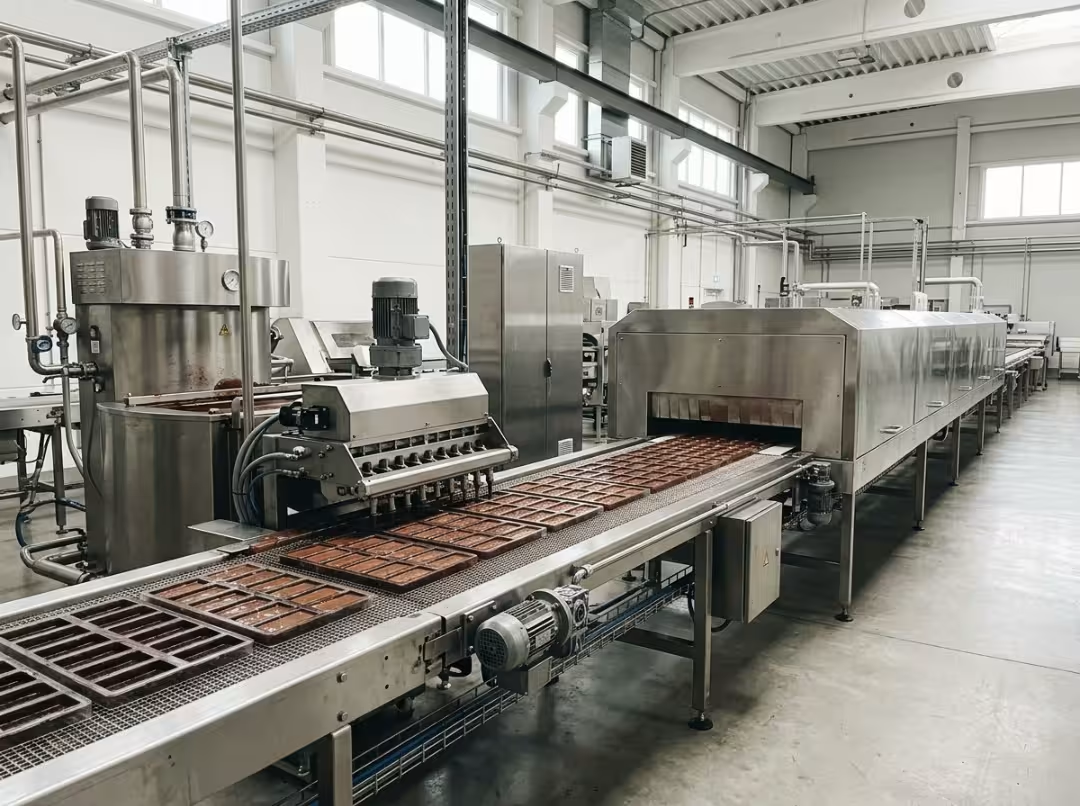
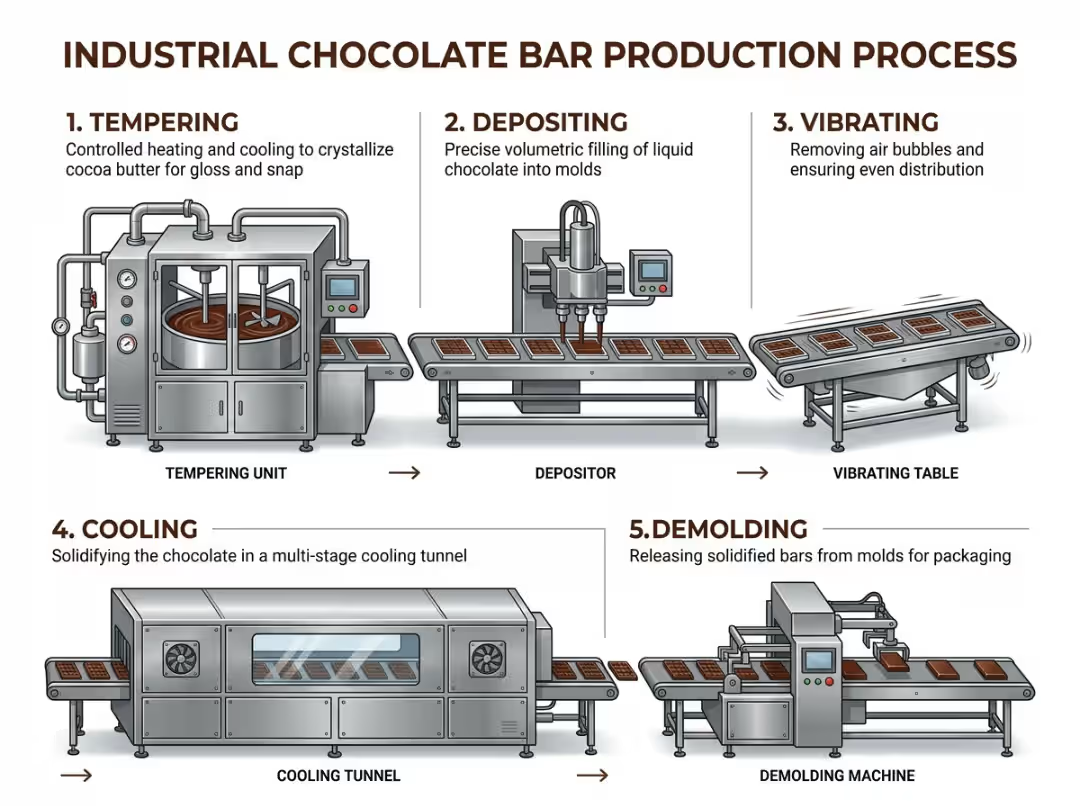
The range is genuinely wide. At the small end, a tabletop unit tempers and molds in the same compact footprint. At the large end, a full chocolate moulding line tempers, deposits, vibrates, cools, and demolds automatically before handing bars off to packaging. Both qualify as “chocolate bar making machines” depending on scale and context.
End products include solid bars, filled bars with liquid or soft centers, bars with inclusions like nuts or crisped rice, and private-label tablets.
What the machine does not cover is equally worth clarifying. Bean roasting, grinding, refining, and conching are upstream processes that produce the flowable chocolate the bar machine needs as its input. That work happens separately—on equipment such as a chocolate refiner and a conche. Buyers sometimes conflate the two, which leads to misaligned quotes and unexpected gaps in a production setup.
What Are the Main Types of Chocolate Bar Making Machines?
Scale is the most practical way to categorize these machines, and most buyers can place themselves accurately within a few minutes.
Small-scale and artisan units
Tabletop tempering-and-molding units, producing tens of kilograms per day. Tempering and molding occur in a single compact machine; labor handles mold filling, cooling cabinet management, and demolding. The setup is forgiving, affordable, and easy to adapt when a recipe changes.
This tier fits chocolatiers, cafés, R&D teams, and small brands proving a product before committing to larger equipment. The signal that it’s been outgrown is usually subtle: mold handling and cooling cycles start consuming daily capacity rather than expanding it.
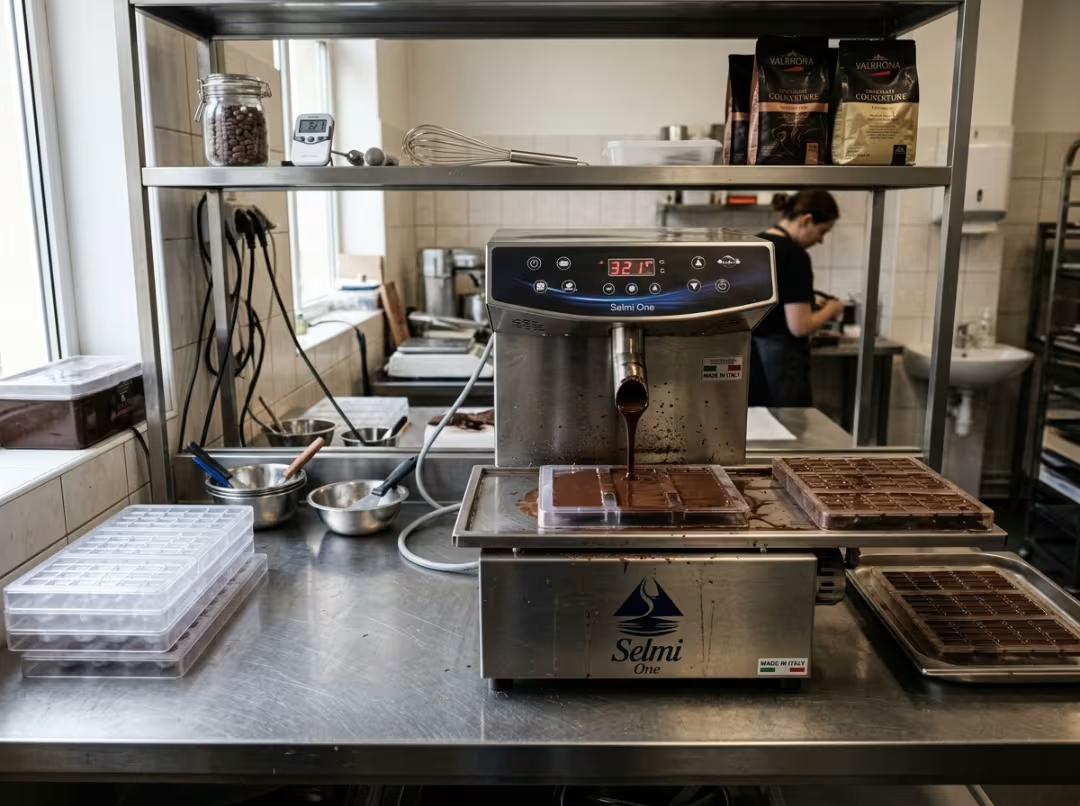
Mid-size semi-automated systems
A dedicated chocolate tempering machine paired with a chocolate depositor and a cooling tunnel. Output reaches into the hundreds of kilograms per day. Operators still load and transfer molds, so labor remains part of the equation—but throughput and consistency are considerably higher than at the tabletop level.
This tier suits growing brands and regional producers who need reliable volume without the full cost and complexity of an automated line. The trade-off is that labor coordination eventually becomes the limiting factor, and when it does, the case for a more automated setup changes quickly.
Fully automated industrial lines
An integrated chocolate moulding line that manages mold warming, depositing, vibrating, cooling, demolding, and transfer to packaging without operator intervention at each step. Capacity ranges from hundreds of kilograms to several tons per day.
Labor cost per bar drops substantially. Upfront investment rises substantially. The line also demands trained operators and an active maintenance program to sustain that performance. This tier is appropriate for industrial manufacturers and contract producers running high volumes across multiple formats.
|
Tier |
Typical Capacity |
Automation Level |
Best-Fit User |
|---|---|---|---|
|
Small / artisan |
Tens of kg/day |
Manual to semi |
Chocolatiers, cafés, R&D, small brands |
|
Mid-size |
Hundreds of kg/day |
Semi-automated |
Growing brands, regional producers |
|
Industrial line |
Hundreds of kg to multiple tons/day |
Fully automated |
Industrial and contract manufacturers |
One pattern comes up consistently: buyers tend to overbuy capacity and underbuy flexibility. A line sized for a number you might reach in five years often sits half-idle while struggling to handle the product variety customers are asking for now. Size for the next two to three years, and treat format flexibility as a real specification—not an afterthought.
The Features That Actually Matter Most
Brochure specs can make very different machines look equivalent on paper. These are the features that genuinely separate a line that produces glossy, shelf-stable bars from one that generates bloom, rejects, and troubleshooting calls.
Tempering system: batch vs. continuous
Tempering is where bar quality is set. Everything downstream builds on what this stage produces, which makes it the wrong place to compromise.
Batch tempering processes chocolate in defined quantities. It’s forgiving, easier to control across varied recipes, and well-suited to operations that regularly switch between dark, milk, and white chocolate. Continuous tempering feeds a steady stream of conditioned chocolate to the depositor—what sustained high-volume output requires.
Buyers often compare machine capacities before confirming that the tempering mode matches their actual production patterns. A continuous system running short batches of multiple recipes wastes transition time. A batch system trying to sustain industrial-volume output will always be the bottleneck. Match the tempering mode to how the line will actually run, not to how you hope it will.
Depositing and molding accuracy
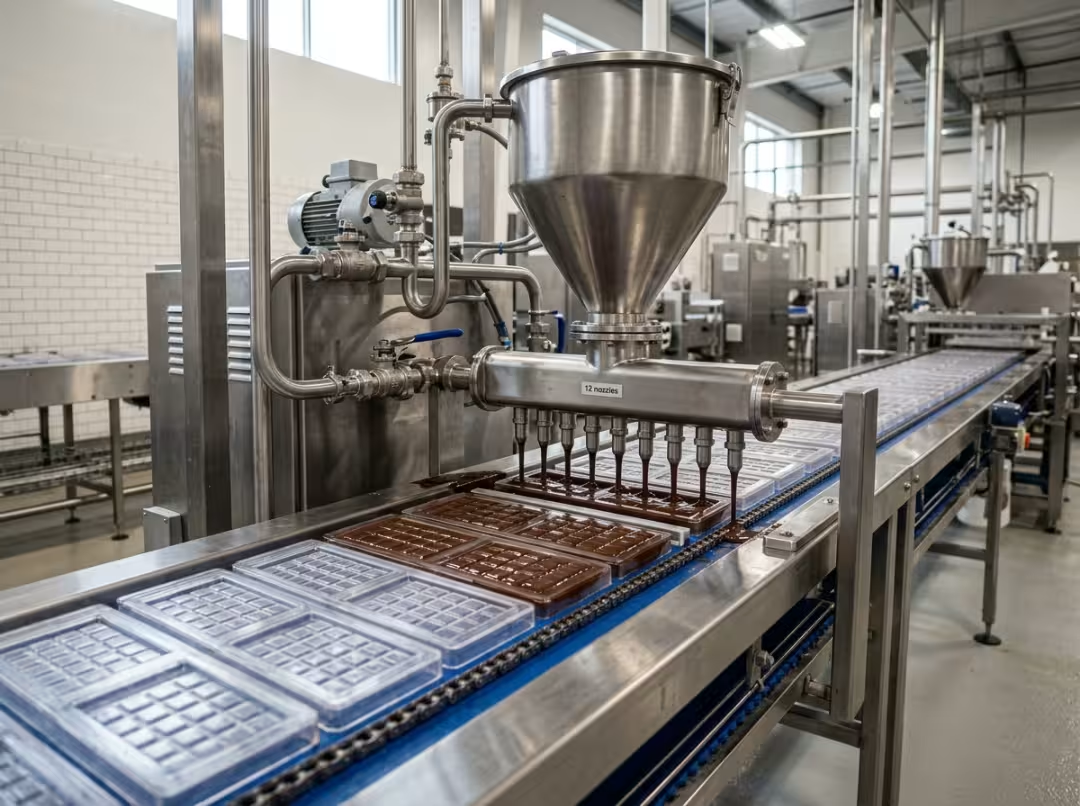
The depositor controls how much chocolate enters each mold cavity. Consistent volumetric dosing drives even bar weight, which matters for cost control, labeling compliance, and customer perception.
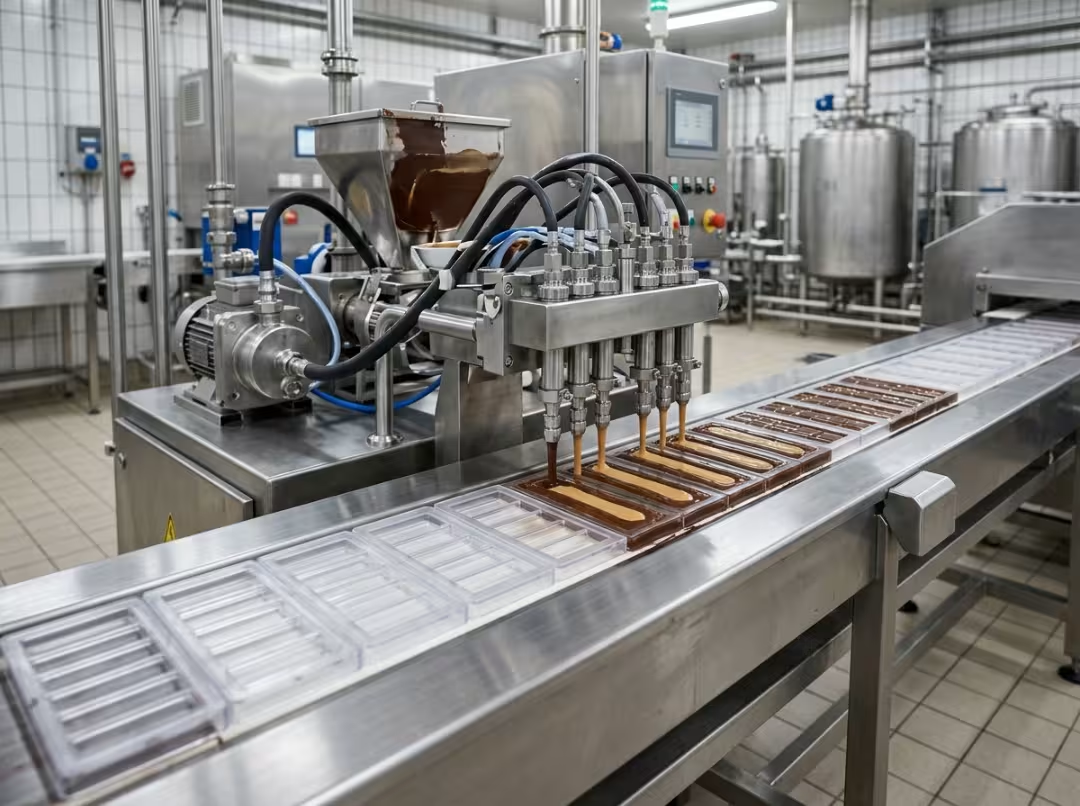
If filled bars are part of the product range—now or in the future—one-shot capability matters. A one-shot depositor places shell and filling in a single coordinated pass rather than two separate steps, improving both efficiency and shell-to-filling registration. One-shot capability should be specified from the start. It is not a straightforward retrofit after a line is installed.
Interchangeable molds determine how quickly you can switch formats. A machine that technically accepts multiple mold types but requires hours of changeover between them is less flexible than it appears.
Cooling performance
Cooling is where quality is either secured or quietly lost. Most buyers underestimate it relative to the depositor, which is the more visible and more actively marketed component.
A cooling tunnel that properly manages dwell time, airflow, and temperature zones allows chocolate to contract evenly and release cleanly from molds. Push cooling too hard or run it unevenly, and the consequences are bloom, dull surfaces, stress cracks, and demolding failures—all of which trace back to this stage, not to the chocolate itself.
In practice, the cooling tunnel is often the actual throughput ceiling on a line. A fast depositor feeding an undersized tunnel doesn’t produce more output—it produces more rejects. The cooling section deserves as much scrutiny in any equipment comparison as the depositing section does.
Demolding reliability
Bars sticking or breaking at demolding is almost never a demolding problem. It signals that tempering or cooling wasn’t right earlier in the process. A line where both are dialed in makes demolding uneventful. When demolding isn’t uneventful, look upstream first.
Mold condition matters too. Worn or scratched polycarbonate molds release less cleanly over time, and the effect compounds if mold maintenance isn’t part of the routine.
Controls and repeatability
PLC and HMI controls with recipe storage turn a result that worked once into one that works every time. An operator who loads saved parameters—temperature curves, depositing volumes, cooling settings—produces the same bar on a Monday morning as a skilled technician did during initial commissioning.
Without that repeatability, quality depends on whoever is running the machine that shift. At small scale, that’s manageable. As volume and SKU count grow, it becomes an operational liability.
Sanitary design and cleanability
Food-grade stainless steel is the baseline, not a differentiator. What actually varies between machines is how accessible the chocolate-contact surfaces are for cleaning and whether the design supports fast allergen changeovers.
A machine with hard-to-reach nozzles, drainage dead zones, or disassembly that takes hours will cost more in labor and downtime than a better-designed alternative—even if the purchase price was lower. Ask to see the cleaning procedure before buying, not after.
The best machine for any operation is the one where no single feature is the weak link. A strong depositor paired with a marginal cooling tunnel, or a sophisticated control system paired with surfaces that can’t be properly cleaned, will underperform relative to a more balanced choice.
How Does the Chocolate Bar Process Work?
Understanding where the machine fits within the overall process clarifies why certain specifications matter more than others.
Upstream preparation
The chocolate that reaches a bar line has already been refined and conched. Refining reduces particle size to a level the palate reads as smooth—typically 18–25 microns. Conching develops flavor and removes off-notes. This work happens on separate upstream equipment; the bar machine starts with finished, flowable chocolate as its input. Texture and flavor problems that originate upstream cannot be corrected at the bar stage.
Tempering
Tempering brings cocoa butter into stable Form V crystals by cycling chocolate through a controlled temperature curve: full melt, controlled cool to seed crystallization, then a slight reheat to working temperature. The specific setpoints vary by chocolate type—dark, milk, and white each require different curves.
Done correctly, this stage produces gloss, snap, and bloom resistance in every bar. Done poorly, it produces dull surfaces, soft texture, and bloom that appears days or weeks after production—sometimes after bars have already been packed and dispatched. There is no downstream fix for a tempering failure.
Depositing, vibrating, and molding
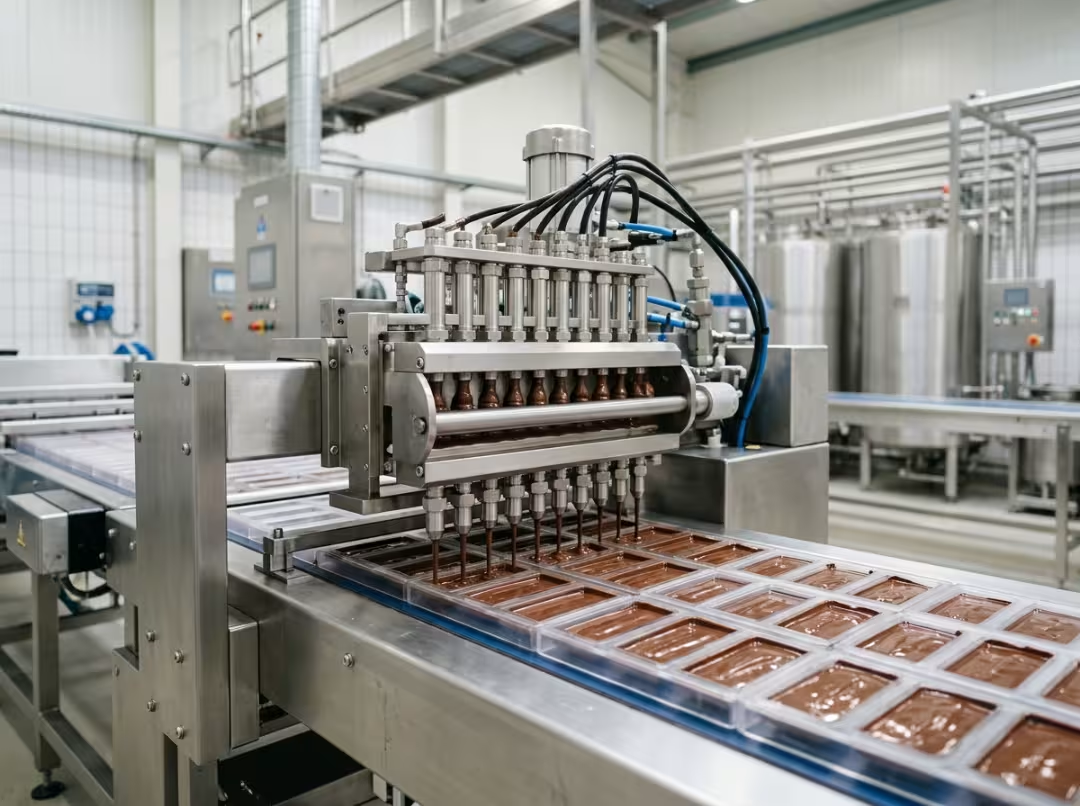
Tempered chocolate is deposited into pre-warmed molds in controlled volumes. For solid bars, this is a single deposit. For filled bars, a one-shot system places shell and filling together in one pass.
After depositing, molds pass over a vibration table that shakes out trapped air—the same air that would otherwise appear as bubbles or surface pitting on the finished bar. Variations in vibration intensity or duration have a direct, visible effect on surface quality. This step is frequently underestimated.
Cooling and demolding
Filled molds move through a cooling tunnel. As the chocolate sets, it contracts slightly and draws away from the mold walls—which is what enables clean release. When cooling is too fast, too cold, or uneven, that contraction is disrupted and bars crack, stick, or demold with surface defects.
Cooling done right is largely invisible: bars come out clean, the line runs, and no one talks about it. When cooling is done wrong, it becomes the dominant topic of conversation in every production meeting.
Wrapping and QC
Finished bars are flow-wrapped or foil-wrapped, then checked for weight, appearance, and foreign materials before release. Most visible defects at this stage—surface spots, pitting, poor gloss—trace back to tempering, vibration, or cooling, not to the chocolate formula.
How to Choose the Right Chocolate Bar Making Machine
This is a matching problem, not a ranking problem. The right machine isn’t necessarily the most capable one—it’s the one that fits how you actually produce.
Start with your real output target
Current daily or weekly volume plus a two-to-three-year projection based on actual sales trends—not the number you’d like to hit. This figure determines which tier applies before any other factor comes into play.
Undershooting leads you to buy again sooner than expected. Overshooting means paying for capacity the business can’t yet feed, which compounds into higher maintenance costs and lower utilization for the life of the machine.
Choose based on product range
This is the single most consequential specification decision. A producer running solid bars only needs a very different setup from one running solid bars, filled bars, and seasonal inclusion formats on the same line.
Filled bars require one-shot depositing. Inclusion bars require different feeder and conveyor configurations. Frequent format changes require fast changeover design throughout the line, not just at the depositor. These requirements don’t adjust a feature or two—they change the machine class. Define the product range honestly before evaluating equipment.
Match automation to your labor reality
High automation lowers labor costs per bar and improves consistency, but it also raises capital costs and demands operators who can run and maintain more complex systems. If skilled technical labor is reliably available in your region, the payback on automation often works well. If it isn’t, a highly automated line can underperform simply because no one on site can manage it properly.
A semi-automated setup with competent operators often outperforms a fully automated one that’s chronically misunderstood. Automation should match the technical capability of the team running it, not just the volume target.
Check floor space and utilities early
This step eliminates more options than buyers expect. Confirm the full line footprint—including the cooling tunnel, which is often the longest single component. Check power supply capacity, cooling water availability, compressed air, and airflow. These constraints are fixed once you’re on site. The machine specs are not.
Budget for total cost of ownership
The purchase price is the number that gets negotiated. The operating costs—reject rate, energy consumption, maintenance, spare parts, and downtime—are what actually determine the economics over the machine’s life. A lower-cost machine with a persistently high reject rate or heavy energy draw will often cost more over three years than the alternative that looked expensive at purchase.
For overseas buyers, spare parts lead times deserve specific attention. A machine that sits idle for weeks waiting for a replacement part has a very different true cost from one where parts arrive in days.
Vet the supplier, not just the machine
Installation, commissioning, and operator training are where many purchases succeed or fail. Ask specifically what is included and what isn’t. Confirm service response times and whether remote support is available. Find out how quickly spare parts can be sourced and delivered to your location.
Most importantly, request a trial run using your own chocolate recipe before finalizing the purchase. Watching your specific product come off the line under production conditions tells you far more than factory demonstrations using standardized test material.
Common Problems in Real Production
Most production problems trace back to a small set of root causes. Knowing them helps you diagnose issues quickly and evaluate equipment before you commit.
White spots and bloom. Almost always tempering, cooling, or storage. Fat bloom results from unstable cocoa butter crystallization—usually due to poor tempering or temperature fluctuations during storage. Sugar bloom comes from moisture contact. Check tempering settings and cooling conditions before assuming the chocolate is at fault.
Air bubbles and poor surface finish. Typically insufficient vibration or chocolate that is too viscous at the point of depositing. Adjust vibration intensity and duration, and confirm the chocolate is at the correct working temperature and fluidity. Viscosity and vibration are the first places to look.
Bars sticking in molds. Check in this order: tempering, cooling, then mold condition. Sticking is rarely a mold problem first. Worn or scratched molds do cause sticking, but only after tempering and cooling have been ruled out.
Weight variation. Almost always a depositor calibration issue or inconsistent chocolate temperature and viscosity at the depositor inlet. A calibrated depositor fed with stable chocolate will hold weight tightly. Variation that resists depositor adjustment usually means the chocolate supply to the depositor is the real problem.
Cleaning and changeover problems. When cleaning regularly takes far longer than it should—or allergen changeovers create compliance risk—that is usually a design issue, not an operator one. It’s exactly the kind of problem that doesn’t show up in a brochure and only becomes visible in daily use. Another reason to see the machine being cleaned before you commit.
Where These Machines Make the Most Sense
Small-batch and artisan producers. Cafés, bean-to-bar makers, and R&D teams get the most value from tabletop setups where recipe flexibility and low entry cost matter more than output volume. The equipment earns its keep through versatility, not throughput.
Growing brands and mid-volume producers. A semi-automated line—tempering machine, depositor, cooling tunnel—is usually the right step up for operations whose demand is real and growing but not yet at industrial scale. It improves consistency and output without committing to full automation before the volume would justify it.
Industrial and contract manufacturers. Fully automated molding lines earn their cost through sustained high output and fast changeovers between products, molds, and formats. At tonnage-level volumes with multiple SKUs, labor-intensive approaches simply can’t compete on economics.
Frequently Asked Questions
How much does a chocolate bar making machine cost?
There is no useful answer without first fixing three variables: target output, product format, and automation level. A tabletop unit and a fully automated industrial line sit in entirely different price ranges, and configurations in between vary widely based on those inputs. A quote tailored to your specific requirements is the only figure that matters.
Can one machine make both solid and filled bars?
Yes, if it includes one-shot depositing capability—which should be specified from the start. A line designed for solid bars is not easily or cheaply converted to filled production afterward. If filled bars are even a medium-term possibility, plan for one-shot capability now rather than treating it as an upgrade later.
Do I need a cooling tunnel at small scale?
Not always. Many small tabletop setups use a cooling cabinet or a well-controlled ambient environment. A dedicated tunnel becomes genuinely necessary once consistent throughput and cooling uniformity matter more than the flexibility of manual handling—typically when production shifts from batches to a semi-continuous flow.
What’s the difference between a tempering machine and a bar making machine?
A tempering machine does one thing: conditions chocolate into stable crystal form. A chocolate bar making machine—or line—uses tempered chocolate as its starting point and then deposits, vibrates, cools, and demolds it into finished bars. At the small end, some tabletop units combine both functions in a single body.
How many bars per hour can a small machine produce?
Small tabletop setups are constrained less by chocolate flow rate and more by mold handling and cooling cycle time. Output is typically measured in kilograms per day rather than bars per hour, and the main variables are bar size, the number of molds in rotation, and how quickly they cycle through cooling.
What causes white spots on finished bars?
White spots are bloom. Fat bloom—the more common type—traces to unstable cocoa butter crystallization from poor tempering or temperature swings after the bar is made. Sugar bloom comes from moisture and is less common in controlled production environments. In both cases, the fix is upstream: correct the tempering curve and control storage conditions rather than adjusting the chocolate recipe.
Choosing the Right Setup
The right chocolate bar making machine is not a ranking exercise. It’s a matching exercise—between output, product range, automation level, and the actual conditions of the operation running it.
Three things decide bar quality above everything else: consistent tempering, accurate depositing, and controlled cooling. Any reliable line keeps all three strong simultaneously. Buyers usually run into trouble by underspeccing one of the three—most often cooling—while focusing on the components that appear more prominently in supplier presentations.
Before approaching any supplier, define your realistic output target, your actual product range, and the SKU complexity you plan to run. With those three inputs clear, equipment comparisons become more meaningful and conversations with suppliers become more productive. Then request a trial run with your own recipe before signing anything.