
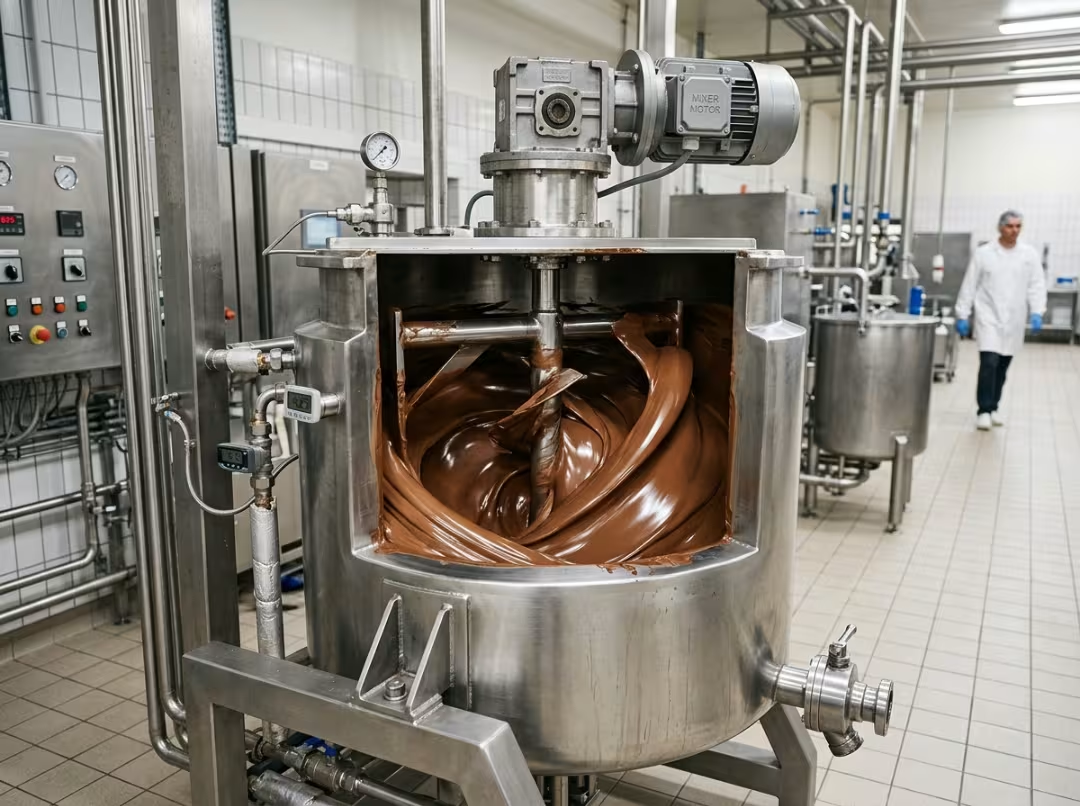
The wrong machine rarely announces itself on the spec sheet. It shows up three months later in scorched batches, two-hour clean-downs, or bars that bloom within days of leaving the mold. Most buyers who end up there didn’t choose badly — they chose on the wrong criteria. Capacity. Price. A familiar brand name. They skipped the questions that actually decide whether a machine performs well over years of daily use.
This guide addresses those questions directly: what a melting machine does and what it can’t, which configuration suits your workflow, the features that determine real-world performance, how to size capacity without guessing, and where common purchasing decisions go wrong. If you’re unsure whether you need a melter or a tempering machine, the answer is in here too.
What an Industrial Chocolate Melting Machine Does — and Doesn’t
An industrial chocolate melting machine turns solid chocolate or couverture into a smooth, flowable liquid and holds it in a usable state. It applies controlled heat — typically through a water jacket — combined with continuous agitation to melt chocolate evenly and keep it stable for whatever comes next in your process.
Three terms get conflated constantly, and the confusion costs real money:
- Melting brings solid chocolate into a fluid state, typically between 40°C and 50°C, depending on the chocolate type.
- Holding keeps already-melted chocolate at a stable working temperature for hours or days, with gentle agitation to prevent cocoa solids from settling and cocoa butter from separating.
- Tempering is a controlled heating-and-cooling cycle that builds stable Type V cocoa butter crystals — the structure responsible for a glossy surface, a clean snap, and reliable mold release.
A melting machine handles the first two. It does not temper. That gap is where the category’s most expensive mistake happens. A producer who needs glossy molded bars but buys a plain melter ends up with dull, soft chocolate that blooms quickly — and eventually buys tempering equipment anyway, at full cost, having gained nothing from the first purchase.
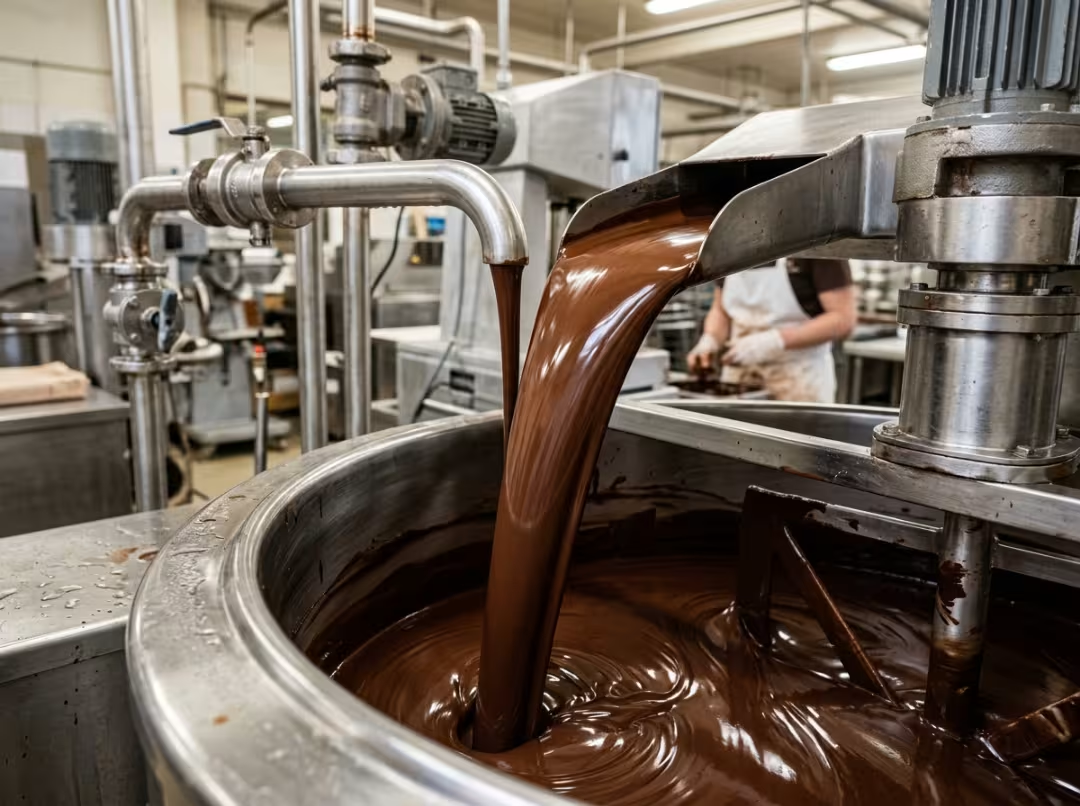
Clarify the function before you compare anything else. If your process only requires melting and holding chocolate before it moves downstream, a chocolate melting and storage tank is the right starting point. If your finished product depends on crystal structure — gloss, snap, clean release from molds — go straight to the tempering section before evaluating anything.
Which Type of Chocolate Melting Machine Fits Your Workflow?
The right machine type follows from how you actually produce, not from how large you plan to grow or how low a price you can find. Four configurations cover most commercial operations, each suited to a different set of production realities.
Batch melters
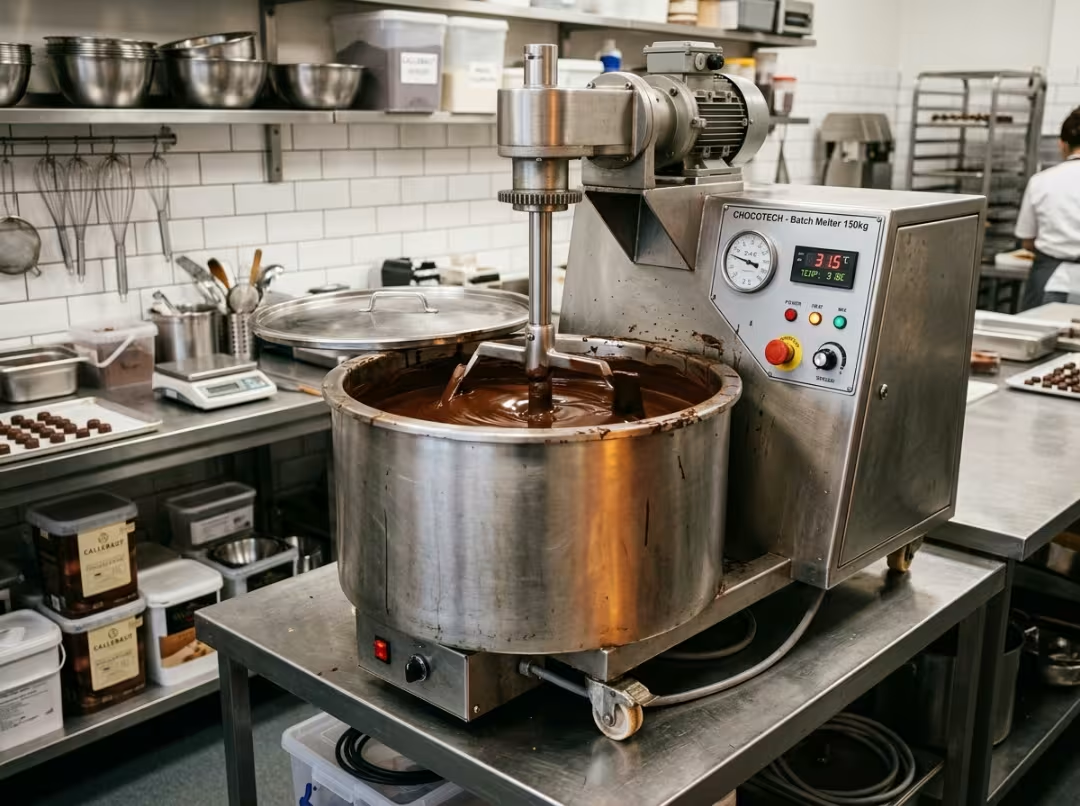
A batch melter handles one defined load at a time: load, melt, use, clean, repeat. The simplicity is the point. Batch systems are affordable, flexible, and easy to switch between recipes or chocolate types. For artisan producers, bakeries, and growing confectioners running a variety of products, that flexibility often matters more than raw throughput.
The constraint is output speed. Between batches is downtime for loading, melting, and cleaning. At high volume, running a single product all day, that gap becomes a bottleneck fast. For most producers who aren’t yet at that scale, batch melting is the practical starting point — and often stays the right answer longer than buyers expect.
Continuous melting systems
Continuous systems feed solid chocolate in one end and deliver a steady flow of melted chocolate from the other, without stopping between cycles. They suit high-volume operations that run the same product across long shifts, where downtime has a measurable cost.
The investment — upfront and in installation — is substantially higher than batch alternatives. That cost only pays off when volume is high, consistent, and predictable. If your product mix changes often or demand fluctuates seasonally, a continuous system sits idle through its most expensive hours. Choose it when continuous, high-throughput output justifies the infrastructure.
Jacketed tank melters
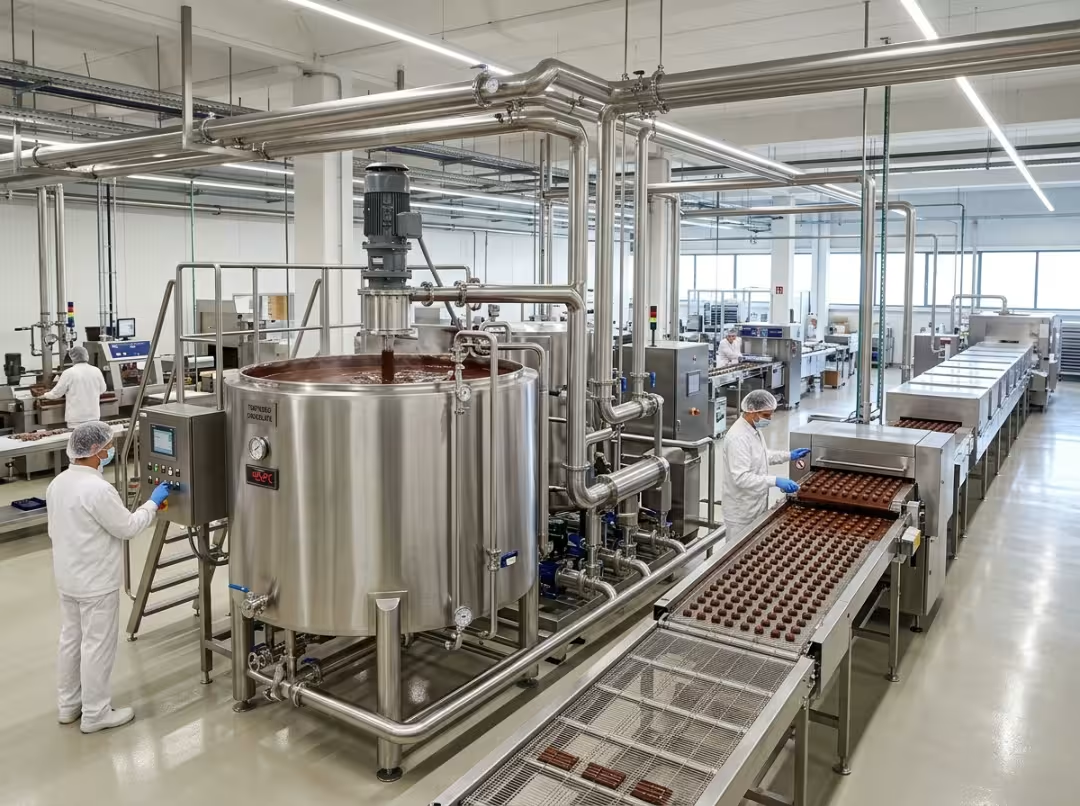
Jacketed tanks heat chocolate through a surrounding water jacket, distributing heat gently and evenly without the hot spots that direct sunlight creates. Combined with slow-turning wall-scraper agitators, they melt chocolate and hold it uniformly for extended periods — hours or days if needed.
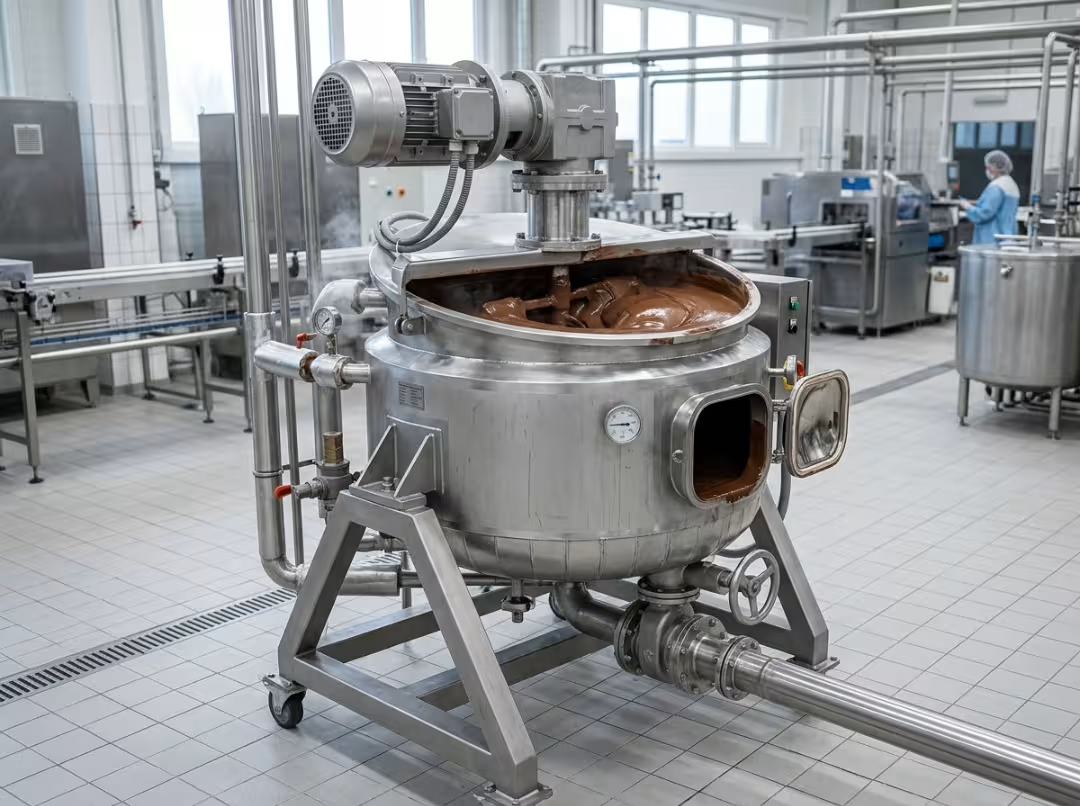
This makes them the operational backbone of most commercial chocolate setups. A jacketed tank sits at the center of many lines, keeping chocolate pumpable and consistent across process stages such as refining, conching, molding, and enrobing. They scale from relatively small volumes to very large capacities, and they’re reliable precisely because they do a bounded job exceptionally well.
Combined melting–tempering units
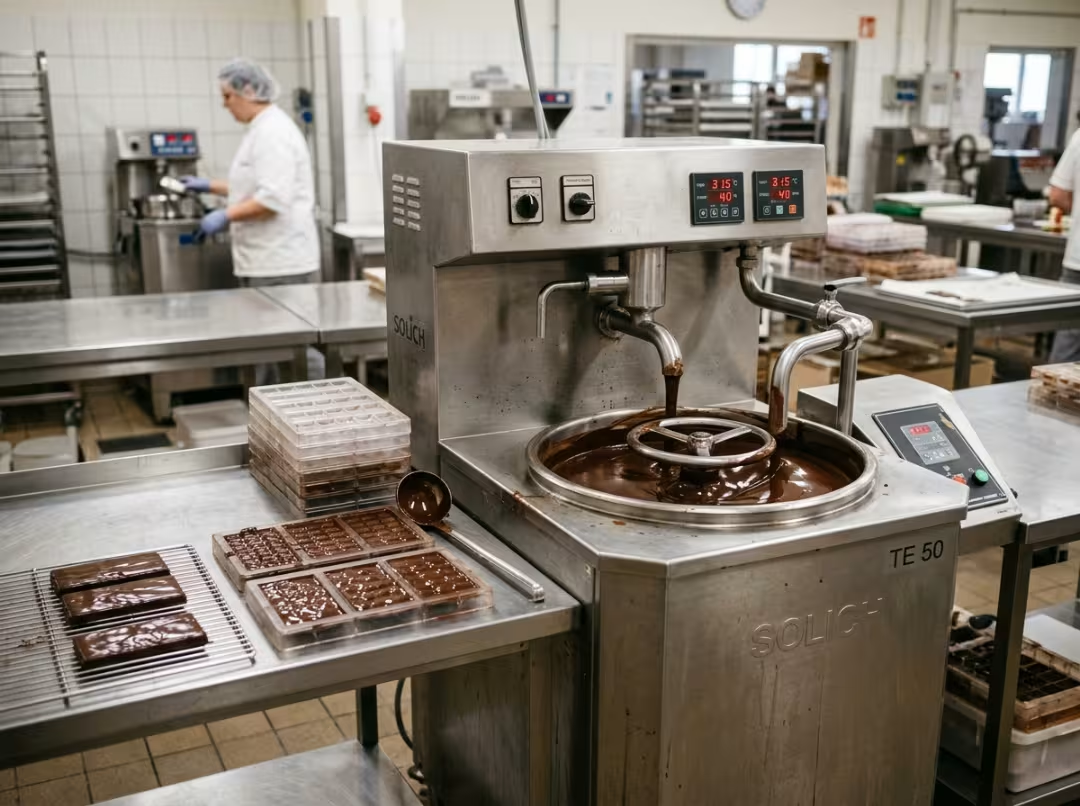
Combined units melt, temper, and often mold or coat in a single machine. For producers whose finished product genuinely requires tempered chocolate — molded bars, filled pralines, enrobed confections — these units eliminate the cost and complexity of separate equipment.
The trade-off is batch size and specialization. A machine like the TTJ40 tempering and moulding machine excels at boutique and small-batch output but isn’t built to hold the volumes a dedicated storage tank manages. For producers who need tempered output at modest scale in a compact footprint, the all-in-one approach usually makes sense both financially and operationally.
Machine type comparison
|
Machine type |
Best-suited workflow |
Typical output |
Key trade-off |
|---|---|---|---|
|
Batch melter |
Varied products, frequent changeovers, moderate volume |
Small to medium, per batch |
Downtime between batches limits throughput |
|
Continuous melting system |
High-volume, single-product lines |
High, ongoing flow |
High cost; inefficient when demand is variable |
|
Jacketed kettle / tank melter |
Melting and holding before downstream steps |
50L to 5,000L+ |
Doesn’t temper; optimized for holding, not high-speed melting |
|
Combined melting–tempering unit |
Tempered molded or coated output at small scale |
~20–50L per batch |
Limited holding capacity; specialized use |
Key Buying Features That Matter More Than Capacity
Capacity is the number buyers compare first and rely on most heavily. It’s also rarely the deciding factor in whether a machine performs well across years of daily use. A larger tank with imprecise temperature control or a difficult-to-clean interior will underperform a smaller, well-built machine every single day it runs. These five criteria are where real performance differences live.
Temperature control accuracy
Chocolate is unforgiving about heat. Overheat it and you scorch flavor, destabilize the emulsion, or trigger premature crystallization. Hold it too cool, and it thickens, loses flow, and clogs downstream equipment. A capable machine maintains chocolate steadily within its target holding window — typically 40–45°C — without the swings that require repeated manual correction and waste time.
Look for a control system that monitors both the heating medium and the chocolate itself, then adjusts automatically. Water-jacket heating is generally more reliable than direct electric elements because it distributes heat across the entire vessel surface rather than concentrating it at specific contact points. Consistent, responsive temperature control is what separates a machine that runs itself from one that demands constant supervision.
Construction and food-safety quality
A melting machine is food-contact equipment. Build quality is a food-safety issue before it’s a durability argument. Food-grade stainless steel is the standard: SUS304 covers most chocolate applications, while 316L offers better corrosion resistance in more demanding environments.
Beyond steel grade, look for hygienic design — smooth, fully penetrated welds with no crevices where chocolate can trap and degrade, product-contact surfaces accessible for cleaning and visual inspection, and CE certification confirming the machine meets recognized manufacturing and safety standards. Well-built stainless construction also lasts longer and cleans faster. This feature quietly returns value for the machine’s entire working life.
Agitation
Chocolate is an emulsion. Left undisturbed, it separates — solids settle, fat rises, and the mass becomes uneven in both texture and temperature. Continuous, gentle agitation is what keeps it stable across hours of holding.
The most effective systems use slow-turning agitators with wall-scraping blades that continuously wipe the vessel surface. This prevents chocolate from caking against warm walls and ensures the batch stays uniform from the first pour to the last. A tank that skimps on agitation quality results in more frequent manual intervention, shorter hold times, and greater product variability — all of which cost more than the spec sheet suggests.
Cleanability
Cleaning reveals the true cost of a cheap machine faster than anything else. Every slow clean-down is lost production time. Every incomplete drain is wasted chocolate. Every crevice that doesn’t flush clean is a cross-contamination risk the next time you switch between dark, milk, and white chocolate, or between real chocolate and compound coatings.
The designs that clean fastest share specific features: removable agitators and scrapers, smooth, seamless interiors, sloped or conical bottoms that drain completely, and access ports wide enough for inspection. Before buying, ask the supplier for a realistic changeover time under actual production conditions — not best-case figures. That number reflects daily operational cost more accurately than any listed specification.
Installation requirements
A melting machine must operate inside your facility. Confirming the practical requirements before purchase prevents the expensive surprises that arrive with the delivery truck:
- Power: voltage, phase configuration, and total draw. Larger tanks demand more — a 5,000L tank may require 27kW of heating capacity. Single-phase versus three-phase wiring matters and may require dedicated electrical work.
- Footprint: floor area plus clearance for loading, access during operation, and cleaning. Measure both dimensions.
- Utilities: jacketed systems need water supply and drainage; confirm what’s available on your production floor.
- Ventilation: adequate airflow around the equipment for consistent, safe operation.
These details are straightforward to request from any supplier. They are also easy to skip — and the cost of skipping them arrives after you’ve already paid.
How to Size Capacity for Real Production
Capacity misjudgment is among the most common and consequential errors in this category. Buy too large, and you heat chocolate you don’t use, occupy floor space unnecessarily, and clean a bigger vessel for no production gain. Buy too small, and a modest increase in demand throttles output before you can respond.
The fix is working from actual numbers rather than estimates, ambitions, or single worst-case scenarios. Four questions structure the calculation:
- Daily output. How many kilograms of chocolate do you process on a normal production day?
- Batch frequency. How many separate runs or product changeovers do you complete each day, and how long does each changeover take?
- Peak demand. What does a genuinely busy period look like, and how long does it last? A six-week seasonal spike warrants a different answer than an occasional heavy day.
- Holding time. How long does chocolate need to remain at working temperature before moving to the next stage? Longer holds favor larger jacketed tanks with reliable agitation throughout.
Worked example
A mid-sized confectioner processes 300 kg of chocolate daily across three product runs. During six peak weeks, daily volume climbs to 450 kg.
- Typical batch size: 300 ÷ 3 = 100 kg
- Peak batch size: 450 ÷ 3 = 150 kg
Sizing for the 100 kg average leaves peak season unworkable. Sizing for the full 450 kg peak means a substantially oversized tank running at a fraction of capacity for most of the year. A practical answer usually lands around comfortable handling of the 150 kg peak batch — or a core tank supplemented by additional flexible capacity for the weeks when it’s actually needed. Batch frequency and holding time refine the final number as much as the daily kilogram total does.
Multi-machine setups
At scale, one tank rarely handles everything well. Many operations use a melting or holding tank as the core, moving chocolate to downstream equipment through heated lines and chocolate delivery pumps. Pumps feed molding lines, enrobers, or tempering machines from a central hold, keeping chocolate from ever sitting idle or cooling in transfer. This approach lets you size each machine for its specific role rather than forcing a single unit to absorb every function — and it typically costs less overall than a single oversized machine attempting to do it all.
Total Cost of Ownership: What the Price Tag Doesn’t Include
The purchase price is typically the smallest number you’ll spend over a machine’s working life. Every cost that follows — installation, operation, labor, repairs, wasted product — accumulates over the years, and the gap between a “cheap” machine and a well-built one often completely reverses within the first year or two of daily use.
Run a real comparison against these factors before finalizing any purchase:
- Installation: electrical work, plumbing, ventilation, and commissioning. Overseas buyers should confirm before signing whether installation support is included or billed separately.
- Power consumption: heating chocolate runs continuously. Insulated, water-jacketed designs retain heat better and cost measurably less to run year over year compared to poorly insulated alternatives.
- Labor: how many operators the machine requires, and how many hours per shift go to cleaning, changeovers, and correcting temperature inconsistency.
- Cleaning downtime: an hour spent cleaning is an hour not producing. A machine that takes twice as long to clean costs twice as much in lost output, every day it operates.
- Spare parts and service: parts availability, lead times, and what happens when something fails mid-shift. Manufacturer support — especially for overseas buyers — is a material operational cost factor, not a footnote.
- Chocolate yield: a machine that scorches the product against heating elements or doesn’t fully drain wastes expensive chocolate in every batch. Over a full year, that waste is significant.
Evaluate the total, not the tag. When comparing suppliers, ask specific questions about what support looks like after the sale — overseas installation, training, and spare-part lead times are where the real cost differences between suppliers lie.
When You Actually Need a Tempering Machine
Some buyers reach this point and recognize the machine they’ve been evaluating was never the right fit. The signals are specific:
- You produce glossy molded bars that must release cleanly from molds with a bright, even surface.
- You need stable shell formation for filled chocolates, pralines, or hollow figures.
- You make enrobed products — coated biscuits, truffles, nuts — that must set with a clean snap and remain stable in storage and transit.
A melting machine holds chocolate liquid and stable. It cannot produce the stable Type V cocoa butter crystal structure those products depend on. Without proper tempering, molded chocolate sets dull, soft, and prone to bloom — regardless of how precise the melting temperature was. The problem isn’t heat control. It’s crystal structure, and no melting machine addresses it.
If those product requirements describe your line, a combined melting-and-tempering unit or a dedicated tempering machine is the right starting point — not a fallback. A machine like the TTJ40 tempering and moulding machine handles melting, tempering, and molding or coating in one compact footprint, which makes it practical for producers who need properly tempered output without building a full-scale line around it.
Common Buying Mistakes
Most purchasing errors in this category are predictable. Check each of these before you commit:
- Buying on capacity alone. A large tank with poor temperature control or a slow clean-down consistently underperforms a smaller, better-built machine. Capacity is one variable among several — often not the most important one.
- Confusing a melter with a tempering machine. The costliest single mistake in this category. If shine, snap, and clean mold release define your product, a melter alone cannot deliver them — full stop.
- Underestimating the cost of cleaning. Cleaning is permanent daily overhead. A machine that’s slow or difficult to clean degrades productivity, increases the risk of contamination, and compounds the cost every day of its working life.
- Missing installation requirements. Power draw, phase configuration, footprint, and utility connections all carry specific demands. Discovering incompatibilities after delivery means expensive fixes that were entirely avoidable.
- Assuming all chocolate behaves the same. Dark, milk, white, and compound coatings hold at different temperatures and require thorough cleaning between changeovers. Confirm the machine handles your full product range before signing.
- Sizing for one scenario only. Size strictly for your daily average, and a busy season will break production. Size for the rare annual peak and you overspend every other month. Both variables belong in the same calculation.
FAQs
What’s the difference between a chocolate melter and a tempering machine?
A melter turns solid chocolate into a fluid state and holds it at a stable working temperature. It does the first two jobs — melting and holding — well. It doesn’t control crystal structure. A tempering machine runs a precise heat-and-cool cycle that produces stable Type V cocoa butter crystals, which give chocolate its gloss, snap, and clean release from molds. If your finished product has to look and perform like properly tempered chocolate, a melter alone won’t produce it.
How much capacity do I need?
Work from real production numbers: daily output, batches per day, peak-season volume, and how long chocolate needs to be held before moving downstream. Calculate both your typical and peak batch sizes, then choose a capacity that handles peaks without running mostly empty the rest of the year. Batch frequency and holding time often shape the answer as much as the daily total in kilograms.
Can a melting machine hold chocolate at working temperature for extended periods?
Yes. A quality jacketed melting or storage tank keeps chocolate stable — typically 40–45°C — for hours or days, with continuous agitation preventing separation and settling. That sustained holding function is exactly what these tanks are designed for. What they can’t do is temper the chocolate: it remains fluid and untempered, which is fine for many production processes and wrong for others.
What stainless steel grade should I look for?
SUS304 food-grade stainless steel is standard for most chocolate applications and provides reliable hygiene and corrosion resistance. For more demanding environments, 316L offers better performance. Confirm that all product-contact surfaces use the specified grade, look for hygienic design details throughout, and check for certifications such as CE.
How long does cleaning take?
Design drives the answer more than tank size. Machines with removable agitators, smooth seamless interiors, and fully draining bottoms clean significantly faster than those without. A compact combined unit can complete a full changeover in under 30 minutes; larger tanks take longer. Ask any supplier for a realistic changeover time under your specific product conditions — it tells you more about day-to-day operational cost than any spec sheet figure.
Can I add tempering capability later?
Sometimes, but it’s worth planning for before you buy. If tempered products are on your roadmap, it’s usually more cost-effective to either buy tempering-capable equipment now or design your layout so that a tempering machine can be integrated downstream —fed by a pump from your holding tank. Retrofitting a setup that was never designed around tempering consistently costs more than building it in from the start.
Making the Right Call
Every decision in this guide connects back to the same principle: match the machine to your actual production, not to your best-case projections or someone else’s setup.
Start with function — confirm whether you need melting, holding, tempering, or some combination. Choose the machine type that fits your workflow, not your ambitions. Evaluate the features that protect quality and uptime before focusing on capacity. Size against real production data, including both your typical day and your peak. Factor in total cost of ownership, not just the purchase price.
That framework is what separates a machine that serves your business well for years from one that creates problems you’re solving daily. For guidance matched to your specific setup, explore the chocolate machinery range at topchocomachine.com or contact the team directly.