
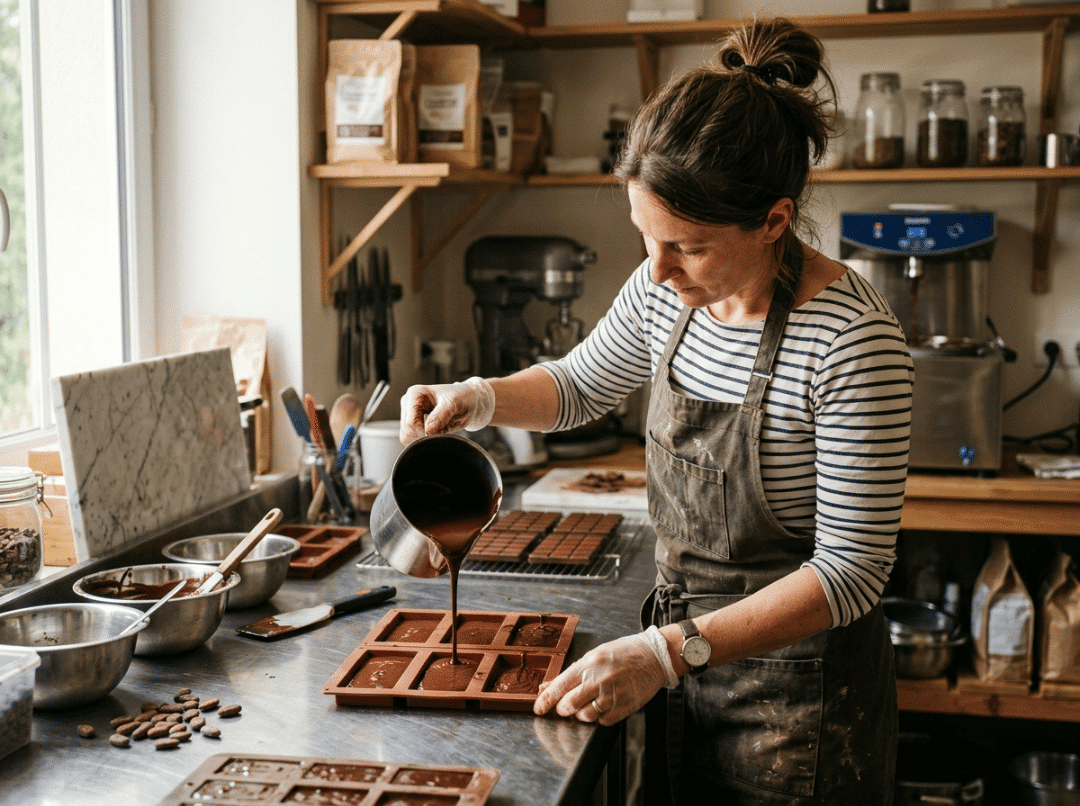
The costliest mistake new chocolate makers make isn’t a bad recipe. It’s buying the wrong equipment in the wrong order, long before demand can pay for it. I’ve seen people invest in a roaster and refiner before selling a single bar, then run dry on the cash they needed to actually market what they made.
Most guides hand you four business paths and a shopping list, then leave you to work out what fits your budget and your stage. This one closes that gap. Starting a chocolate business is a sequence of decisions: pick a model, set a budget to match, buy only the essentials first, then upgrade as sales prove out.
By the end, you’ll know which model fits you, roughly what it costs, exactly what to buy now versus later, and which products sell first. This comes from the machinery side of the trade, where we watch closely which setups grow and which ones stall under gear bought too soon.
Which Chocolate Business Model Is Right for You?
Pick your model before you buy a single mold. This one choice shapes your costs, your equipment, your daily workflow, and your margins. Get it right and everything downstream gets easier.
Think of the four models as a spectrum of control versus cost. At one end, you buy finished chocolate and focus on shaping and flavoring it — lowest cost, fastest start. At the other, you make chocolate from raw beans, which hands you full control but demands the most money and skill.
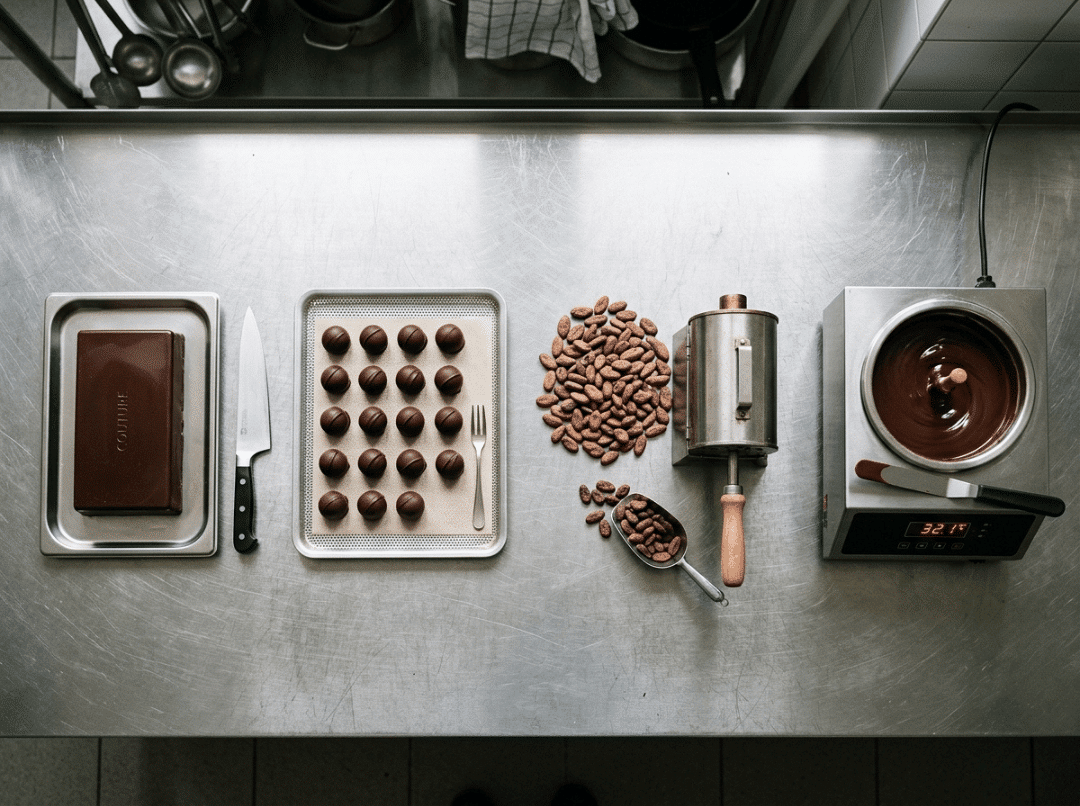
The Four Models at a Glance
|
Model |
Upfront Cost |
Skill Required |
Speed to First Sale |
Best For |
|---|---|---|---|---|
|
Couverture |
Lowest |
Low |
Fastest |
Testing demand on a tight budget |
|
Handmade chocolatier |
Low–moderate |
Moderate |
Fast |
Premium, hands-on artisan brands |
|
Bean-to-bar |
Higher |
High |
Slow |
Full flavor control and a craft story |
|
Small production line |
Highest |
Moderate–high |
Slow to set up |
Scaling proven demand |
Skip couverture if flavor control is your whole selling point. Skip handmade if you dislike repetitive bench work. Skip bean-to-bar until you’ve proven people will buy. And skip the production line unless demand already outruns your hands.
Couverture — The Fastest, Lowest-Risk Start
You buy high-quality couverture and focus on melting, tempering, molding, and flavoring. No roasting, no grinding. This launches quickest on a modest budget, and it suits gift-focused brands and anyone testing whether people will pay for their work.
The honest limit: you have less control over flavor, and your craft story is smaller. You’re shaping someone else’s chocolate, however well you do it.
Handmade Chocolatier — Premium Craft, Moderate Spend
You craft truffles, bonbons, filled chocolates, and bars using hand techniques and small tools. The detail is what you sell, which supports premium pricing.
The trade-off is labor. Hand work scales with your hours, and there are only so many of those. This model rewards makers who genuinely enjoy the bench and want an artisan identity.
Bean-to-Bar — Full Control, Steepest Learning Curve
You run the whole process from raw beans: roasting, cracking, winnowing, grinding, refining, and molding. You get complete flavor control and a strong single-origin story.
This is the model people reach for too early. It carries the steepest learning curve and the heaviest equipment load. It makes sense when flavor control is your core brand promise and you have the patience to learn each step properly.
Small Production Line — Only After Demand Is Proven
A compact, semi-automated setup built for steady volume and wholesale supply, integrating tempering, depositing, and cooling into one flow.
This isn’t a startup decision. It’s a scaling decision. You reach for it once demand is real and repeatable, not when you’re hoping to create it.
Still Unsure? A Three-Question Shortcut
Answer these in order:
- What’s your hard budget ceiling? A few thousand dollars means couverture, full stop.
- Craft or volume? If your edge is handmade detail, go chocolatier. If it’s flavor from the bean up, go bean-to-bar.
- How much of the process do you want to control? More control means more equipment, more skill, and more capital.
Tight budget and speed point to couverture. A premium, hands-on brand points to handmade. Flavor from the bean, plus patience for the learning curve, points to bean-to-bar. A production line only enters the picture once your current setup can’t keep up with orders.
How Much Does It Cost to Start a Chocolate Business?
Your startup cost is driven by the model, not a single magic number. A home chocolatier working with couverture might launch for a few thousand dollars. A bean-to-bar setup or small line runs into the tens of thousands. Rather than chase one figure, anchor yourself to a realistic band for your scale.
Budget by Startup Scale
|
Scale |
Typical Starting Budget |
What That Buys |
|---|---|---|
|
Lean home start |
$2,000–$6,000 |
Melting basics, molds, tools, packaging, initial couverture |
|
Artisan chocolatier |
$6,000–$20,000 |
Reliable tempering, better molds, enrobing tools, branding |
|
Small bean-to-bar |
$20,000–$60,000 |
Roaster, cracker, winnower, grinder/refiner, tempering |
|
Small production line |
$60,000+ |
Integrated tempering, depositing, and cooling |
Treat these as directional. They shift with your region, whether you buy new or used, and how much space you fit out. But they’re close enough to plan around, which is more than a list of cost categories gives you.
Where Your Money Actually Goes
Five buckets absorb almost everything: equipment, ingredients, packaging, legal and insurance, and recurring overhead. Equipment gets all the attention, but two categories quietly catch new makers off guard.
The first is packaging. Food-safe materials that protect chocolate from heat and light aren’t cheap, and for gifts the packaging is part of the product. The second is monthly overhead — rent or commissary fees, utilities, hosting, marketing. These repeat every month, so build them into your prices from the start.
Which Startup Costs Can You Delay?
Spend now on what makes or breaks a sellable product: food-safe basics and reliable tempering. Skimp here and every batch suffers.
Defer the rest. Enrobing, a cooling tunnel, and line automation all wait until volume justifies them. A maker who spends $8,000 on an enrober before landing a wholesale account has tied up cash that should have gone into packaging, photography, and market stalls. Buy for the stage you’re in.
What Equipment Do You Need to Start — and What Can Wait?
The rule I give every new maker: buy for the stage you’re in, and upgrade in step with sales. Equipment should follow your orders, never run ahead of them.
Essential Equipment to Launch
Every model starts with the same core: melting equipment, molds, scrapers, a reliable digital thermometer, and cooling racks. Plenty of makers launch with little more. “Good enough to start” means gear that produces a clean, consistent product at small volume — not the biggest machine you can finance.
When Does a Tempering Machine Become Worth It?
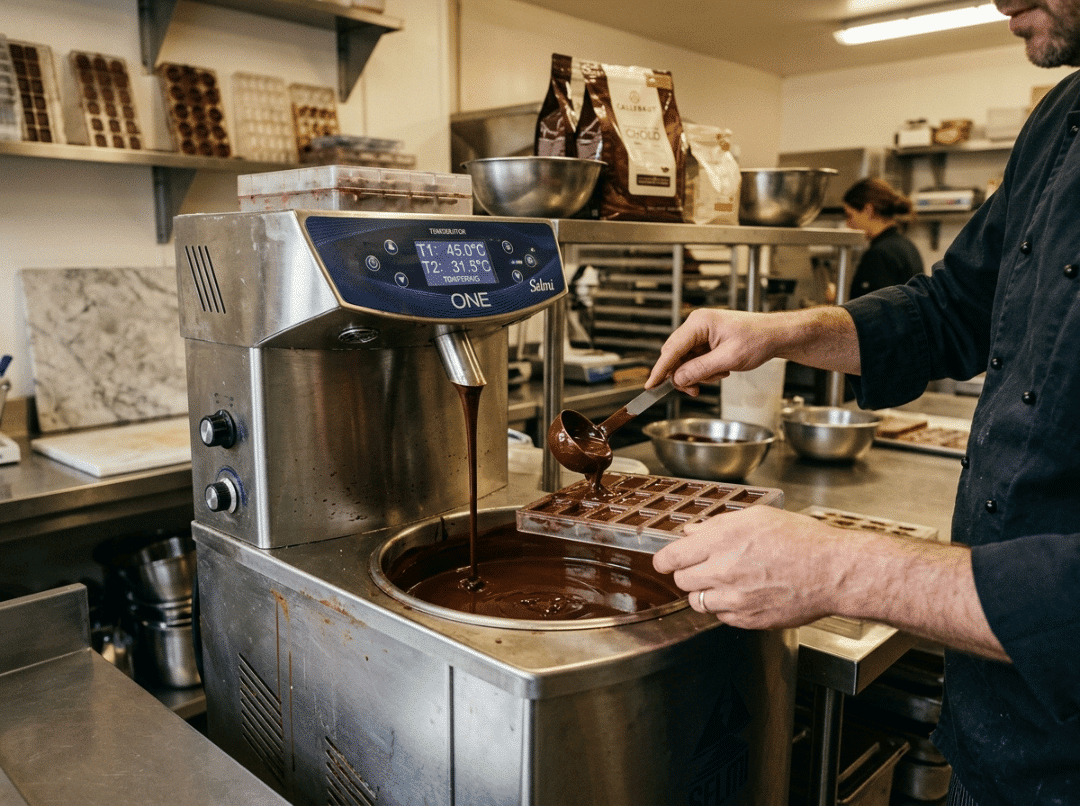
Hand-tempering works for small batches, but it’s slow and inconsistent. The trigger points are clear: you’re selling regularly, your gloss and snap drift batch to batch, and tempering eats hours you need elsewhere.
That’s when a tempering machine earns its cost. It turns that glossy, snappy finish into a repeatable result instead of a daily gamble. Consistency brings customers back, and that’s the real return — not speed alone.
When Does an Enrober Earn Its Place?
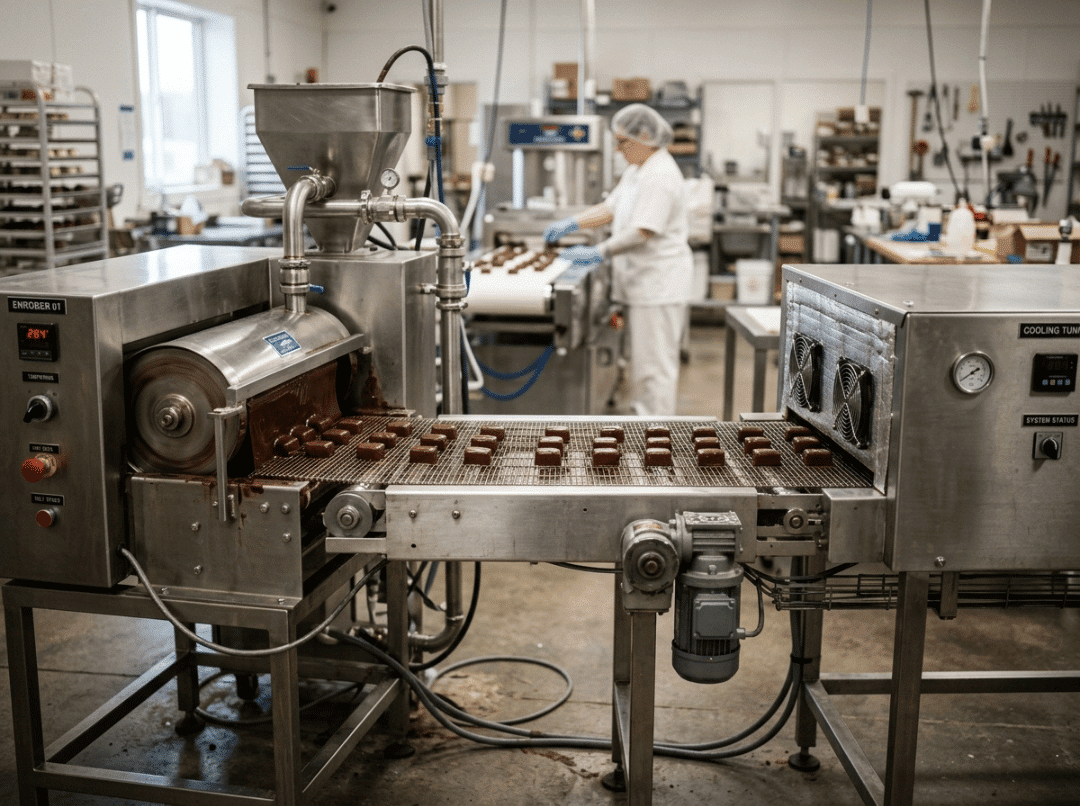
If you’re making filled chocolates, coated bars, or anything needing an even outer shell, hand-dipping gets old fast and never coats uniformly. An enrober applies a consistent shell and streamlines the whole workflow.
Buy it too early, though, and it sits idle while you cover the payment. The trigger is dipping volume your hands can no longer keep up with.
When Does Cooling Become Critical?
As volume climbs, uneven setting starts causing bloom and surface defects. A cooling tunnel controls airflow and temperature in stages, so products set cleanly instead of being shocked cold. Below a certain volume, cooling racks handle it fine. The tunnel is a scale tool.
When Does a Production Line Pay Off?
Once demand outruns what your hands can produce, it’s time to integrate. A production line ties tempering, depositing, and cooling into one repeatable flow, cutting labor and holding consistency across long runs. The trigger is proven, steady demand — not a hope that automation will create it.
The Equipment Upgrade Sequence
Here’s the order that keeps your cash working:
- Basics (melting, molds, thermometer, racks) — buy on day one.
- Tempering machine — add when you’re selling regularly and consistency slips.
- Enrober — add when hand-dipping volume no longer scales.
- Cooling tunnel — add when uneven setting causes defects at volume.
- Production line — add when proven demand exceeds hand capacity.
Move down this list as sales pull you there, not before.
Can You Start a Chocolate Business From Home?
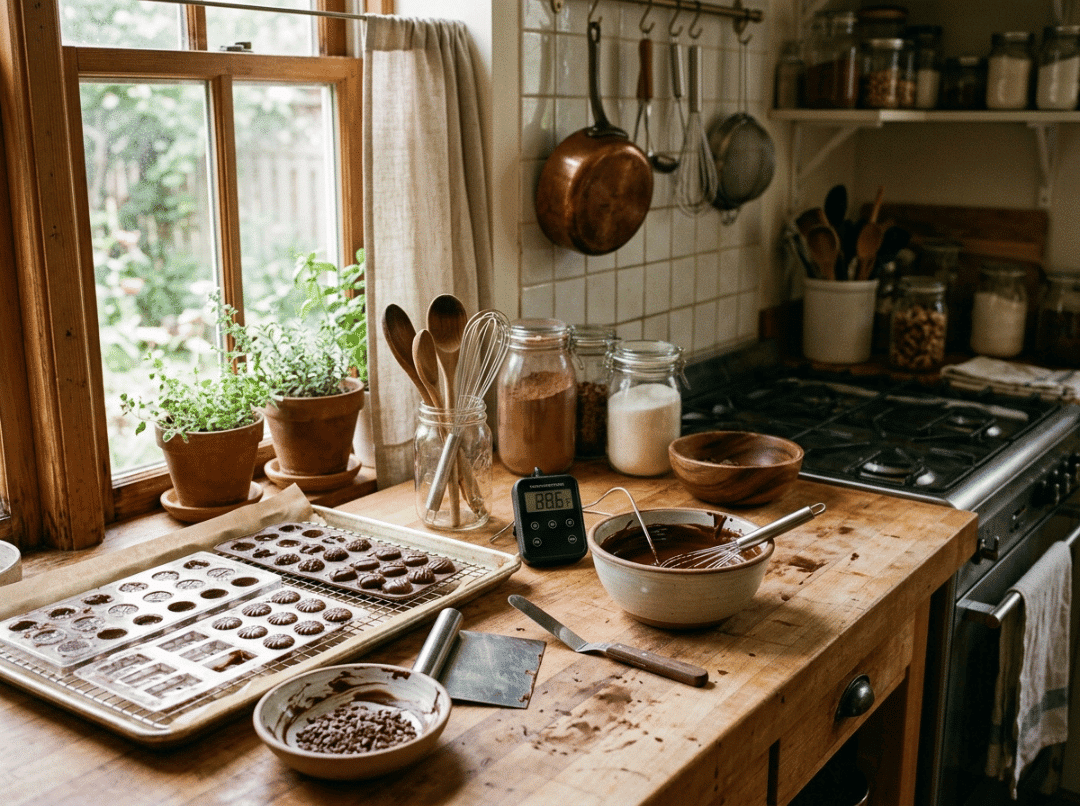
Often, yes — within limits. Many regions allow it under cottage food laws, and a home kitchen keeps overhead low while you prove demand. But the limits are real, and you want to know them before you commit.
What Do Cottage Food Laws Allow?
These laws typically let you make and sell certain foods from a home kitchen, but they set boundaries: what you can produce, where you can sell it, and sometimes an annual sales cap. Rules vary widely by region, so check your local health department before you make anything to sell. Skipping this step causes far bigger headaches later than the hour it takes to sort out.
A Home Setup That Can Scale
Plan for dry storage, stable room temperature, and enough space to work cleanly. Chocolate hates heat and humidity, so temperature control matters more than square footage. Choose a starter kit you won’t need to replace the moment you grow — reliable tempering and solid molds carry forward; a bargain machine you’ll outgrow in three months does not.
When Should You Move Out of the Home Kitchen?
Three signals point to a commercial or commissary space: volume your kitchen can’t handle, wholesale accounts with requirements a home kitchen can’t meet, and equipment with a footprint that no longer fits. When those show up together, the move is overdue rather than early.
Which Chocolate Products Are Easiest to Sell First?
Choosing what to make matters as much as choosing how to make it. A lean, fast-to-produce catalog beats a sprawling one every time in the early days.
Start With Three or Four Core Products
Variety feels like an advantage until you’re managing a dozen recipes, a dozen molds, and a dozen packaging formats on your own. Perfect three or four core items first. A tight range is faster to make, easier to price, and simpler to sell — and it lets you build a reputation for doing a few things exceptionally well.
Best Beginner Products by Model
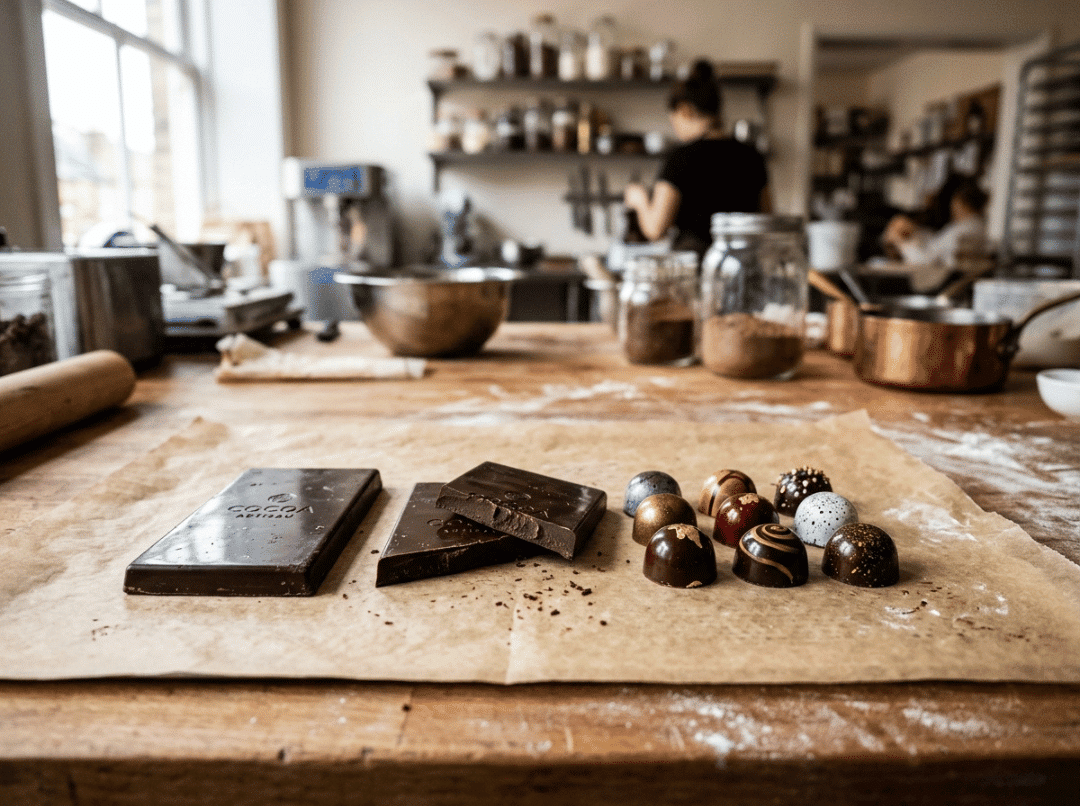
Match your first products to your model. Couverture makers do well with molded bars and gift boxes. Handmade chocolatiers should lead with truffles and bonbons, where the craft shows. Bean-to-bar makers are best served by single-origin bars that put their flavor work front and center. In each case, favor the products with the best margin and the least production complexity.
Lean Into Gifting and Seasonal Demand
Gift positioning supports premium pricing, because buyers expect to pay more for something they’re giving. Seasonal peaks — Valentine’s Day, Christmas, Mother’s Day — deliver concentrated demand that can fund a whole year of growth. Build seasonal collections early; they’re some of the easiest sales you’ll make.
How Do You Price Chocolate for Profit?
Pricing is where new makers hurt themselves most, and it’s one of the hardest mistakes to walk back. Set your numbers with a repeatable method rather than a guess.
A Simple Pricing Formula
Start with your cost of goods sold: add up ingredients, packaging, and labor for a single batch. Layer in a share of your overhead — rent, utilities, marketing, hosting. Then set your margin on top and work back into your retail and wholesale prices. Every piece you sell should carry its share of every cost, not just the chocolate in it.
Set Wholesale Prices That Still Leave You Margin
Wholesale is not retail minus a little. A retailer needs room to add their markup, and you still need to profit after they do. Price your wholesale so both of you make money, or you’ll end up working hardest on the accounts that pay you least.
Review Prices as Cacao Costs Move
Global cocoa prices swing, sometimes sharply. Fixed prices quietly erode your margin as ingredient costs climb. Review your numbers on a schedule and adjust before a cost spike eats your profit rather than after.
What Mistakes Waste the Most Money Early On?
I’ve watched promising brands stumble over the same handful of things. Each one traces back to spending or scaling ahead of real demand.
Buying equipment ahead of demand. The classic cash-flow trap. Wait for the trigger — regular sales, volume your hands can’t meet — not the ambition. Money tied up in idle machines is money you can’t spend on getting customers.
Jumping into bean-to-bar too soon. Roasting and grinding gear is a serious investment. Validate that people will buy before you commit to the heaviest equipment in the trade.
Underpricing handmade work. Thin margins compound fast when every piece is made by hand. Run the pricing formula and hold your numbers, even when it feels uncomfortable at first.
Launching with too many products. Complexity costs time, materials, and attention. Perfect a core range before you expand the catalog.
Weak packaging and ignoring shipping heat. Cheap packaging invites bloom, melting, and returns. Use food-safe, heat-aware materials from the start, and plan shipping around warm months before they catch you out.
Frequently Asked Questions
How much money do you need to start a chocolate business?
It ranges widely by model. A lean home couverture setup can start around $2,000–$6,000, while a bean-to-bar operation or small production line can run from $20,000 into the tens of thousands once roasting, grinding, and cooling equipment are factored in.
Is it cheaper to start with couverture or bean-to-bar?
Couverture is far cheaper because you skip the roasting, cracking, and grinding equipment entirely. Bean-to-bar costs more upfront but gives you full control over flavor and a stronger craft story.
Can I start a chocolate business from home?
Often yes, under cottage food laws that allow certain products to be made and sold from a home kitchen. Those laws limit what you can make and where you can sell it, so check your local rules and permits before you begin.
What equipment do I need to start a chocolate business?
At a minimum, food-safe basics — melting equipment, molds, a reliable thermometer, cooling racks — plus dependable tempering. Add enrobing, cooling, and eventually a production line as your volume grows.
Do I need a tempering machine right away?
Not on day one. It becomes worth the spend once you’re selling regularly and hand-tempering starts hurting your consistency or eating too much of your time.
Is a chocolate business profitable?
It can be, especially with premium and gift positioning, wholesale accounts, and strong seasonal sales. Profit comes from disciplined pricing and cost control, not from volume alone.
What’s the difference between a chocolatier and a chocolate maker?
A chocolatier crafts products from finished chocolate, such as truffles and bonbons. A chocolate maker produces the chocolate itself, starting from raw cocoa beans.
The Bottom Line
Starting a chocolate business comes down to a clear sequence. Your model sets your costs and your equipment. Your budget follows the model. Essential gear comes first, and upgrades follow proven sales. A lean starter catalog and confident pricing fund the growth from there.
The makers who succeed rarely overspend early. They match their setup to real demand and scale deliberately, one trigger point at a time. That discipline is worth more than any single machine.
When your sales justify the next step, size your equipment to your actual output rather than an ambition you rarely hit. Take a look at the chocolate tempering machines and chocolate production line equipment built to grow alongside your business — and if you tell us your model and volume, we’ll help you land on the right unit instead of over- or under-buying.
What model are you leaning toward, and what’s your biggest question about getting started?