
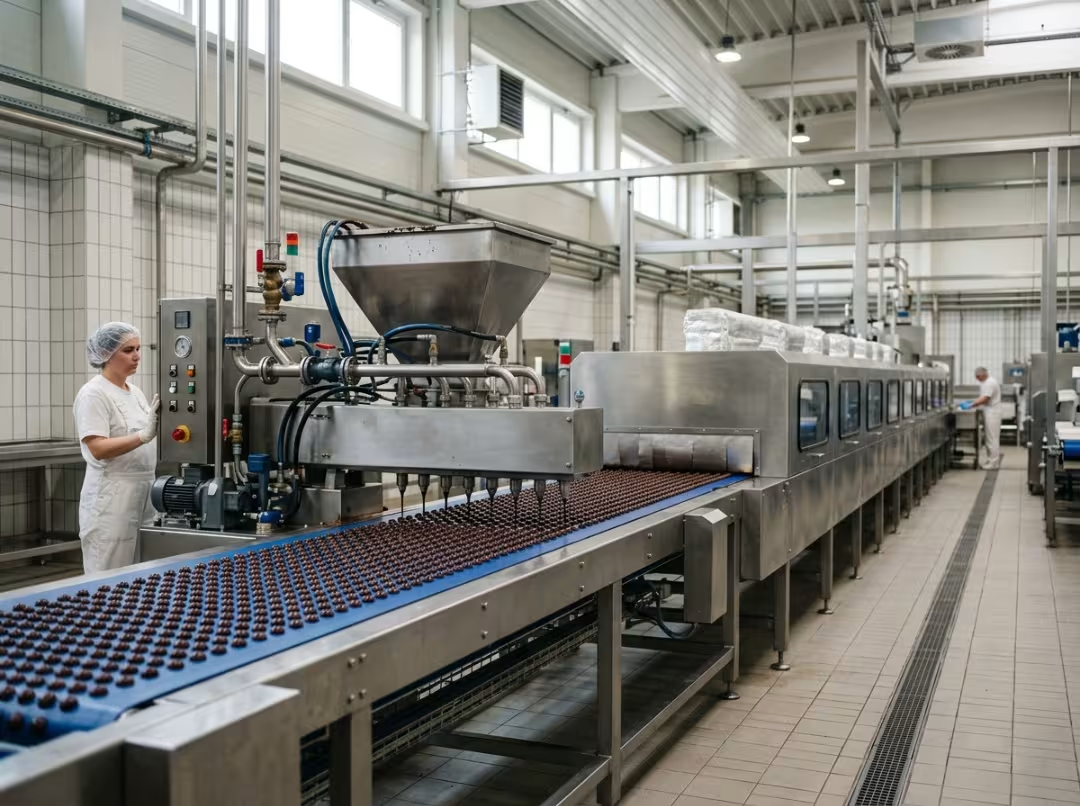
Most chocolate drop lines underperform not because the machines are bad, but because the configuration was chosen before the product was fully defined. A 4 mm bakery chip engineered to survive a 180°C oven has almost nothing in common with a large retail drop built to melt cleanly at room temperature. Both are chocolate drops. The line requirements are entirely different.
This guide is for food manufacturers and procurement engineers evaluating, specifying, or upgrading a chocolate drop or chocolate chip production line. It covers how the line works, which four machines determine whether drops are consistent batch after batch, how to plan capacity around what you can actually sustain—not what a spec sheet promises—and how the intended end use should shape every major equipment decision.
What Chocolate Drops Are—and Why Line Design Has to Follow the Product
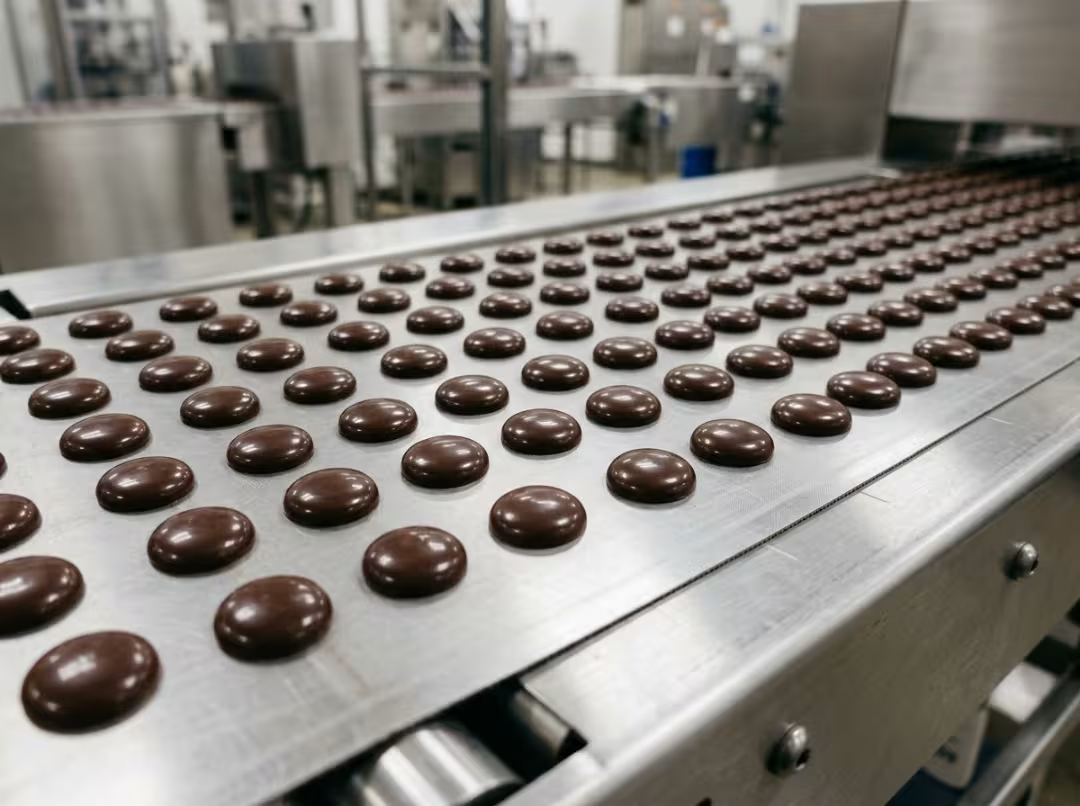
Chocolate drops (also called chips or callets) are individually deposited units of chocolate held to a defined size, weight, and shape through cooling, storage, and often a second heat process. The specifications that matter commercially are drop size and base diameter, height retention after setting, surface gloss, and chocolate formulation. A high-fat couverture flows and crystallizes differently than a compound coating built on vegetable fat, and those differences are not cosmetic—they reach directly into which refiner setting, which temper profile, and which cooling dwell time you need.
Every product specification works backward through the line. A fine-textured retail drop needs more refining time to achieve smooth mouthfeel. A bake-stable chip depends on both formulation and a well-controlled temper. A sharply defined drop with clean edges depends on the depositor nozzle configuration and the subsequent cooling profile. When the line is specified around a nameplate output figure rather than the product it will make, the mismatch shows up as tailing, dull surfaces, poor snap, deformed shapes, or a throughput ceiling the operation can never reach.
The starting point is non-negotiable: define the finished drop in full before evaluating a single machine.
How a Chocolate Drop Production Line Works
The line runs in a fixed sequence. Each stage delivers a specific quality or throughput outcome, and shortchanging any one of them creates a problem that downstream equipment cannot correct.
Mixing
Mixing combines cocoa mass, sugar, cocoa butter or vegetable fat, milk powder, and functional additives such as lecithin into a uniform paste. The quality of this blend sets the starting point for everything that follows. Variation introduced here—uneven fat distribution, inconsistent hydration—propagates through refining and conching and cannot be reversed.
Refining
Refining reduces the particle size of the mixed mass to a target range, typically 18 to 25 microns for a smooth-eating drop. Particle size is the primary lever on mouthfeel. Too coarse and the drop tastes gritty; over-refined, and the mass becomes overly viscous and difficult to deposit cleanly. The refining target should be set by the product, not by default machine settings.
Conching
Conching applies controlled heat and mechanical work over an extended period to develop flavor, expel volatile acids and residual moisture, and coat each solid particle in a fat layer. The result is chocolate that flows smoothly and deposits predictably. Viscosity coming out of the conche is a direct input to depositor performance: a mass that is too stiff tails; one that is too fluid loses shape on the belt.
Tempering
Tempering guides the cocoa butter into a stable crystalline form (Form V). This step controls gloss, snap, resistance to fat bloom, and shelf stability. It is also where the most common and costly production failure occurs: a temper that drifts even slightly produces dull, soft, or streaky drops that customers notice immediately and that no amount of packaging hides.
Depositing
The depositor meters tempered chocolate through nozzles onto a belt or into molds, forming drops of a defined size and weight. Drop weight accuracy and shape retention are determined here—and, with them, the cost-control implications. Every gram of giveaway across a shift compounds quickly. Nozzle design, deposit speed, and cycle timing determine whether the output is clean, uniform drops or a mix of tails, doubles, and off-weight units.
Cooling
The cooling tunnel carries crystallization to completion under a controlled temperature and airflow profile. Drops must be fully set before they can be handled or packed, so the tunnel’s dwell time governs the maximum rate at which finished product can leave the line. This makes the tunnel the most common—and most underestimated—throughput constraint on a chocolate drop line.
Packaging
Packaging weighs, bags or boxes, and seals the finished drops. An underspecified packaging station is one of the quietest ways to cap a line that is otherwise capable of considerably more.
The Equipment That Drives Consistency
Storage tanks, pumps, and conveyors need to be reliable, but they don’t decide whether the drop is good. Four machines do: the refiner and conche, the tempering machine, the depositor, and the cooling tunnel. These are where specification decisions carry the largest consequence, and where vendor evaluation time is best spent.
Refiner and Conche
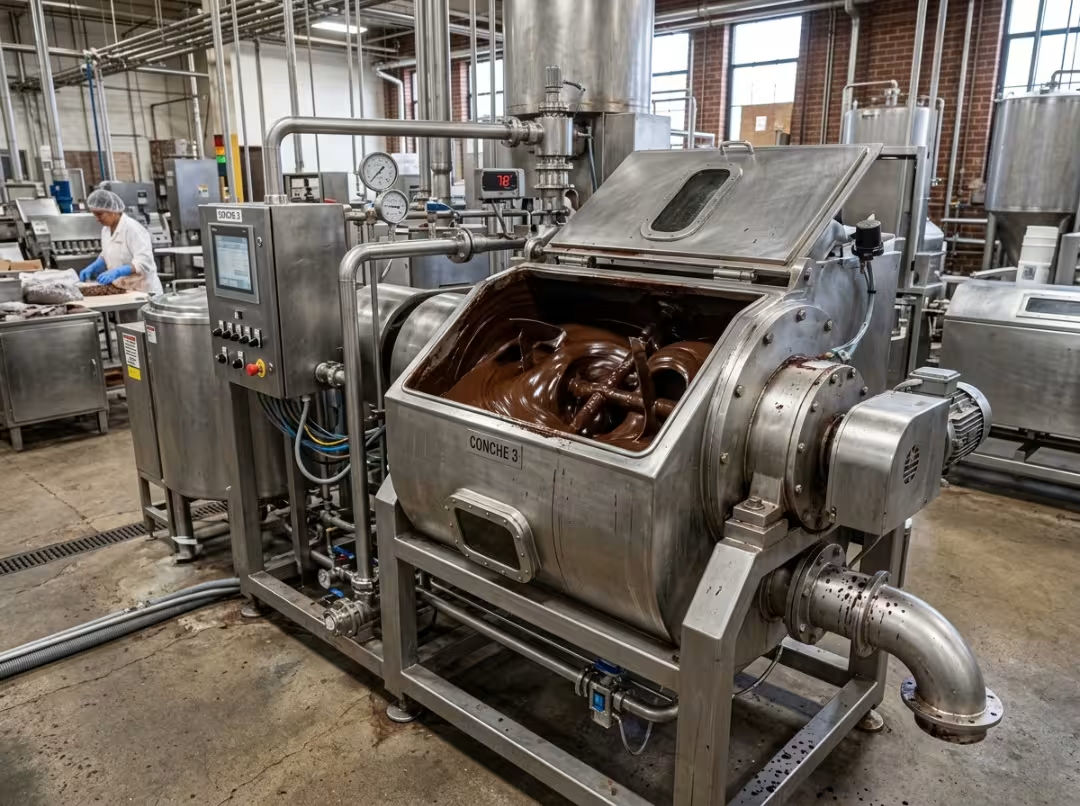
Together, the refiner and conche establish the sensory foundation of the drop—particle size, texture, flavor, and the viscosity that every downstream step depends on. Refining determines how fine the solids are ground. Conching determines how smoothly and consistently the mass flows.
Viscosity is the link between these two machines and the depositor. A mass too thick to flow cleanly tails and eventually clogs nozzles. A mass that is too thin loses its shape on the belt. Neither problem can be fixed downstream; both trace back to what happened in the refiner and conche.
There are two main grinding routes. Roll refiners paired with a conche produce fine, consistent particle reduction suited to premium recipes where mouthfeel and flavor depth are the primary targets. A chocolate ball mill grinds faster and at lower cost, making it well-suited to compound formulations and high-throughput operations where the finest particle refinement matters less than output rate. For retail eating drops, the roll-and-conche route is the more reliable choice. For compound drops and volume-driven production, a ball mill often delivers more value per kilogram.
A modern chocolate refiner and conche integrates both functions into a single controlled cycle, simplifying the line and tightening batch-to-batch consistency.
Tempering Machine
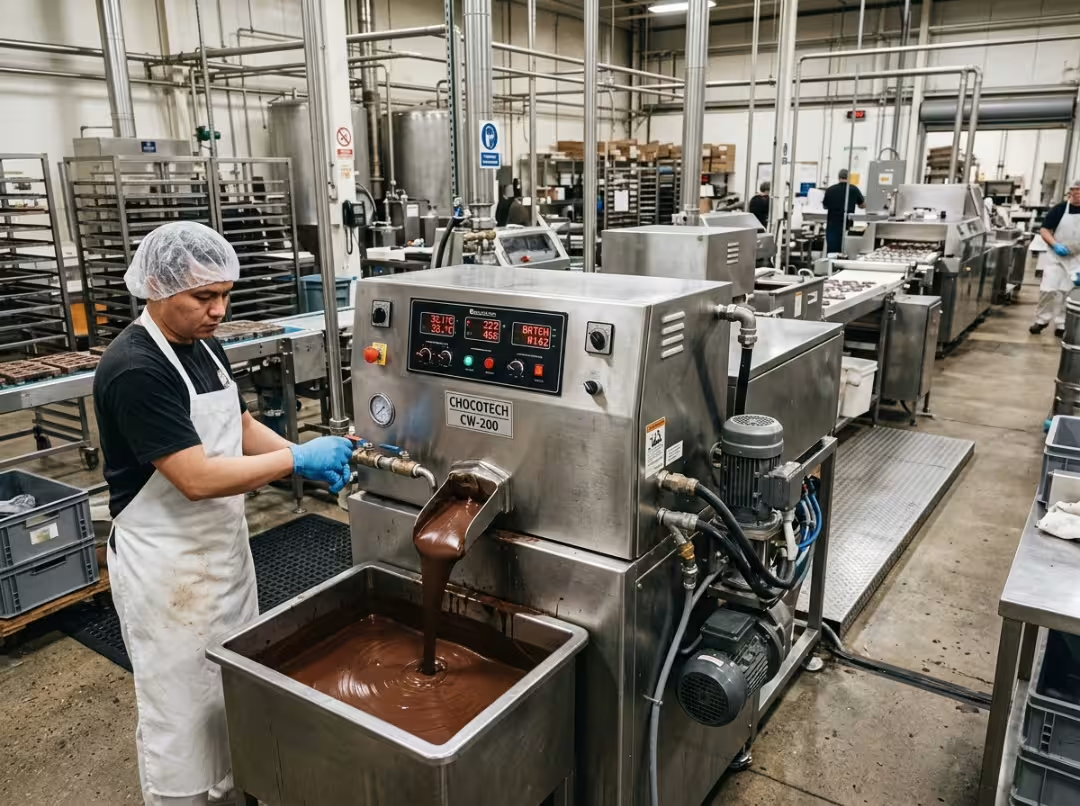
Crystal structure is what separates a well-made drop from a defective one. The tempering machine builds that structure by cycling the chocolate through a precise sequence of temperatures that encourages cocoa butter to crystallize in the stable Form V configuration. Get it right, and the drop has gloss, snap, and a shelf life that holds. Get it wrong and bloom, softness, and surface inconsistency are guaranteed across an entire run.
For production lines, continuous tempering is the standard. A continuous unit delivers a steady, correctly tempered stream to the depositor without interruption, maintaining the temper window across long runs. A machine like the TTJ40 is sized to keep pace with deposit rate while holding the temper tightly—because even a small drift is immediately visible in the finished product.
Depositor
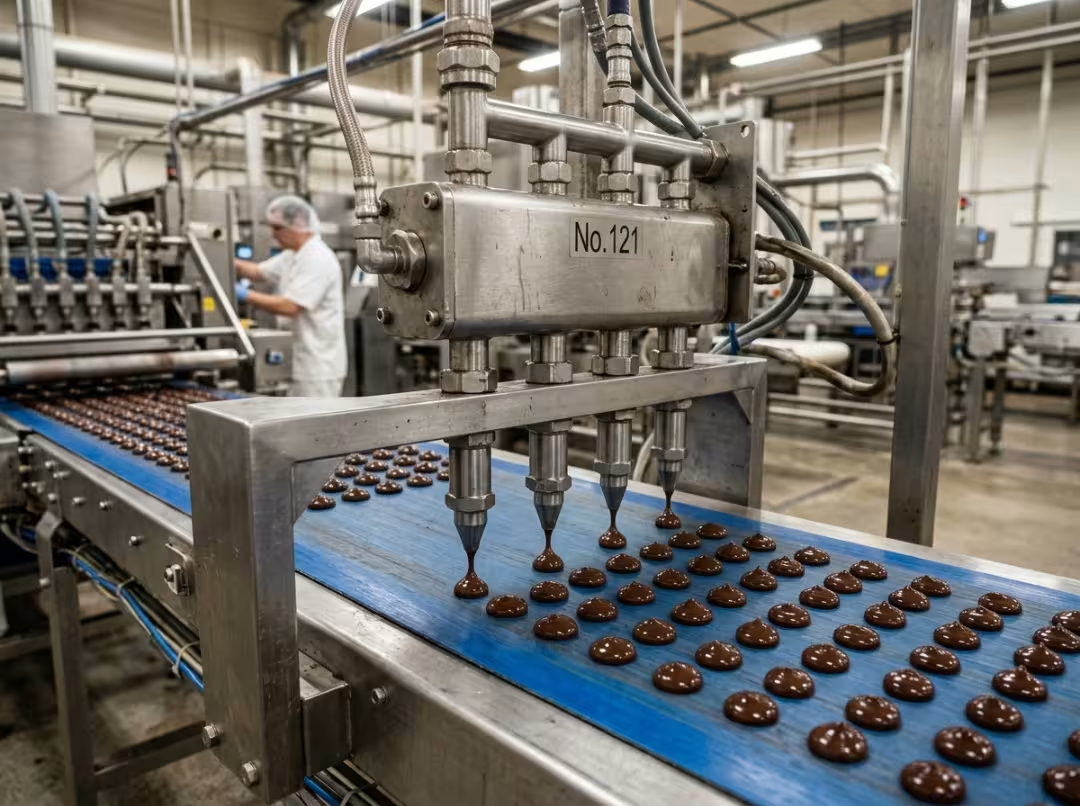
The depositor is where drop weight and shape are finalized. Precise metering keeps each unit within spec; nozzle configuration determines whether edges are clean or tailed. Both matter for quality and for cost: consistent weight means no giveaway, and clean shape means less rework.
A depositor with interchangeable nozzle plates can run several drop sizes from one machine, which is practical for operations with varied product ranges. For producers running one size at high volume, a fixed high-speed configuration is simpler and faster. For filled drops or one-shot shell-and-center products, a one-shot depositor handles both layers in a single action. The right choice follows from the product range and run pattern, not from the depositor’s maximum rated speed.
Cooling Tunnel
The cooling tunnel paces the entire line. Because drops must complete crystallization before they can be handled or packed, the tunnel’s dwell time sets the ceiling on finished-product output—regardless of how fast the depositor runs or how efficiently packaging operates. A tunnel that is too short, or one with a profile too aggressive for the product load, produces soft drops that deform on the belt or bloom in storage.
This is the most frequently undersized machine on a chocolate drop line. Operations that spend heavily on a fast depositor and then underinvest in cooling capacity end up with a bottleneck they cannot tune away; the only fix is a longer tunnel.
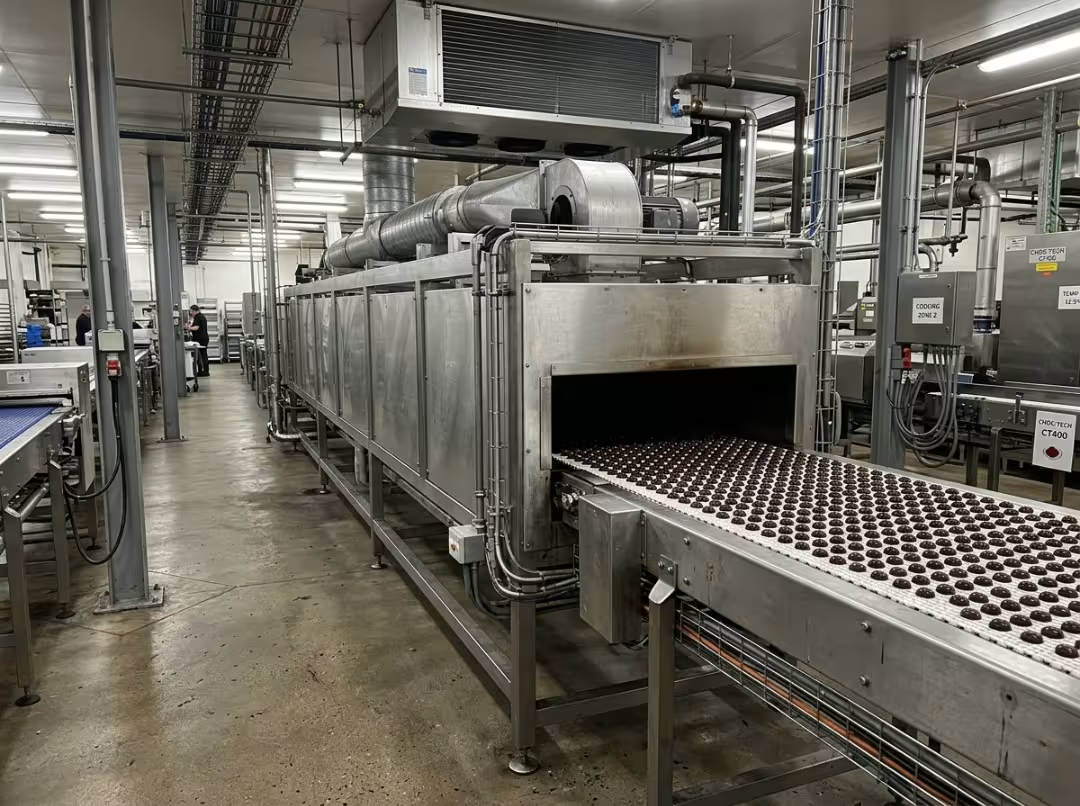
Size the tunnel to the drop that needs the longest dwell time at your target throughput—not the average, and not the smallest drop in the range.
|
Machine |
Primary quality lever |
Consequence of misjudging |
|---|---|---|
|
Refiner & Conche |
Particle size, texture, viscosity |
Gritty or pasty texture; poor flow at depositor |
|
Tempering Machine |
Gloss, snap, shelf stability |
Bloom, soft drops, inconsistent surface |
|
Depositor |
Drop weight accuracy, shape retention |
Weight scatter, tailing, deformed drops |
|
Cooling Tunnel |
Set quality, line throughput |
Soft or deformed drops; capacity bottleneck |
Capacity Planning: What Rated Speed Actually Means
Equipment suppliers quote nameplate capacity: the output achievable under continuous, ideal conditions. Production lines do not run under ideal conditions. The gap between rated and real is where most capacity planning goes wrong.
Several factors reliably erode actual throughput:
- Cleaning and allergen changeovers. Switching from milk to dark chocolate, or introducing a new recipe, may require a full line washdown. The time this takes is not captured in any nameplate figure.
- Product and format changeovers. Adjusting nozzle plates, re-establishing temper, and confirming deposit weight after each changeover adds up across a shift.
- Cooling dwell time. The tunnel caps output regardless of how fast the depositor runs. If the drop needs 12 minutes to set and the tunnel delivers 10 at current belt speed, nothing else on the line matters.
- Line bottlenecks. Real throughput equals the rate of the slowest station. That station is usually the cooling tunnel or the packaging line—not the depositor.
- Startup and minor stops. Temper stabilization at the start of a run, brief jams, and manual interventions all reduce effective operating time.
To find the real ceiling, map the sustained output rate of every station and identify the slowest. A depositor capable of 500 kg/hour is irrelevant if the tunnel can only set 320 kg/hour and packaging can only clear 280. The lowest number is the line’s actual capacity.
|
Factor |
Effect on a line rated at 500 kg/hr |
|---|---|
|
Nameplate (rated) capacity |
500 kg/hr |
|
Operating availability after cleaning, changeovers, minor stops (~75%) |
375 kg/hr |
|
Cooling tunnel as pacing constraint |
Capped at ~350 kg/hr |
|
Packaging station limit |
Capped at ~300 kg/hr |
|
Realistic sustained output |
~300 kg/hr |
The numbers above are illustrative, but the pattern they represent is consistent. Specify every station to clear the throughput you need to sustain across a full shift, then confirm that the cooling tunnel and packaging line are sized to that same number—not to the depositor’s rated speed.
How End Use Changes Line Configuration
The end use defines the drop spec, and the drop spec defines the line. These are not independent decisions.
|
Application |
Typical drop spec |
Key configuration requirements |
|---|---|---|
|
Bakery (chips) |
Small, bake-stable, heat-resistant |
Heat-stable formulation; precise small-drop depositing; robust cooling for shape retention |
|
Ice cream inclusions |
Small to medium, cold-stable |
Fine refining; compound or cold-stable formulation; accurate small deposits |
|
Cereal/snack |
Varied sizes, mechanically durable |
Consistent sizing; firm set; bulk packaging format |
|
Retail (eating drops) |
Larger, high gloss, clean snap |
Fine refining; strong stable temper; larger-nozzle depositing; consumer packaging |
Bakery chips are primarily an engineering problem—they need to resist spreading during baking, which depends on formulation and a stable temper. Retail drops are primarily a sensory problem—gloss and snap are the purchase drivers, which pushes refining quality and tempering control to the front of the decision. Ice cream inclusions must stay firm and clean at freezing temperatures, which often means reformulating with compound fat rather than cocoa butter. Cereal and snack drops must survive mechanical blending and handling without fracturing, which means prioritizing a durable, consistent set over fine surface texture.
Define the application, translate it into a drop specification, and let that specification direct the line configuration.
Flexibility vs. Speed: How to Decide
A dedicated high-speed line is built for one or two drop sizes and one recipe type. It runs fast, changes over rarely, and achieves the lowest cost per kilogram at scale. A flexible multi-recipe line handles many products, sizes, and formulations—but runs slower and requires more frequent stoppages for changeovers and cleaning.
|
Dedicated line |
Flexible multi-recipe line |
|
|---|---|---|
|
Best for |
One product at high volume |
Multiple SKUs, varied sizes |
|
Throughput |
Maximum |
Moderate (changeover losses) |
|
Cost per kilogram at scale |
Lowest |
Higher |
|
Changeover frequency |
Rare |
Frequent |
|
Ideal operator profile |
Single-product manufacturers |
Contract manufacturers, diverse portfolios |
The right answer depends on SKU count, run length per SKU, and changeover frequency. If two or three products account for most of your volume, a dedicated line typically delivers a lower cost per kilogram and simpler operations. If you run many shorter recipes, the additional flexibility justifies the trade-off in throughput. What is never justified is buying flexibility you do not use—it adds capital cost, operating complexity, and slower changeovers for no production benefit.
How to Choose the Right Line
Work through these decisions in sequence. Each narrows the field for the next, which prevents the common error of optimizing a machine against the wrong constraint.
- Define the product specification in full. Drop size, weight tolerance, chocolate type, gloss and snap requirements, packaging format.
- Identify the application requirements. Bake stability, cold performance, shelf life—translate end use into concrete technical targets.
- Specify the four core machines to match the spec. Refiner and conche, tempering machine, depositor, and cooling tunnel come before auxiliary equipment in every serious evaluation.
- Size every station to sustained output. Calculate the throughput you need to maintain across a full shift, factor in cleaning and changeovers, and confirm that the cooling tunnel and packaging can handle that rate.
- Decide on flexibility based on actual run patterns. SKU count, run length, and changeover frequency—not future possibilities.
Follow that order, and the line configuration follows the product. Reverse it, and you spend years managing the consequences.
Common Mistakes
- Specifying to nameplate speed. Rated capacity assumes continuous operation under ideal conditions. It never reflects real production. Plan for sustained output and build in the real constraints.
- Undersizing the cooling tunnel. The tunnel sets the pace for everything. An undersized tunnel strands the capacity of every other machine on the line, and running the depositor faster won’t help.
- Buying flexibility that won’t be used. Flexible configurations add cost and complexity. If your product range doesn’t require it, a dedicated line is almost always the better investment.
- Letting packaging cap the line. An overlooked packaging bottleneck limits output just as effectively as an undersized tunnel—and with less obvious cause. Size packaging to the line’s sustained output target.
- Treating all chocolate as interchangeable. Dark, milk, white, and compound formulations require different temper profiles, cleaning protocols, and often different depositing parameters. Confirm the line is configured for your full recipe range before commissioning.
Frequently Asked Questions
How much output can I realistically expect relative to rated capacity?
In most real production environments, sustained throughput lands at 55–75% of nameplate capacity once cleaning time, changeovers, cooling constraints, and packaging limits are accounted for. Size your line to the number you need to sustain across a full shift, then confirm every station—particularly the cooling tunnel and packaging—is specified to carry that load.
Can one line run both bakery-grade and retail drops?
Yes, with a flexible configuration: adjustable nozzle plates on the depositor, a tempering machine capable of holding different temper profiles, and a cooling tunnel sized for the most demanding product in the range. Expect lower throughput than with a dedicated line, and more changeover time between recipe switches.
What is the most common bottleneck on a chocolate drop line?
The cooling tunnel, followed closely by the packaging station. The depositor is rarely the constraint. Drops have to fully crystallize before they can be handled, so tunnel dwell time caps finished-product output regardless of deposit speed. An underpowered packaging station then further reduces what actually reaches the warehouse.
Ball mill or roll refiner?
For retail eating drops where fine mouthfeel and flavor development are the commercial differentiator, roll refiners paired with a conche are the more reliable choice. For compound chocolate and high-throughput operations where output rate and cost efficiency matter more than the finest particle reduction, a ball mill is a practical and well-proven alternative.
Which machines most affect finished-drop consistency?
The refiner and conche (particle size, texture, viscosity), the tempering machine (gloss, snap, bloom resistance), the depositor (weight accuracy, shape retention), and the cooling tunnel (set quality and line pace). Every other machine supports these four. Evaluate them first.
How do I size the cooling tunnel?
Size it to the drop with the longest required dwell time at your target throughput—not the average across the range, and not the fastest-setting product. A tunnel matched to the slowest-setting product at full belt speed ensures that every drop leaving the line is fully set and prevents the tunnel from becoming the constraint limiting everything upstream.
Building the Line Around the Product
A chocolate drop production line built on a clear product specification, sized to realistic sustained output, and configured around the four machines that actually drive consistency will perform reliably at scale. One built around a nameplate figure or a flexible wish list will generate problems that compounding adjustments never quite resolve.
Start with the finished drop. Define it precisely. Let the application requirements translate into concrete specifications. Then specify the refiner and conche, the tempering machine, the depositor, and the cooling tunnel to match—in that order, before everything else.
With over 35 years of chocolate machinery experience and full customization capability, the Yucho team helps manufacturers translate product specifications into line configurations that perform in real production environments—backed by global installation support and ongoing after-sales service. Share your drop specification, target throughput, and end-use application to get a configuration built around what you actually make. Request a customized configuration to get started.