
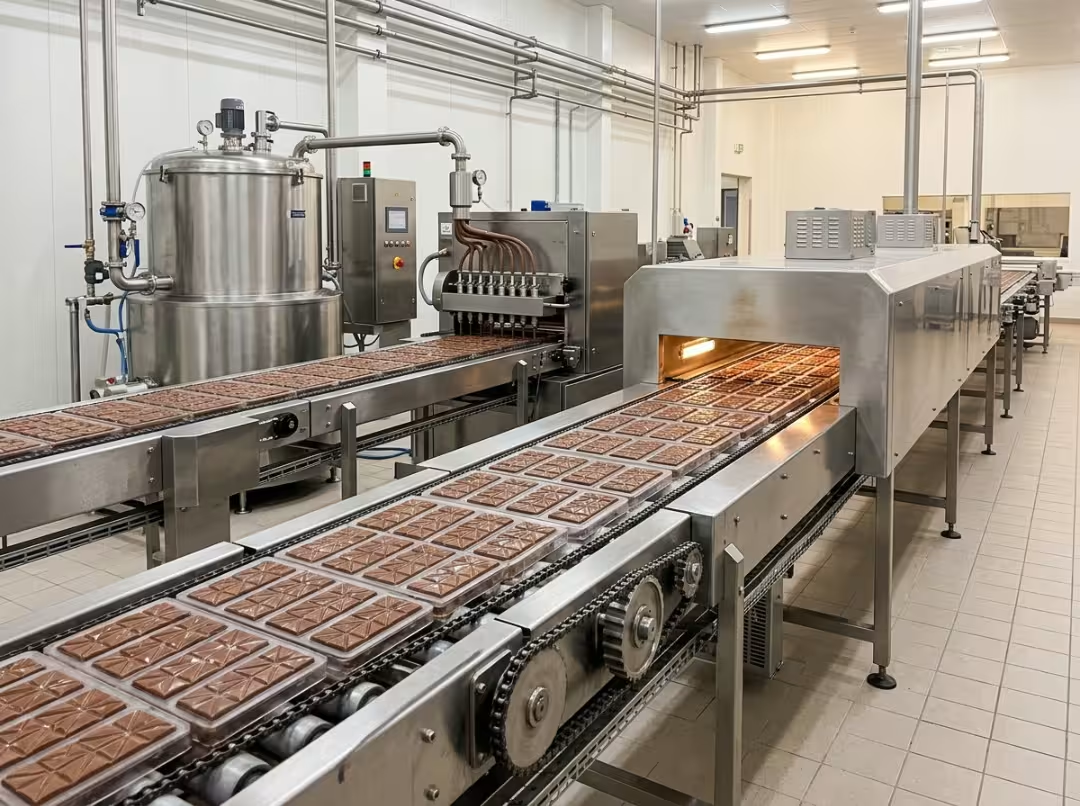
For many buyers, the problem doesn’t start with chocolate quality. It starts when demand outgrows what the current setup can handle—whether in volume, product mix, or changeover schedule. Or it starts earlier, when a first-time buyer is staring at a set of quotes for a chocolate bar production line, each showing an impressive kg/hour figure, none of them explaining what that number actually means on a working shift.
Either way, the underlying questions are the same: what equipment does the line actually need, where does the process go wrong when things aren’t specified correctly, and how do you size a line to match real demand rather than an optimistic spec sheet?
This article focuses on the stages and decisions that actually determine whether a line delivers. Not a survey of every machine in the building.
What a Chocolate Bar Line Really Needs to Solve
A chocolate bar production line is not a collection of standalone machines. It’s a connected system where each stage feeds the next, and overall output is limited by the weakest point in that chain. Refining sets the texture that tempering builds on. Tempering sets the crystal structure that cooling locks in. A tunnel that’s too short undermines a well-specified depositor. A fast front end is useless if wrapping can’t keep pace.
In real projects, underperformance rarely comes from one machine being bad. It comes from a line being specified around a headline output figure, with insufficient attention to product mix, cooling capacity, or packaging pace. The line runs—just not at the rate anyone expected. And the bottleneck is rarely where buyers assumed it would be.
Three buying habits explain most of the problems: anchoring on peak-rated capacity without knowing which product and conditions that figure assumes; selecting depositor type without locking in the product format first; and underspeccing cooling and wrapping—the two stages that quietly cap real output after everything else has been purchased and installed.
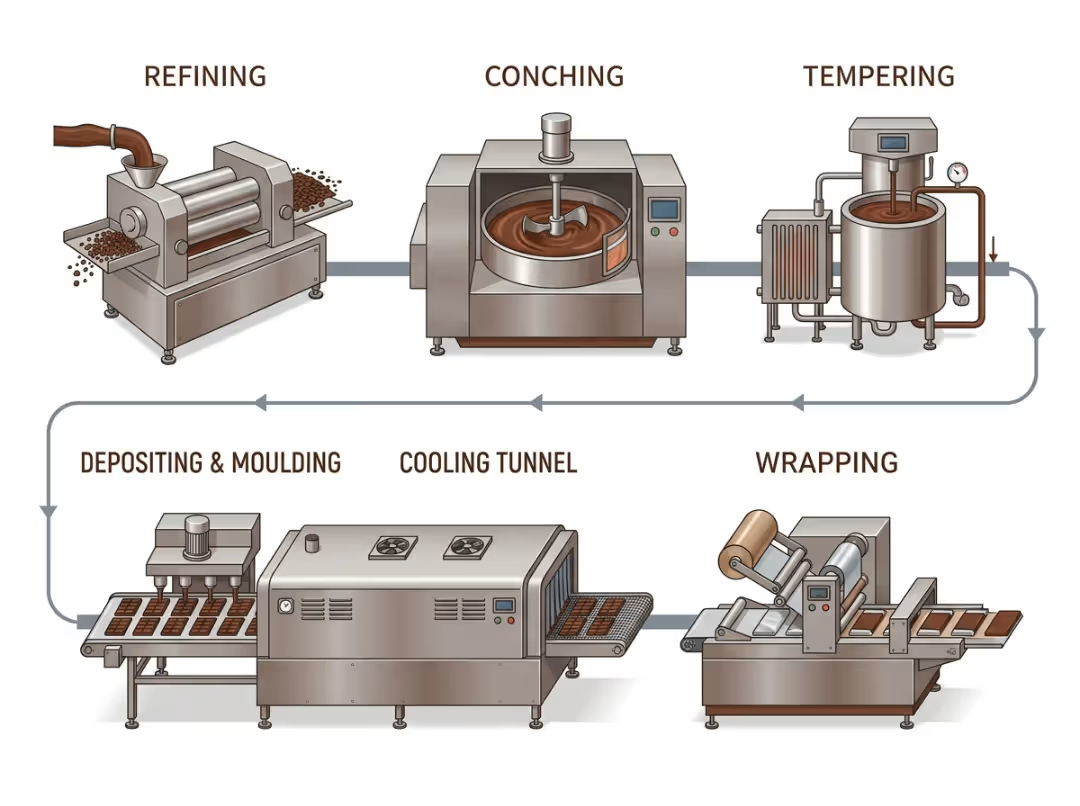
The 5 Key Stages That Determine Line Performance
Refining and Conching: Where Quality Starts
Ball mills and chocolate refiner-conche systems reduce particle size to roughly 18–25 microns—the threshold below which chocolate reads as smooth rather than gritty on the palate. Conching then works the mass for hours at controlled temperatures, driving off volatile acids and excess moisture while developing the rounded flavor profile that separates quality chocolate from a harsh or flat base.
This stage sets the ceiling for how good the finished bar can be. Poor mouthfeel is often blamed on tempering or molding when the root cause is here. If particle size stays too coarse or conching runs short, that defect survives every downstream step intact. No downstream machine can undo grit.
Tempering: The Make-or-Break Stage for Appearance and Shelf Life
A chocolate tempering machine cycles chocolate through a precise temperature curve to form stable Form V cocoa butter crystals—the ones responsible for gloss, clean snap, and bloom resistance. Everything visible about a finished bar on a retail shelf comes from proper tempering.
Tempering problems are expensive not because they affect one or two bars, but because they scale. A small control drift can quietly convert an entire shift into dull, bloom-prone product. The failure mode is also delayed: bars may look fine at demolding and reveal bloom days later, after they’ve already been packed and dispatched.
Continuous tempering suits high-volume, single-product runs where the line operates for long stretches without stopping. Batch tempering is well-suited to smaller operations, frequent recipe changes, or multi-SKU producers who need flexibility more than raw speed. The choice matters most when SKU complexity is high—continuous systems penalize short runs with waste and transition time that adds up fast.
Depositing and Molding: Where Product Format Decides the Equipment
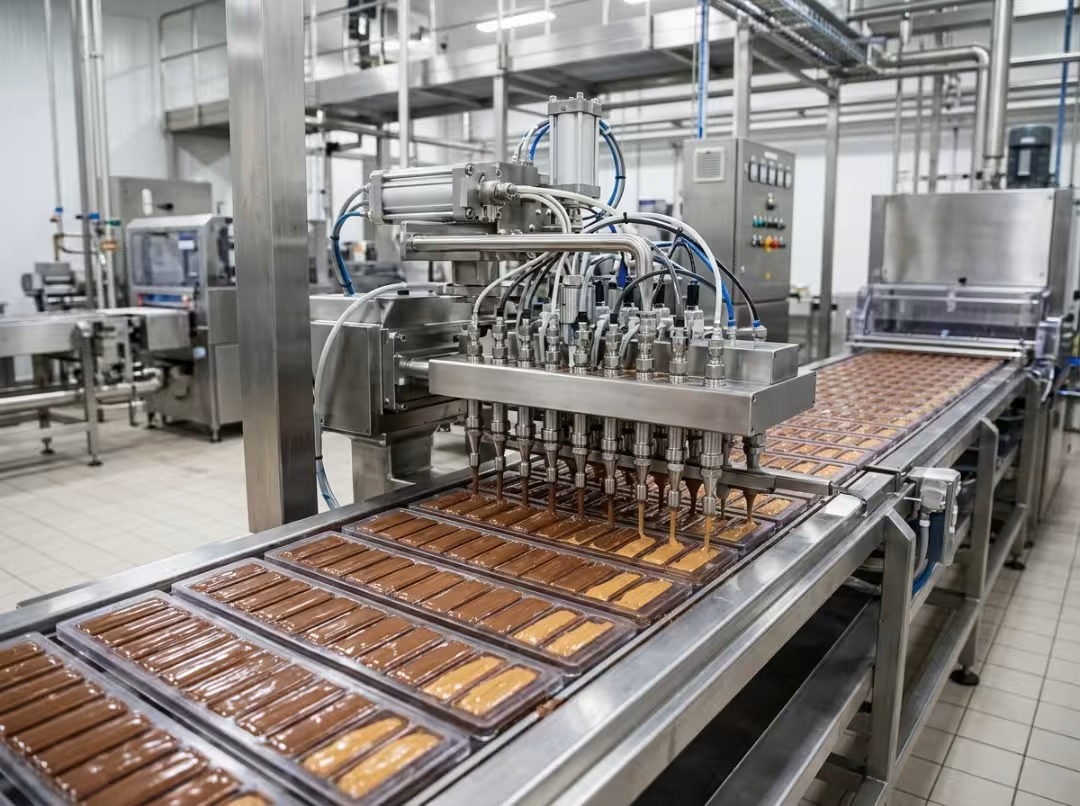
Tempered chocolate flows to a chocolate depositor, which doses precise volumes into molds on a chocolate moulding line. Vibration removes trapped air, and scraping levels the mold tops before the bars enter the cooling phase.
The depositor choice is driven entirely by the product. A standard depositor handles solid bars—one material, one pass. A one-shot depositor places the shell and filling simultaneously, which is the only practical way to produce filled, layered bars at scale. Getting this wrong is one of the more costly spec errors in chocolate line procurement, because adapting a solid-bar line to filled production after installation is rarely straightforward or cheap.
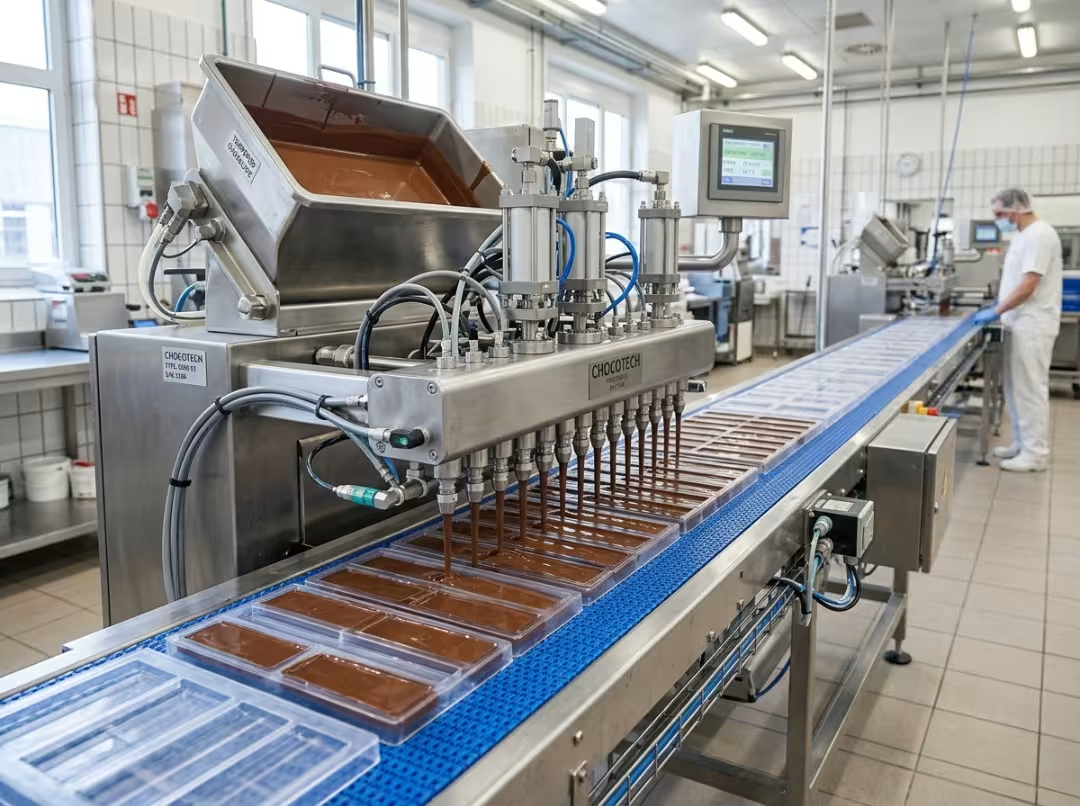
This decision also isn’t just about today’s product. If filled bars are a realistic medium-term possibility, the depositor choice should account for that roadmap from the start.
Cooling: The Stage Most Often Underspecced
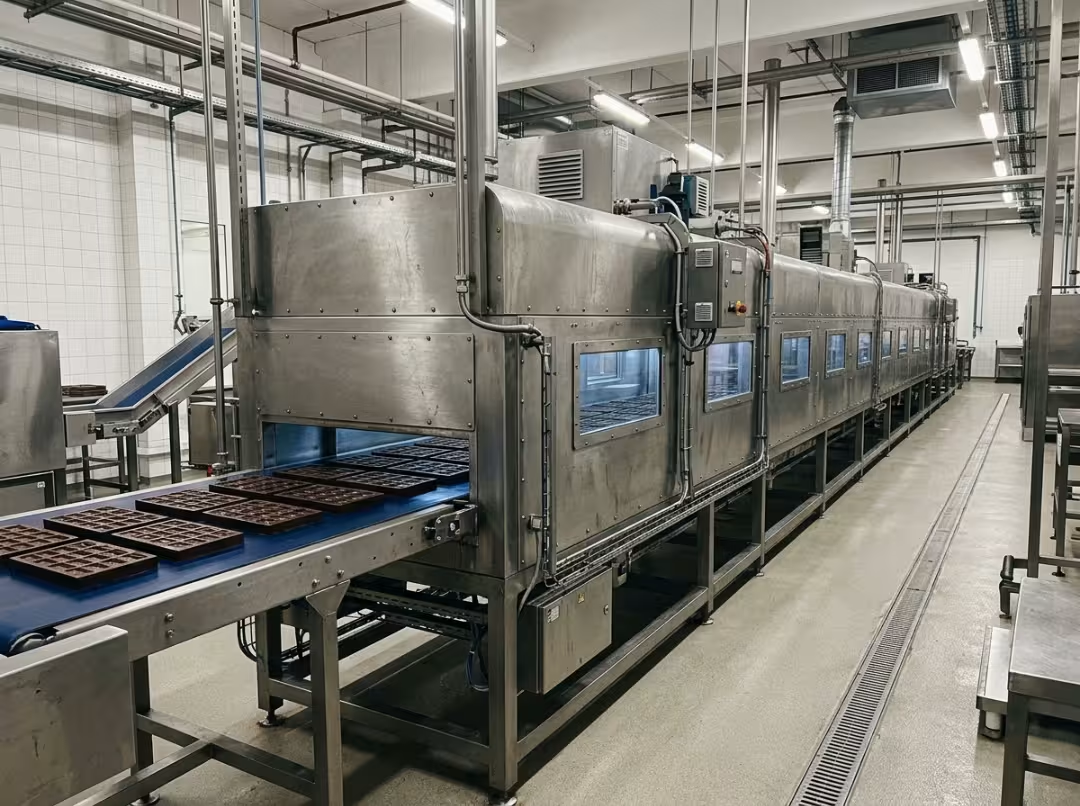
Buyers tend to compare depositing speed and assume that’s where line performance is decided. In practice, the cooling tunnel is where output is most frequently capped—and where the gap between spec-sheet rate and real throughput is most commonly explained.
Chocolate needs controlled, gradual cooling to complete its crystal structure, demold cleanly, and exit the tunnel without bloom or cracking. Tunnel length, temperature zones, and dwell time all have to be matched to front-end speed. If there is one section that gets underspecified in too many projects, it is the cooling tunnel. Buyers accept a fast depositor quote, don’t ask whether the tunnel was sized to sustain that speed, and discover at commissioning that the line has to run slower than promised to maintain acceptable quality.
Rush the cooling or run it too cold and the failure modes stack up: fat bloom, cracking, stress marks, poor mold release, elevated reject rates.
Wrapping: The Final Gate That Governs Line Rhythm
Packaging is frequently treated as a downstream utility. In production, it behaves more like a line governor. If the wrapping section can’t accept bars at the rhythm the front end produces them, the whole line backs off to that pace—or product backs up between stations.
A line that molds and cools 300 bars per minute but wraps 200 bars per minute has an effective capacity of 200 bars per minute. Flow-wrapping throughput must be specified to match the front end, not simply to handle the product. This is a straightforward calculation that is skipped more often than it should be.
Process Flow: Where Things Go Wrong
Rather than walking through every step, it’s more useful to know where each stage typically fails.
Mixing and refining
Inconsistent ingredient dosing creates batch-to-batch variation that compounds downstream. Incomplete refining leaves particle size too coarse, and the resulting gritty texture carries through to the finished bar.
Conching
Two failure modes, opposite ends of the same parameter. Under-conching leaves harsh, volatile off-notes that don’t resolve. Over-conching flattens the flavor and burns the cycle time, which can’t be recovered. The correct duration is recipe-specific and should be validated rather than estimated.
Tempering
Drifting temperature setpoints and poor seed control are the usual culprits. When tempering slips, the damage isn’t contained to a few bars—it affects the entire run, often becoming visible only after bars have cooled or been packaged. This is why tempering problems are frequently caught too late.
Molding, cooling, and demolding
Trapped air pockets leave voids in the bar face. Cooling that is too fast or too cold causes cracking and stress marks. Bars that look acceptable at deposit can still fail at release if cooling and mold handling are misaligned.
Final checks before packing
Checkweighing, metal detection, and visual inspection are the last line of defense. Undetected weight drift compounds quietly across a shift. Foreign-body escapes that reach customers represent a different category of problem entirely. This stage is not an afterthought.
Capacity: Why Rated Output Is Not Real Output
How suppliers quote capacity—and why the numbers aren’t comparable
Capacity is quoted in kg/hour or bars/hour, and the two aren’t interchangeable without knowing bar weight. A figure in kilograms tells you nothing about bar count until that variable is fixed. More important is the gap between theoretical machine rate and finished, sellable output at the end of a real shift.
Capacity figures are only comparable when the product basis is comparable. A quote built around a 10 g bar and one built around a 50 g bar don’t tell you the same story, even when the headline numbers look similar. Before comparing quotes, confirm the product weight, format, and filling status for each figure.
Why stated capacity routinely exceeds real throughput
Spec-sheet numbers assume continuous, single-product running with no changeovers, cleaning cycles, or operator interruptions. Real production doesn’t work that way. Changeover time, cleaning schedules, product complexity, and staffing all pull actual output below the rated figure. The more product variety you run, the less useful the headline capacity figure becomes.
This isn’t necessarily a sign of a dishonest quote—it’s a predictable consequence of comparing ideal-condition specifications against real-world operating patterns. The question worth asking is how much of that gap the supplier will acknowledge before the sale rather than after.
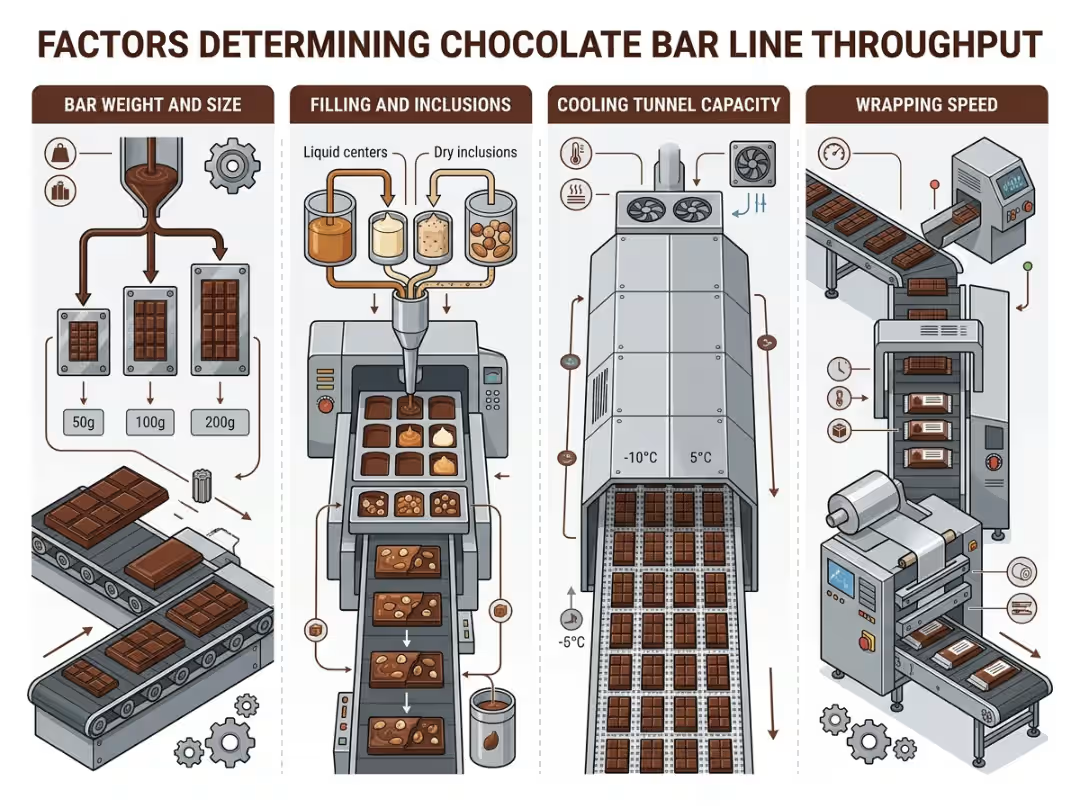
The four variables that actually determine real throughput
- Bar weight and size — heavier or larger bars reduce bars per hour at the same kg rate and change mold cycle dynamics.
- Fillings and inclusions — these slow-depositing materials complicate surface finish and can affect demolding consistency.
- Cooling tunnel capacity — the most common hidden ceiling. Tunnel output governs the whole line, not depositor speed.
- Wrapping speed — the final constraint. Upstream speed is irrelevant if packaging can’t absorb it.
Matching line scale to your operation
|
Line tier |
Automation |
Best-fit use case |
|---|---|---|
|
Small / artisan |
Semi-automatic |
Startups, craft brands, product testing, short-run specialty |
|
Mid-scale |
Higher automation |
Growing regional brands, multi-SKU producers scaling distribution |
|
Large industrial |
Fully automated |
High-volume national or export supply, multi-shift continuous operation |
These categories are useful as planning shorthand, but they are not a substitute for specifying your actual product mix and operating pattern. A mid-scale line built for one SKU will behave very differently from one designed to handle six.
Flexibility versus speed: the trade-off most buyers underweight
A highly automated, high-speed line earns its value only when running long, consistent batches of the same product. A more flexible line—with faster changeovers and broader format compatibility—is often the better business decision for producers running frequent campaigns, short runs, or several bar formats in the same week. It may show a lower peak throughput figure and still deliver more usable capacity across the month.
Build in growth headroom, but don’t pay upfront for idle capacity you won’t reach for years. Modular lines allow phased expansion—adding cooling capacity, depositor heads, or wrapping speed as volume actually grows rather than front-loading the investment on a forecast.
Product Types and How They Change Your Line Configuration
Solid bars
The most straightforward configuration. A standard depositor and a conventional moulding line cover the requirement. Fewer process variables, faster changeovers between bar weights or shapes, lower initial cost. A reasonable starting point for producers validating demand before committing to a more complex setup.
Filled bars
From a sales perspective, adding a filled bar looks like a line extension. From a process standpoint, it’s a more significant step than it appears. Filled bars require a one-shot depositor to place shell and filling in a single coordinated pass. Filling viscosity and temperature have to be closely controlled—too thick and the fill won’t deposit cleanly; too warm and it disturbs the shell before it sets. The process margin is tighter than solid bar production, and that tightness shows up in reject rates when parameters drift.
Bars with inclusions
Nuts, crisped rice, dried fruit, and similar additions require even distribution during depositing—otherwise bars vary in both appearance and eating quality. They also affect surface texture, which can complicate the consistency of wrapping. Inclusion handling is routinely underestimated during specification, both in terms of the feeder equipment required and the downstream impact on demolding and wrapping.
Specialty and compound bars
Sugar-free, high-cocoa, and compound-coated products change the process in ways that go beyond adjusting a few parameters. Compound coatings use vegetable fat rather than cocoa butter and don’t require conventional tempering, which shifts how cooling is managed and what temperature control the line needs. For coated bars specifically, a chocolate enrobing machine represents a different production route from molding—coating a formed center rather than casting chocolate in a mold. These are not interchangeable approaches; the product determines which route makes sense.
Six Questions to Ask Any Supplier Before Buying
These questions are worth putting to every supplier before contracts are signed. They’re useful not only for the answers they produce, but for what those answers reveal about how well a supplier actually understands your operation.
- What product and cycle rate was the capacity figure based on? If the answer doesn’t specify bar weight, format, and filling status, the number has limited value for your evaluation.
- Is this line better suited to solid or filled bars? A candid answer reveals what the line was actually designed and optimized for.
- Is the cooling tunnel likely to be the bottleneck at the quoted throughput? If it wasn’t sized to sustain front-end speed, it will be—regardless of what the depositor spec says.
- How long do recipe changeovers and cleaning typically take? This is where multi-SKU throughput disappears, and the honest figure is rarely the one quoted up front.
- Can the line be expanded in a modular way if volume or SKU count grows? Designing for expansion now is consistently cheaper than retrofitting later.
- Does wrapping speed match front-end throughput at the quoted production rate? A mismatch here silently caps everything upstream.
Frequently Asked Questions
How much does a chocolate bar production line cost?
There is no useful answer without first fixing three variables: target output, product format, and automation level. A semi-automatic line for solid bars at artisan volumes and a fully automated line for filled bars at industrial throughput are not comparable investments. Request quotes tied to your specific product and a realistic output target rather than comparing headline prices across different specifications.
Can one line produce both solid and filled bars?
It can, but only if that flexibility is designed in from the start. A line built around a one-shot depositor can run both formats. A line specified for solid bars only can rarely be converted to economically fill-producing after the fact. Decide the product range before buying, not after.
What’s the difference between a one-shot depositor and a standard depositor?
A standard depositor places a single chocolate mass into molds—straightforward for solid bars. A one-shot depositor deposits shell and filling in a single simultaneous pass, which is what filled and layered products require. The one-shot option adds process complexity and cost; the standard option is simpler and cheaper if the product range stays solid.
What usually limits line output first?
In most installations, the first hard limit occurs in cooling rather than in deposition. The cooling tunnel determines how fast bars can be set, released, and transferred consistently—and it’s the component most commonly specified too short relative to front-end speed. Wrapping speed is the second most frequent constraint. Both are easier and cheaper to get right at the design stage than to address after installation.
How much floor space does a chocolate bar line need?
The cooling tunnel is usually the longest single component and the main driver of footprint. Small semi-automatic lines fit into compact workshops; large industrial lines with extended cooling sections and inline wrapping need substantial floor area. Ask suppliers for a dimensioned layout drawing before ordering so that floor loading, utility connections, and maintenance clearances can all be confirmed.
How long does installation and commissioning take?
This depends on line size, site readiness, and the extent of integration with upstream and downstream equipment. Before signing, confirm who is responsible for installation, commissioning, trial runs, and operator training—and what the acceptance criteria are. These details matter more than the quoted lead time.
Buying for the Line You Actually Run
A chocolate bar production line earns its return when product type, throughput, cooling capacity, and packaging speed are matched to each other and to real operating patterns. Lines that underperform usually do so because one of those four variables was underspecced, not because the individual machines were wrong.
Before approaching any supplier, define three things: the bar formats you plan to produce, a realistic output target based on your actual shift schedule, and your expected SKU complexity. Those three inputs will sharpen every conversation you have with equipment manufacturers and make the quotes you receive genuinely comparable.