
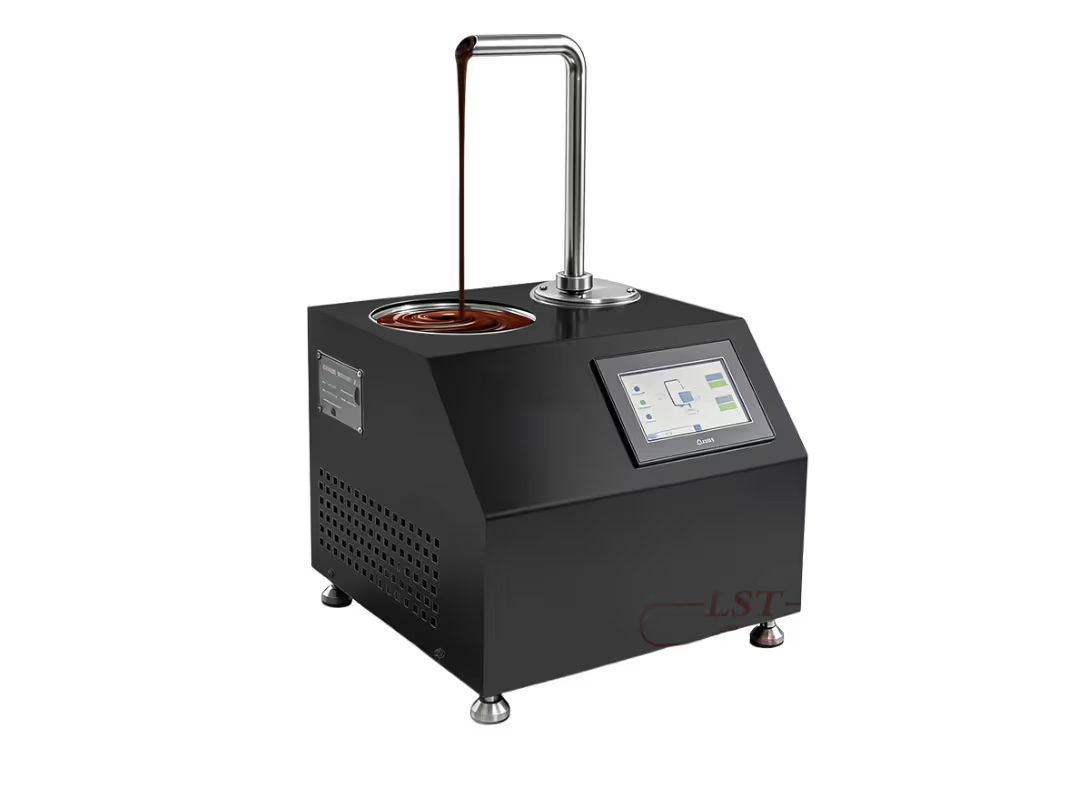
A chocolate dispenser is a countertop machine that keeps chocolate melted at a stable temperature and releases it in controlled amounts on demand. It is not a chocolate fountain. It is not a tempering machine. Understanding that difference will save you from a costly purchase mistake.
If your kitchen uses melted chocolate daily—to finish drinks, glaze pastries, or plate desserts—a dispenser can meaningfully improve consistency and speed. If you melt chocolate occasionally at home, it probably isn’t worth the investment or the cleanup.
This guide explains what a dispenser actually does, how it compares to similar equipment, who genuinely needs one, and what to look for when buying.
What Is a Chocolate Dispenser?
At its core, a chocolate dispenser is a heated reservoir with a controlled output. You load it with chocolate, set a temperature, and the machine keeps it in a smooth, pourable state for hours. When you need it, you pull a lever or press a button, and chocolate flows out through a valve or pump.
The value isn’t just warmth. It’s consistency. A dispenser maintains the same temperature from the first pour of the morning to the last of the afternoon. That means the same flow, the same texture, and the same finish across every item you make—without reheating, stirring, or babysitting a bowl.
Two things set a dispenser apart from simpler options. First, it passively maintains temperature, so the chocolate is always ready. Second, it controls output, so you’re not ladling or estimating by hand.
What it doesn’t do: temper. A chocolate dispenser cannot produce the glossy, snap-when-you-break-it finish of properly tempered chocolate. That requires a separate process. More on this below.
Why Kitchens Use Chocolate Dispensers
The case for a dispenser comes down to three practical advantages that compound over a busy service.
Consistent output, every time
Manual melting drifts. A bowl of chocolate warmed on a bain-marie starts thick, loosens as it heats, then stiffens again as the bowl cools. The result is uneven drizzles, inconsistent glazes, and a finish that looks different from one item to the next.
A dispenser eliminates that drift. The thermostat maintains a fixed temperature, so the chocolate behaves the same at 7 a.m. as at 2 p.m. For a café producing 150 drinks a day or a bakery glazing dozens of pastries each morning, that consistency matters.
Speed when it counts most
During a rush, every step that requires stopping—re-melting a bowl, waiting for chocolate to soften, refilling a piping bag—creates a bottleneck. A dispenser removes those stops. The chocolate is already at the right temperature and ready to flow. One pull of the lever, and you’re done.
Less mess, less waste
Bowls of melted chocolate create drips, spillage, and hardened residue. A dispenser keeps the chocolate contained in a sealed reservoir. You use what you need. What’s left stays usable. The station stays cleaner, and the amount of chocolate you throw away at the end of service drops considerably.
These advantages compound in a real kitchen. A café finishing specialty drinks, a bakery glazing a morning production run, and a dessert kitchen adding chocolate accents to plated dishes all benefit from the same fundamentals: ready chocolate, reliable flow, repeatable results.

Chocolate Dispenser vs. Melter vs. Fountain vs. Tempering Machine
This is where most buyers go wrong. These four types of equipment look similar in category listings but serve genuinely different purposes. Buying the wrong one means paying for a machine that doesn’t solve your problem.
Dispenser vs. chocolate melter
A melter’s job is to melt and hold a large volume of chocolate. Most melters don’t have a precise dispensing mechanism—you scoop or ladle from them, often to fill a separate container or dispenser. They’re workhorses for bulk production.
A dispenser is built around controlled output at the point of use. You dispense directly from it, into a cup, onto a pastry, or across a plated dessert. If you need portion control and a clean pour at the service point, a melter alone won’t provide them. If you need to melt 20 pounds of chocolate for a production batch, a dedicated melter makes more sense than a small dispenser.
Some larger units combine both functions—marketed as melter-dispensers—and those can work well for busy kitchens that need volume and control.
Dispenser vs. chocolate fountain
A fountain circulates thinned chocolate over tiered rings in a decorative cascade. It’s designed for self-serve dipping at events—fruit, marshmallows, pastry bites. The visual effect is the point.
A dispenser is a working kitchen tool. It’s not decorative. It’s not self-serve. If you’re running a wedding buffet or a dessert station at an event, a fountain fits. If you’re behind a counter finishing drinks and plating desserts through a full-service, a fountain doesn’t belong there.
Dispenser vs. tempering machine
This distinction is the most important one to get right, and the most frequently misunderstood.
Tempering is the process of heating and cooling chocolate through precise temperature stages to stabilize the cocoa butter crystals. When done correctly, the chocolate sets hard, shiny, and with a clean snap. This is what you need for molded chocolates, dipped truffles, and coated confections that look professional.
A chocolate dispenser does not temper. It melts chocolate and holds it warm. If you fill a dispenser with untempered chocolate and let it set, it will likely look dull, feel soft, or develop white streaks—signs of untempered cocoa butter.
For drizzling over drinks, glazing cakes, or finishing dessert plates, tempering isn’t necessary. The chocolate doesn’t need to set hard or look glossy in that context. That’s precisely why dispensers work so well for those tasks. But if your output is bonbons, enrobed bars, or molded shells, you need a machine that actually controls tempering—and a dispenser is the wrong tool.
What about a double boiler or microwave?
Both melt chocolate reliably. Neither holds temperature through a full service. Both require you to monitor and reheat repeatedly. For occasional home use, that’s a reasonable trade-off. For a kitchen doing volume, it creates friction at exactly the wrong moments.
|
Feature |
Chocolate Dispenser |
Chocolate Melter |
Chocolate Fountain |
Tempering Machine |
|---|---|---|---|---|
|
Main purpose |
Controlled dispensing at point of use |
Melting and holding large volume |
Decorative dipping |
Producing properly tempered chocolate |
|
Portion control |
High |
Low to medium |
None |
Medium |
|
Keeps chocolate melted |
Yes |
Yes |
Yes |
Yes |
|
Keeps chocolate tempered |
No |
No |
No |
Yes |
|
Best for |
Drinks, glazing, drizzling, plating |
Bulk production batches |
Events, buffets, self-serve |
Bonbons, molds, coatings, enrobing |
|
Typical setting |
Café, bakery, dessert kitchen |
Production kitchen |
Catering, events |
Chocolatier, patisserie |
How a Chocolate Dispenser Works
The mechanism is simple. A reservoir holds the chocolate. A heating element warms it. A thermostat holds the temperature in range. When you activate the dispensing mechanism—usually a lever or button—chocolate flows out through a valve or is pushed through a nozzle by a pump. In larger production setups, a dedicated chocolate delivery pump handles this transfer role between holding tanks and dispensing points.
Two design approaches exist, and the choice between them affects daily performance and cleaning effort.
Gravity-fed dispensers rely on the chocolate’s own weight to flow through a valve at the bottom of the reservoir. They’re straightforward, easier to take apart, and easier to clean. The trade-off is that flow can vary as the reservoir empties or as chocolate thickness shifts with temperature.
Pump-style dispensers use a motorized pump to deliver chocolate consistently, regardless of the reservoir level. The flow is more uniform and better suited to precise portioning. The pump adds complexity to the cleaning process.
One factor that buyers often overlook: the chocolate itself. Higher cocoa butter content means better flow and less strain on pumps and valves. Standard chocolate chips—which contain stabilizers to hold their shape—often melt more slowly and can clog a dispenser that wasn’t designed to handle them. The machine and the chocolate need to be matched.
Who Actually Needs a Chocolate Dispenser?
The honest answer is: not everyone. Here’s how to judge whether one makes sense for your situation.
Cafés and beverage counters
If you’re finishing drinks with chocolate—mochas, hot chocolates, specialty lattes, chocolate shakes—throughout a full service, a dispenser is a strong fit. The chocolate is always ready, the finish is consistent, and during a rush, the time savings are real. High volume and repeatable output make a clear case.
Bakeries and dessert kitchens
A bakery glazing trays of pastries or cakes every morning benefits from a steady, even flow it can count on. The same goes for a dessert kitchen adding chocolate accents to plated dishes during dinner service. When you’re producing dozens or hundreds of items, both the time saved and the consistency gained justify the machine.
Chocolatiers and confectionery production
Here the picture gets more nuanced. If you’re making drizzled bark, chocolate-dipped fruit, or sauce-finished desserts, a dispenser works well. If you’re producing molded chocolates, bonbons, or coated truffles that need to set with a glossy finish, a dispenser is not enough—you need a tempering machine, not a holding appliance.
Home users
For most people baking at home a few times a month, a dispenser isn’t worth the cost or the maintenance. A double boiler or microwave melts the chocolate, and the effort of cleaning a dispenser between occasional uses quickly outweighs any convenience.
The right question to ask yourself: do I dispense chocolate repeatedly in a single session, do I need consistent results across many items, and does speed matter during peak demand? If yes to all three, a dispenser earns its place. If not, simpler tools will do.
The Main Types That Matter
Within the dispenser category, three formats account for most real-world buying decisions.
Gravity-fed dispensers
The simpler, more affordable option. Chocolate flows out by gravity through a valve at the base. Good for smaller cafés and operations where consistent portion size isn’t critical. Easy to disassemble and clean. Flow can become less predictable as the reservoir level drops.
Pump-style dispensers
More suited to operations that need uniform output throughout the service. The pump maintains consistent pressure regardless of how much chocolate is in the reservoir. Better for precise drizzles, portioned toppings, and high-frequency use. Cleaning requires greater attention due to the pump components.
Large commercial melter-dispenser units
Designed for kitchens that need both volume and control in a single machine. Higher capacity, stronger temperature systems, built for continuous use. They cost more, take up more counter space, and require a proper cleaning routine—but for a busy production kitchen, the trade-offs make sense.
Quick note on what doesn’t belong in this category: chocolate fountains, hot chocolate machines (which reconstitute powder or syrup into a beverage), and candy dispensers (which release solid pieces by gravity) are different products. Don’t confuse search results for any of these with a chocolate dispenser.
How to Choose the Right Chocolate Dispenser
The goal is to match the machine to your real daily workload—not to the busiest day you might ever have.
Define your primary use first
A café topping drinks needs different things than a bakery finishing cakes. The use case determines whether you need gravity-fed or pump-style, small or large, simple or feature-heavy. Be specific about what you’ll actually do with the machine.
Size capacity to your real volume
The most common buying mistake is overestimating how much capacity you need. An oversized reservoir means heating and cleaning more chocolate than you use, which wastes product and adds time. Estimate your realistic peak-period demand and buy to match that—not to exceed it by a wide margin.
Gravity or pump?
If consistency, precise portions, plating stations, premium drink finishing, and uniform accents matter—choose pump-style. If simplicity and easy cleaning are priorities and slight variation in flow is acceptable, gravity-fed systems keep things straightforward.
Prioritize temperature stability over features
The thermostat is the most important component in a dispenser. A precise, stable thermostat keeps chocolate in the right range for hours. An imprecise one lets it drift—too hot and the chocolate thins out or scorches; too cool and it stiffens and clogs. Flashy controls mean nothing if the actual temperature control is weak.
Think about cleaning before you buy
Every machine looks manageable in a brochure. The question is how it disassembles in practice. Can you easily access the valve, the pump, and the reservoir? Are the parts that touch chocolate removable for proper cleaning? Machines that are hard to clean get cleaned poorly, which shortens lifespan and eventually affects product quality.
Confirm the chocolate you use is compatible
Check whether the machine is designed to handle the chocolate or coating you already use. A thick compound coating behaves very differently from a high-cocoa-butter couverture. If you buy a dispenser and find out your chocolate doesn’t flow through it properly, you now have two problems.
|
Use case |
Machine type |
What to prioritize |
|---|---|---|
|
Home / occasional use |
Skip the dispenser |
A double boiler handles it fine |
|
Small café |
Gravity-fed |
Reliable thermostat, easy cleaning, compact size |
|
Bakery / dessert kitchen |
Pump-style or mid-capacity unit |
Consistent portions, stable flow, moderate capacity |
|
High-volume kitchen |
Large melter-dispenser |
High capacity, robust temperature control, durable construction |
Common Problems Buyers Run Into
Most complaints about chocolate dispensers stem from a handful of avoidable issues.
Chocolate turns thick or seizes
This almost always traces back to moisture or temperature. Even a small amount of water—from a damp spoon, condensation on a cold bowl, or steam nearby—can cause chocolate to seize into a stiff, grainy mass that won’t flow. Keep utensils and the reservoir completely dry. If the thermostat is running too cool, the chocolate will also stiffen even without moisture contact.
The finish looks dull or soft
This happens when buyers expect tempered results from an untempered machine. A dispenser holds chocolate melted. It doesn’t control crystallization. If the chocolate needs to set with gloss and snap—for coatings, dipped products, or molded pieces—you need to temper it separately or use a machine that holds temper. For drizzles and glazes that don’t need a hard set, this isn’t a concern.
Cleaning is harder than expected
Pump-style units and large commercial machines have more internal parts, and hardened chocolate in a pump or valve is stubborn. Buyers who don’t factor cleaning into their daily workflow find that the machine degrades faster and starts to affect product quality. The true cost of a dispenser isn’t just the purchase price—it includes the cleaning time every service.
Temperature control is unreliable on budget units
Cheap dispensers often use imprecise thermostats that swing too hot or too cool. The result is inconsistent chocolate through a single service. Spending a little more on a unit with a reliable thermostat is usually cheaper than the chocolate you’ll waste trying to compensate for a bad one.
The reservoir is too large for actual use
Buyers imagine their busiest possible day and buy to match it. In practice, they heat and clean more chocolate than they need every service. Right-sizing the capacity to typical demand—not hypothetical peak demand—saves time, product, and energy.
Best Practices for Daily Use and Cleaning
A few consistent habits keep performance high and problems rare.
- Preheat before loading if the manufacturer specifies it. Adding chocolate to a cold reservoir can cause uneven melting and stress the heating element.
- Keep everything dry. Wipe the reservoir, utensils, and your hands before any contact with chocolate. Water is the most common cause of seized chocolate in dispensers.
- Use the right chocolate. Higher cocoa butter content means better flow, fewer clogs, and less wear on pumps and valves. Couverture chocolate is typically a better fit than standard chips.
- Clean immediately after service. Warm chocolate wipes away easily. Set chocolate requires force and often damages components. Don’t let residue harden overnight.
- Build a cleaning schedule in commercial kitchens. A daily clean of the reservoir and valve, plus a weekly deep clean of internal parts, keeps flow consistent and prevents off-flavors from building up. Most kitchen cleaning problems with dispensers stem from inconsistency, not the machines themselves.
FAQs
How long can chocolate stay melted in a dispenser?
Under stable temperature control with no moisture exposure, chocolate can remain usable for a full service day—typically 8 to 12 hours. The quality holds as long as the temperature stays correct. Don’t leave it heated overnight.
Can I use regular chocolate chips in a chocolate dispenser?
Not always. Standard chips contain stabilizers that prevent them from fully melting smoothly. When melted, they often produce a thicker consistency that can clog spouts or strain pumps. Couverture chocolate or chocolate designed for melting performs much better.
Can a chocolate dispenser temper chocolate?
No. A standard dispenser holds chocolate at a warm, melted temperature. Tempering requires moving chocolate through specific heating and cooling stages to control cocoa butter crystallization—a process dispensers don’t perform. If you need tempered chocolate, use a dedicated tempering machine or temper before loading.
What’s the difference between a chocolate melter and a chocolate dispenser?
A melter’s priority is to melt and hold a large volume of chocolate. Most melters don’t dispense precisely—you scoop from them. A dispenser’s priority is controlled, portioned output at the point of use. Some larger machines combine both functions.
Why is my chocolate turning thick or lumpy?
The two main causes are incorrect temperature and exposure to moisture. If the machine runs too cool, chocolate stiffens. If any water comes into contact with the chocolate, it can seize. Keep everything dry and verify the thermostat is holding the correct temperature.
Is a chocolate fountain the same as a chocolate dispenser?
No. A fountain circulates thinned chocolate in a visual cascade for self-serve dipping. A dispenser releases measured amounts of chocolate on demand for use at a kitchen or service counter. They’re built for different contexts.
What temperature should a chocolate dispenser be set to?
It varies by chocolate type, but most dispensers hold melted chocolate between roughly 104–113°F (40–45°C) to keep it fluid without overheating. Follow the machine manufacturer’s guidance and adjust based on how your specific chocolate flows.
Is a chocolate dispenser worth it for home use?
For most home bakers, no. Occasional use doesn’t justify the cost, counter space, or cleaning routine. A double boiler or microwave handles the job well enough. A dispenser becomes worth considering at home only if you’re producing chocolate items regularly and want hands-free consistency.
Is a Chocolate Dispenser Worth It?
For occasional home use, probably not. A double boiler handles the job with none of the overhead.
For commercial kitchens that dispense chocolate through a full service, the calculus changes. The time saved, the reduction in waste, and the improvement in consistency typically justify the cost fairly quickly—especially in high-volume settings where every service minute matters.
Four things determine whether a dispenser is worth it for your operation: how often you use melted chocolate, how much consistency you need across your output, how much peak-hour pressure your service faces, and how willing you are to maintain the machine. If the answer to the first three is “a lot,” and you’ll commit to cleaning, a good dispenser will earn its keep.
When you’re ready to buy, start by defining your typical daily volume—not your maximum—then choose the smallest machine that handles it comfortably. That decision alone will save you money, counter space, and cleanup time.