
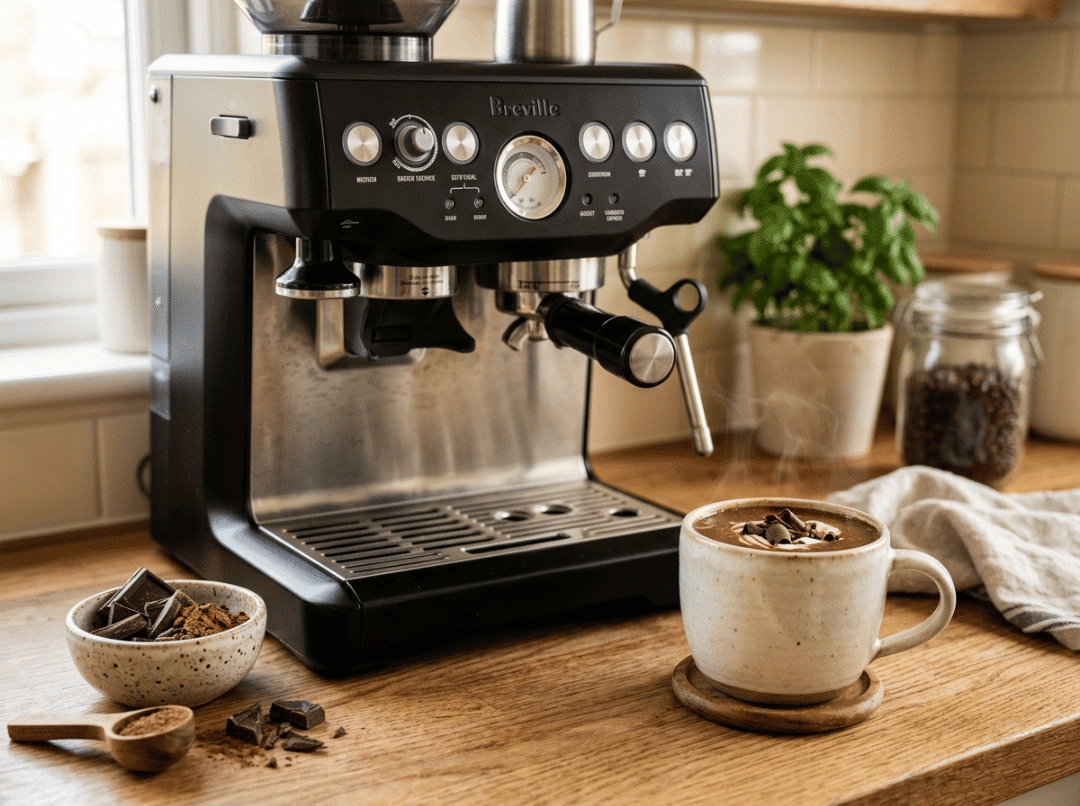
You can make hot chocolate in most coffee machines, but only by using the machine as a hot water and milk-steaming tool—not as a brewer for chocolate itself. One rule protects your equipment: chocolate melts in the cup, never inside the machine. Push powder or syrup into the brew path, and you invite clogs, sour residue, and permanent flavor contamination.
What you get depends on the machine you own. An espresso machine produces a drink close to what a café serves. A basic drip brewer barely improves on a kettle. Each machine type below is judged on what it actually delivers, with the safe method for each and the mistakes that wreck hardware.
Which Coffee Machines Can Actually Make Hot Chocolate?
Capability comes down to two features: a steam wand for milk texture and a hot water outlet for melting chocolate. The more a machine offers, the closer you get to a proper drink.
|
Machine type |
Verdict |
Best method |
Main risk |
|---|---|---|---|
|
Espresso machine |
Best option |
Steam wand + hot water tap |
Low, if chocolate stays out of internals |
|
Standalone milk frother |
Reliable |
Froth milk, stir into melted chocolate |
Low |
|
Bean-to-cup |
Milk only |
Use milk function, melt chocolate separately |
Medium |
|
Pod / capsule |
Situational |
Hot water function or dedicated pods |
Medium |
|
Drip coffee maker |
Weakest |
Hot water source only |
Low |
Espresso machines: the only genuine café-quality option
An espresso machine is the single machine type that produces hot chocolate worth comparing to a coffee shop. The steam wand heats and aerates milk into microfoam, and the hot water tap gives you a controlled pour to dissolve chocolate. No other domestic machine matches that combination of texture and temperature control.
Standalone milk frothers: the easiest safe method
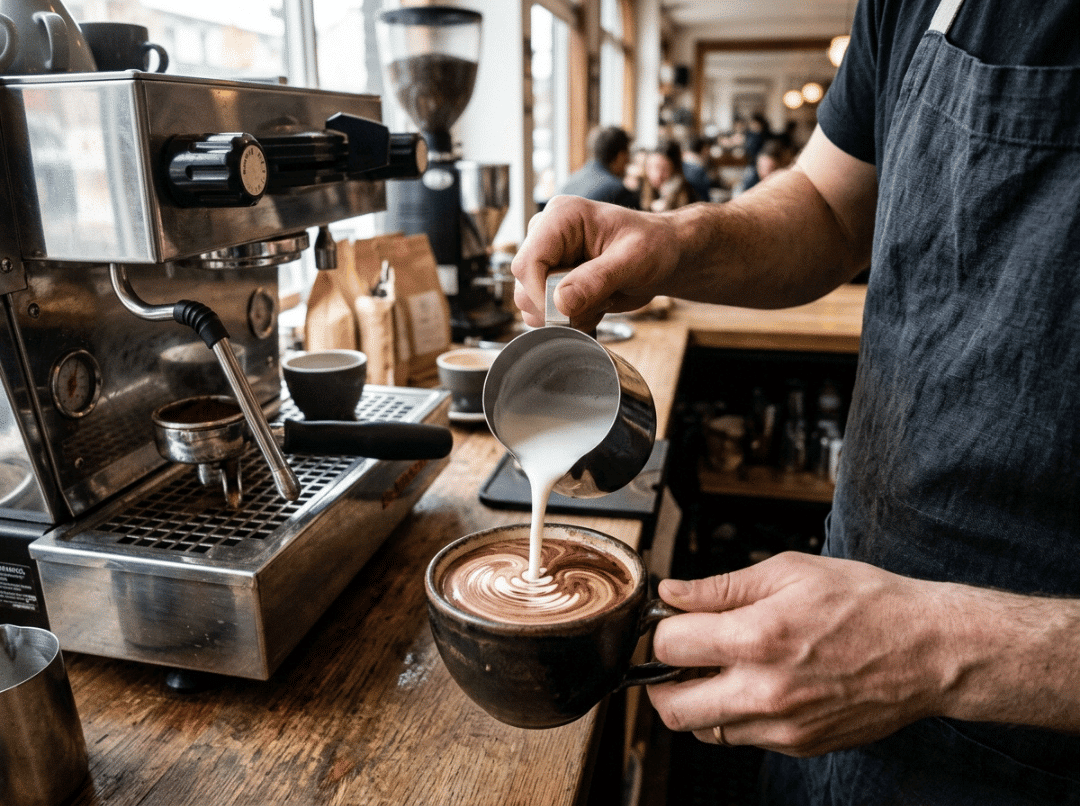
A separate frother removes every contamination risk, since chocolate never touches the machine. Froth warm milk, pour it over chocolate you’ve already melted in the mug, and stir. For consistency with minimal effort, nothing beats it.
Bean-to-cup machines: good for milk, wrong for chocolate
Bean-to-cup machines heat and froth milk well, so use them for that step alone. Their coffee channel is a sealed path built for grounds and water. Chocolate has no place inside it—melt yours in the cup and add the machine’s milk afterward.
Pod and capsule machines: only in specific setups
Pod machines work when they carry a hot water function or a companion milk frother. Some brands also sell dedicated hot chocolate pods designed for the system. Loose powder forced into the capsule holder blocks the needle and packs into a hardened mess, so leave it out.
Drip coffee makers: a kettle with extra steps
A drip maker cannot brew chocolate and offers no frothing. Its only contribution is hot water. The drink will taste fine but stay thin, so expect a lighter cup than any steam-based method delivers.
Why You Should Never Put Chocolate Powder in a Coffee Machine
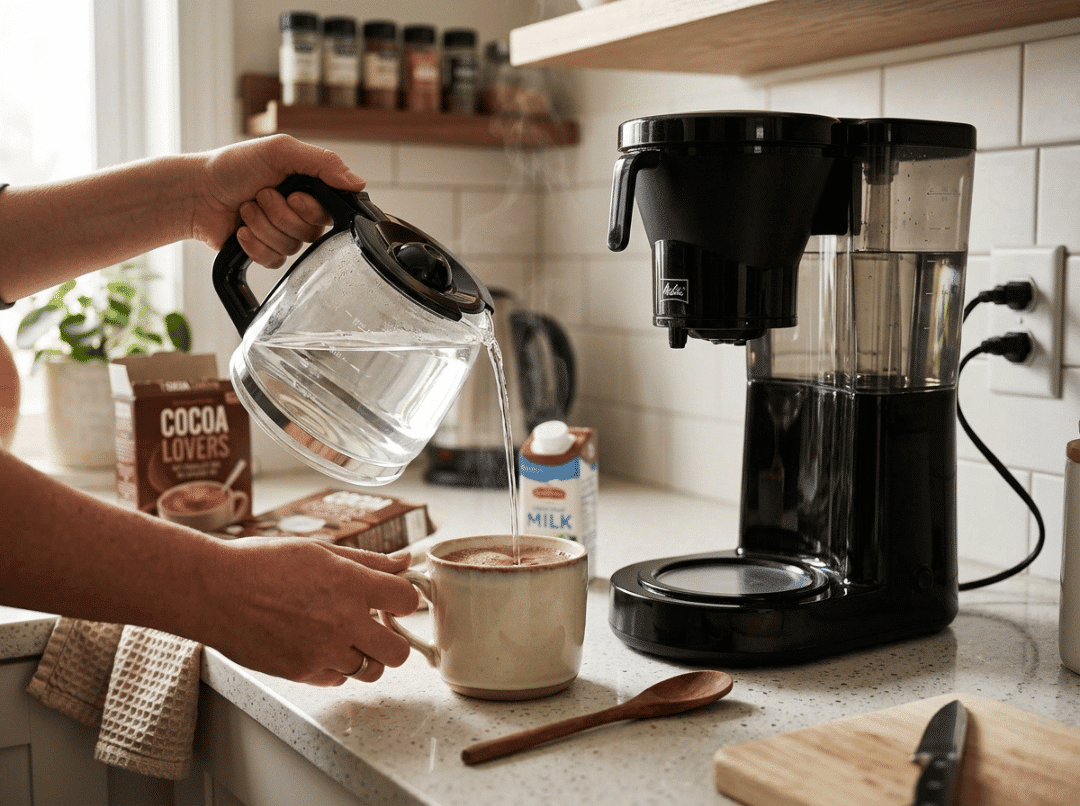
Coffee machines are engineered for dry, porous grounds and clean water. Chocolate powder and syrup are the opposite: sticky, sugary, and fat-heavy. Send either through the brew path and the damage stacks up fast.
- Clogging in the brew basket, pump, and tubing restricts flow and strains the motor.
- Sugar hardening leaves deposits that standard descaling agents won’t dissolve.
- Flavor contamination carries a stale chocolate note into every future coffee.
- Microbial growth takes hold in the warm, sugary residue trapped inside.
None of this reverses with routine cleaning. Keep chocolate in the cup, and the internal risk drops to zero.
The Safe Method for Each Machine
Every method below follows the same principle: melt the chocolate first, then use the machine for water or milk. What changes is how much the machine contributes.
Using an espresso machine
- Place chopped chocolate or 50–70% cocoa in the cup.
- Draw a small pour of hot water from the tap and stir into a smooth paste.
- Steam whole milk to 60–65°C until it forms tight microfoam.
- Pour the milk into the chocolate base and stir to combine.
- Finish with cocoa or cinnamon.
Cut the steam at 65°C. Past 70°C, milk proteins scorch and the sweetness flattens into a bitter edge. Without a thermometer, read the pitcher wall: too hot to hold for three seconds means stop.
Using a drip coffee maker
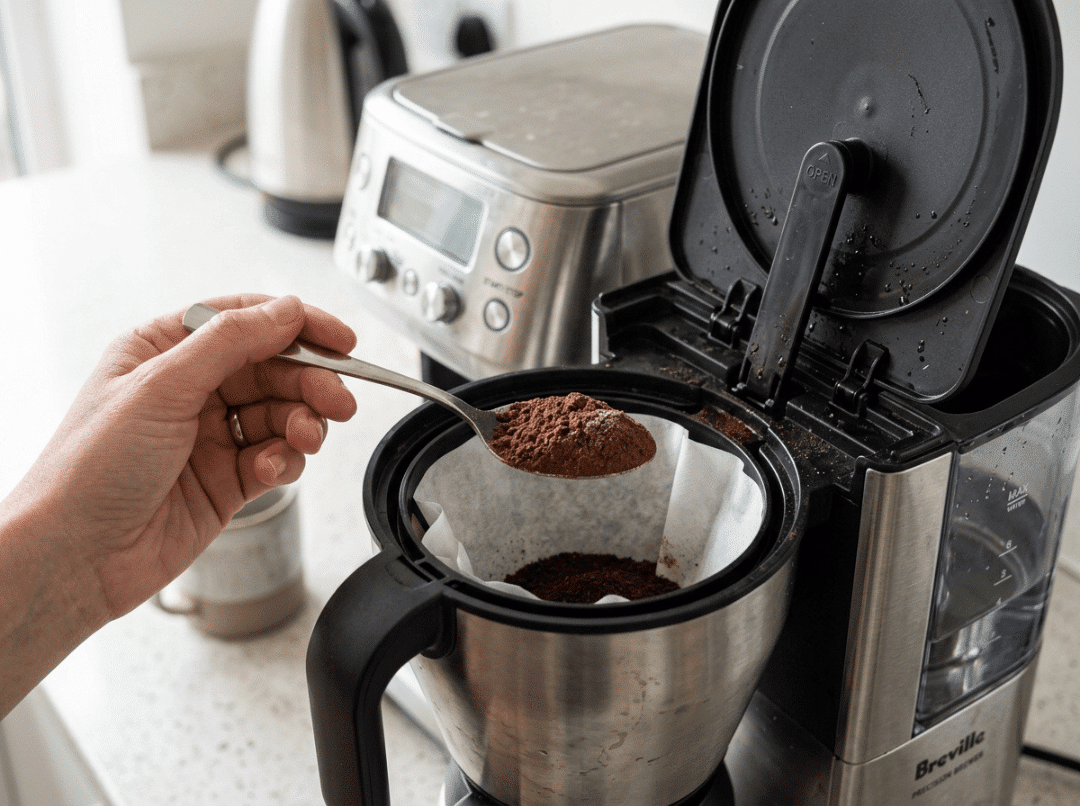
- Run the machine with clean water only—no grounds, no powder.
- Mix cocoa or chopped chocolate with a splash of that hot water in the mug.
- Top up with the remaining hot water, or with separately warmed milk for more body.
- Stir until glossy.
Texture is the ceiling here. No steam means no foam, so the drink stays thin no matter your technique.
Using a pod or capsule machine
- Melt chocolate in the mug with a small pour from the hot water function.
- Fill the cup with hot water or frothed milk and stir smooth.
- If your system sells dedicated hot chocolate pods, use those for a clean, repeatable result.
Never pack loose powder into the capsule holder. It won’t dispense like coffee—it compacts, jams the needle, and leaves residue that resists cleaning.
Milk or Water: Which Belongs in Your Cup?
Milk delivers richness; water delivers a lighter, dairy-free drink. The choice tracks the flavor and body you want.
Whole milk builds a fuller mouthfeel and stable foam, and it softens the sharpness of high-cocoa chocolate. It also carries more calories and scorches if overheated.
Water keeps the drink light and fast, and it lets a good dark chocolate show its full character. Pair it with lower-quality cocoa, though, and any bitterness comes through unmasked.
A split of milk and water gives you richness without the heaviness—useful when you’re serving darker chocolate to a mixed crowd.
Common Mistakes That Ruin the Drink or the Machine
- Loading powder into the brew basket or pod holder — the fastest way to clog the system.
- Overheating milk past 70°C — scorches the proteins and turns the flavor bitter.
- Reaching for cheap, lump-prone powder — real chopped chocolate melts evenly and tastes fuller.
- Skipping the melt-first step — leaves gritty, undissolved specks in the cup.
- Leaving the steam wand uncleaned — dried milk hardens inside and breeds bacteria.
- Ignoring the chocolate-to-liquid ratio — produces a drink that’s either watery or too dense to sip.
When a Coffee Machine Stops Being Enough
A coffee machine handles a home mug or the occasional order without trouble. It turns into a workaround the moment you need volume and consistency—cafés, dessert shops, and chocolate studios all reach that wall fast.
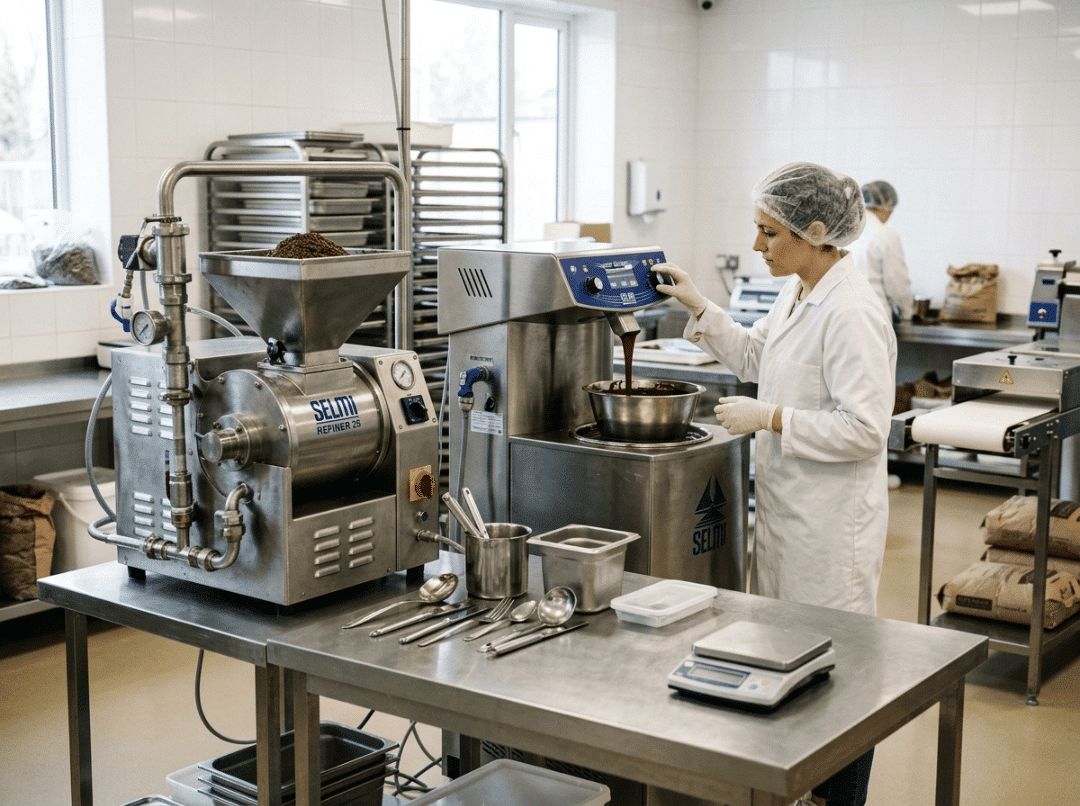
Two limits force the shift. A coffee machine can’t hold chocolate at a stable working temperature across dozens of servings, and it can’t refine chocolate into the smooth, pourable base repeat production demands. That’s where dedicated equipment earns its place:
- A chocolate tempering machine holds chocolate at the correct crystal structure, delivering a glossy, stable finish serving after serving.
- A ball mill machine refines chocolate into the fine, silky texture that beverage bases, sauces, and fillings require.
Once your use case moves from single cups to steady service, a coffee machine keeps capping your output. Matching the right chocolate equipment to your volume is what makes every cup consistent. If you’ve reached that point, talk to us about the setup that fits your production.
Frequently Asked Questions
Can you put hot chocolate powder in a coffee maker?
No. Powder clogs the brew system, hardens into sticky residue, and contaminates the flavor of future coffee. It can also trap moisture and encourage mold. Always mix hot chocolate powder directly in your cup, then use the machine only for hot water or steamed milk.
Can an espresso machine make hot chocolate?
Yes, and it’s the best option. Use the hot water tap to melt chocolate into a smooth paste, then steam milk with the wand and combine the two. The steam creates a rich, café-quality microfoam that hot water alone simply can’t match.
Will hot chocolate damage a coffee machine?
Only if chocolate enters the internal parts. Powder and syrup clog pumps, lines, and baskets. Used correctly—melting the chocolate in the cup and running only water or milk through the machine—your equipment stays completely safe and clean.
How do you make hot chocolate with a milk frother?
Froth warm milk until it’s smooth and slightly foamy. Meanwhile, melt chopped chocolate or cocoa in your mug with a splash of hot water. Pour the frothed milk over the melted chocolate, stir well, and finish with cocoa or cream.
Can you make hot chocolate in a Keurig or pod machine?
Yes, with the right approach. Use the hot water function to fill a cup of pre-melted chocolate, or buy dedicated hot chocolate pods made for your machine. Never force loose powder into the capsule holder, as it will block the needle.
Is hot milk or hot water better for hot chocolate?
Milk gives a creamier, richer, fuller-flavored result and froths well. Water makes a lighter, lower-calorie cup that lets dark chocolate’s flavor stand out and suits dairy-free drinkers. For balance, blend the two to get richness without the heaviness.
What is the best chocolate for a coffee machine hot chocolate?
High-quality chopped chocolate or cocoa with 50–70% cocoa content gives the smoothest, richest flavor. Real chocolate melts more evenly than cheap powder and resists lumping. It also delivers a fuller taste that stands up well to steamed or frothed milk.
What temperature should hot chocolate be?
Aim for 60–65°C for the sweetest taste and the best texture. Below that, the drink feels lukewarm; above 70°C, milk scorches and turns bitter. If you’re using an espresso machine, turn off the steam as soon as the pitcher becomes too hot to hold.
Key Takeaways
- Most coffee machines can make hot chocolate, but only when you melt the chocolate in the cup and use the machine for water or milk.
- Espresso machines are the one type that delivers genuine café-quality results, thanks to the steam wand.
- Drip makers manage hot water alone; pod and bean-to-cup machines work only within specific limits.
- Powder or syrup in the brew path causes clogs, residue, and contamination that cleaning won’t fix.
- Once you need volume and consistency, tempering and refining equipment replaces the coffee-machine workaround.
Start with the machine you own, match it to the method above, and keep chocolate out of the internals. When single cups turn into steady demand, that’s the signal to move up to dedicated chocolate equipment.