
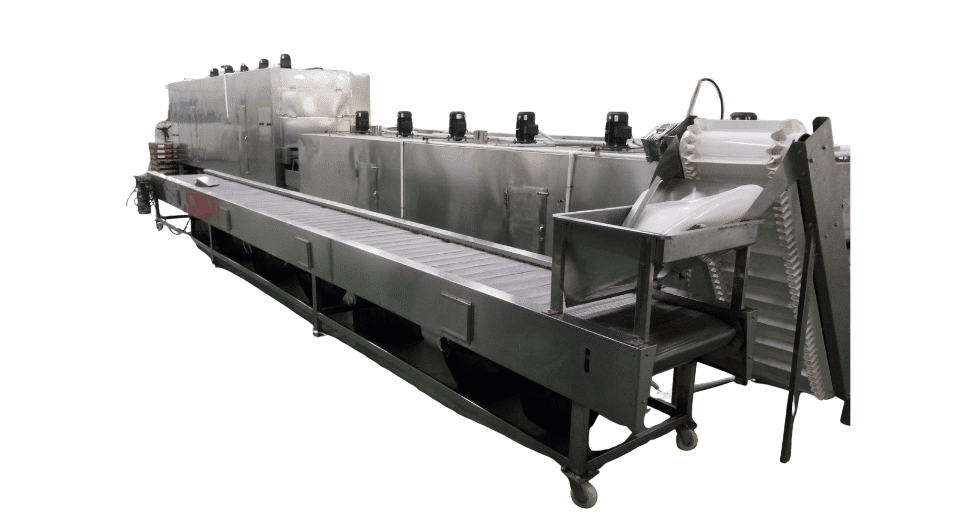
The craft and premium chocolate movement has reached a turning point. Worldwide demand for high-quality chocolate keeps climbing, and a growing number of producers now want to own every part of their process, from the raw cocoa bean right through to the wrapped bar on the shelf. Achieving that level of control takes more than passion. It takes a dependable, well-engineered bean-to-bar chocolate machine setup. At YUCHO (Shanghai Yucho Industrial Co., Ltd.), we have spent more than 35 years designing, developing, and manufacturing precision chocolate equipment, supplying makers in over 100 countries with food-grade, production-ready solutions that hold up shift after shift.
In this guide, we’ll walk the full path together, from raw cocoa beans to finished chocolate bars, and show you why modern bean-to-bar machinery matters so much for protecting flavor, meeting rising demand, and lifting productivity. You’ll see how chocolate-making has evolved, which ingredients truly shape your product, how a production line is planned and built, and what roles technology, quality control, and sustainability now play. We’ll close with practical market insights and answers to the questions buyers ask us most.
The Evolution of Chocolate Making: A Historical Perspective
Chocolate carries a history that runs back thousands of years. Long before the bar existed, ancient Mesoamerican cultures such as the Maya and Aztecs treated cacao as nearly sacred. They drank it as a bitter, spiced beverage and valued cocoa beans so highly that the beans even circulated as currency. When cacao eventually crossed the ocean to Europe, sugar and milk reshaped it into the sweeter, smoother treat most of us recognize today. Yet for generations, chocolate stayed a luxury reserved for the wealthy. Only as cocoa trade routes widened and sugar grew more plentiful did it slowly reach everyday tables.
The Industrial Revolution rewrote the rules. A short list of breakthroughs transformed the entire craft: the cocoa press, which separated cocoa butter from solids; conching, which dissolved gritty texture into silk; and tempering, which delivered that signature gloss and clean snap. Machinery suddenly made large-scale chocolate bars possible, and many of the iconic brands still on shelves today trace their roots to this era. That same drive now powers the bean-to-bar movement, where makers reclaim command of every stage and pair time-honored craft with modern engineering. The story keeps moving as tastes evolve, but it never strays far from cacao’s deep roots.
Understanding the Key Ingredients in Bean-to-Bar Chocolate
Exceptional chocolate begins with exceptional ingredients, and the bean-to-bar world rests on a surprisingly short list: cocoa beans, cocoa butter, sugar, and sometimes milk powder. Among these, the cocoa bean does the real work. Its origin, variety, and roasting profile steer the finished flavor more than anything else, ranging from bright, fruity single-origin character to the deep, rounded richness of a classic dark bar. That sensitivity is precisely why thoughtful makers now source with care, studying where their beans grow and how they are cultivated. The right equipment, beginning with a precise cocoa roaster and grinder, is what releases the full potential locked inside each bean.
Buyer expectations are shifting just as quickly. Today’s customers want cleaner labels, fewer additives, and far greater transparency about what goes into their chocolate. In response, many brands are removing artificial ingredients, introducing dairy-free or reduced-sugar options, and proudly spotlighting single-origin or ethically sourced cocoa. All of these places real pressure on manufacturers to protect natural flavor at every stage of processing, and that is exactly where precise, food-grade bean-to-bar equipment proves its worth. At YUCHO, our focus on gentle flavor preservation and food-grade stainless steel construction helps you deliver the clean, honest products the market now demands.
The Design Process: From Initial Concept to Production Line
Designing a bean-to-bar chocolate line is part creative vision and part disciplined engineering. The process opens with clarity: a defined product and a realistic target output. With the global chocolate market expanding so steadily, flexible and scalable lines have become one of the smartest investments a producer can make. As the design takes shape, several decisions carry real weight, including production capacity, available floor space, the appropriate degree of automation, and how cocoa flows seamlessly from one machine to the next. The best outcomes emerge from genuine collaboration between engineers, chocolate makers, and production teams, building a workflow that respects real factory conditions rather than forcing a one-size-fits-all template.
Reaching a finished, working line is rarely a straight road. It involves testing, refinement, and patient fine-tuning to accommodate different bean types and fluctuating production volumes. This is where modular, customizable design delivers lasting value, allowing your line to grow alongside demand so you can start lean and scale up without discarding earlier investments. That philosophy sits at the core of YUCHO’s tailor-made approach. We adapt equipment capacity and dimensions to your workshop, optimize each process for your specific product, and integrate auxiliary equipment to ensure a genuinely seamless production process. The objective never changes: protect quality while raising output and efficiency in equal measure.
The Core Machines in a Bean-to-Bar Chocolate Line
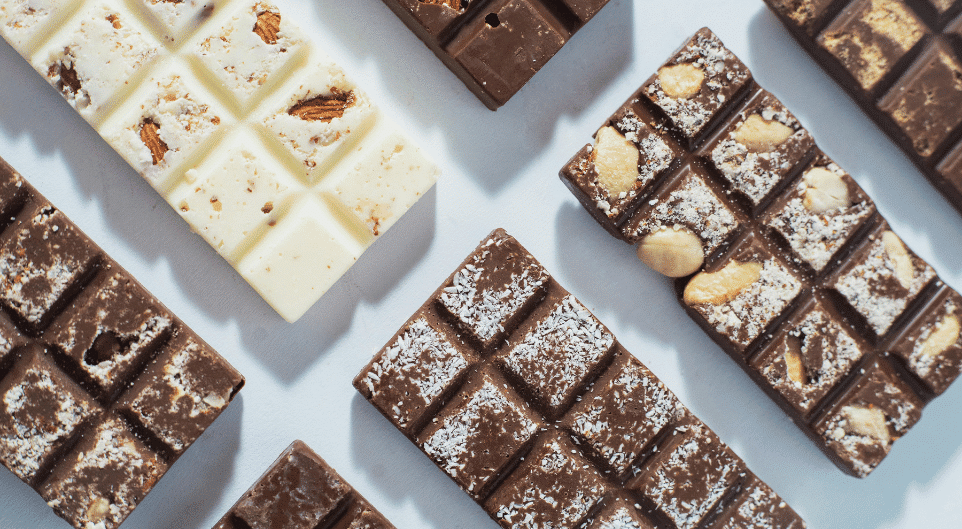
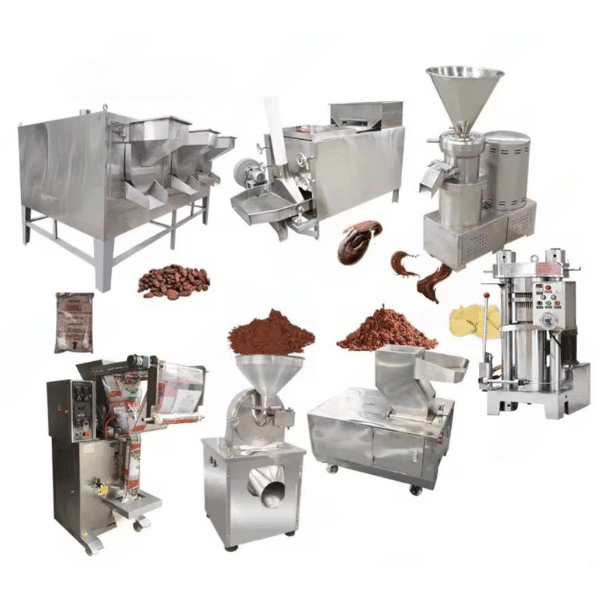
Let’s follow the first half of the journey, machine by machine. Everything begins with the cocoa bean roaster, which coaxes flavor forward through even, carefully controlled heating. Cooling and conveying systems then move the beans safely between stages without bruising or contamination. Next, the cocoa bean peeling and winnowing machine separates the nibs from their shells at a high peeling rate, leaving clean, ready material behind. From there, the cocoa bean grinding machine converts roasted nibs into smooth, fluid cocoa liquor with tightly controlled particle size. Every one of these machines is built from food-grade stainless steel and engineered to preserve flavor, control particle size, and maintain precise temperature at each step. You can review the complete setup in YUCHO’s full range of bean-to-bar chocolate equipment.
The second half completes the transformation. For producers who want to separate fats, cocoa butter pressing extracts rich, golden cocoa butter and leaves a pressed cake destined for cocoa powder milling, which yields fine, uniform powder. Refining and conching, then working the chocolate mass for hours to smooth texture and develop aroma into something refined and consistent. Tempering follows, stabilizing the cocoa butter so the chocolate sets with proper gloss and a crisp snap, and moulding shapes the mass into finished bars. Throughout the line, storage tanks, heated pumps, mixing tanks, and cooling systems keep everything moving cleanly between stages. YUCHO supplies all of this as fully integrated turnkey solutions, so you source a complete line from a single trusted partner instead of coordinating with several suppliers, saving you meaningful time and costs.
Technology’s Role in Modern Bean-to-Bar Chocolate Machines
Technology has reshaped chocolate manufacturing in ways earlier makers could scarcely imagine. Automation now manages tasks once handled entirely by hand, from conveying and sorting to precise temperature control, making production both faster and dramatically more consistent. Precise servo control and accurate temperature systems are especially vital here, because chocolate is unforgiving when it comes to heat. Even a small fluctuation can dull the surface, coarsen the texture, or weaken that satisfying snap. With automation handling the heavy lifting, you produce more bars with fewer errors, a real advantage as demand keeps rising. Just as importantly, that consistency safeguards flavor, texture, and appearance across every single batch you run.
The intelligence runs deeper than speed alone. Programmable controls, intuitive touchscreen interfaces, and remote monitoring give operators the power to fine-tune settings and catch small irregularities long before they turn into costly downtime. Energy-efficient designs trim running costs while supporting continuous, around-the-clock operation. This is where YUCHO’s engineering philosophy stands out: robust structures, low energy consumption, straightforward operation, and equipment built to run reliably 24 hours a day. As more producers embrace these capabilities, the bean-to-bar landscape looks genuinely bright, uniting traditional craft with modern efficiency to serve a growing, quality-driven market.
Quality Control in Bean-to-Bar Chocolate Production
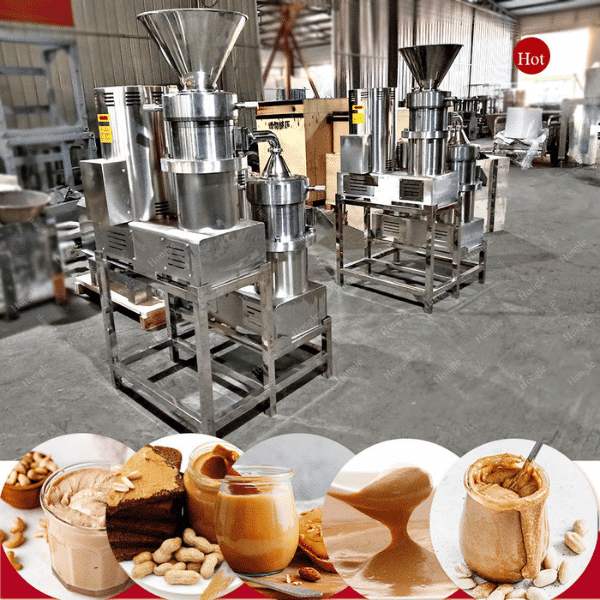
Quality control is the backbone of serious bean-to-bar production, ensuring that every bar meets food safety standards and your customers’ expectations. Strong programs begin at intake, where raw beans are inspected for defects and contaminants. From there, makers monitor roasting profiles closely and test particle size and viscosity throughout grinding and refining. Consistent temperature control during tempering is equally critical, since it directly governs gloss, snap, and shelf stability. Treating quality control as a priority does more than protect a single batch. It defends your brand’s reputation, builds repeat loyalty, and sharply reduces the waste, recalls, and inconsistency that quietly erode margins.
Yet quality control extends well beyond the chocolate itself; the machinery deserves the same attention. Routine inspection, cleaning, and maintenance keep equipment performing smoothly and prevent breakdowns that could compromise texture or flavor. Food-grade stainless steel surfaces directly support this effort by sanitizing easily and maintaining strict hygiene compliance between runs. Every YUCHO machine is built to recognized international standards, carrying both ISO 9001 and CE certifications, and each unit passes strict inspection from raw material selection through final finished-machine testing. Taken together, these safeguards help you deliver safe, consistent, premium chocolate batch after batch, with the guesswork removed.
Sustainability Practices in Bean-to-Bar Chocolate Manufacturing
Sustainability has moved from a talking point to a genuine priority across chocolate making, propelled by consumers who care deeply about how their food is produced. Sourcing usually marks the starting line. A growing share of makers now choose certified cocoa from suppliers who honor strict environmental and social standards. That decision strengthens fairer relationships with cocoa farmers and their communities while helping protect the rainforest ecosystems where cacao naturally thrives. Increasingly, responsible sourcing ties directly to brand trust and long-term supply security, which means doing right by people and the planet also makes sound commercial sense.
Sustainable production carries equal weight. Forward-thinking factories adopt energy-efficient machinery, reduce waste wherever possible, and find new value in byproducts such as cocoa shells. You’ll also notice a clear shift toward recyclable and biodegradable packaging, alongside water recycling and measurable cuts in carbon output. YUCHO’s low-energy, durable equipment fits naturally into this picture, helping you trim consumption and waste across a machine’s long service life. Step by step, these choices help the wider chocolate industry move toward a more responsible future, all without asking you to compromise on quality.
| Dimension | Data |
|---|---|
| Annual Production (tons) | 150,000 |
| Sustainable Cocoa Sourcing (% beans) | 80% |
| Energy Consumption (kWh/ton) | 320 |
| Water Recycling Rate (%) | 75% |
| Waste Reduction (%) | 65% |
| Carbon Footprint (kg CO2/ton) | 180 |
| Sustainable Packaging (% recycled materials) | 85% |
| Cocoa Shell Reuse Rate (%) | 90% |
Shaping the Future of Chocolate: Bean-to-Bar Market Insights
The global chocolate market continues to expand at a healthy clip, and the premium, craft bean-to-bar segment is growing faster still. Much of that momentum traces back to surging demand for single-origin, ethically sourced, and genuinely high-quality chocolate, paired with consumers who gladly pay more for distinctive flavor and clear provenance. The appeal stretches across a wide demographic, from curious first-time buyers to devoted connoisseurs. For producers entering the category or scaling an existing operation, that combination translates into a real, durable opportunity.
Within bean-to-bar production, efficiency and consistent quality decide who wins. A complete line that integrates roasting, winnowing, grinding, refining, conching, tempering, and moulding gives you command over flavor from the very first step to the last. It also unlocks a diverse portfolio, including bars, chips, couverture, and single-origin specialties, all from one coordinated setup. The freedom to customize your range helps you reach niche markets and build a recognizable, defensible brand, which keeps fueling growth even in a crowded field.
Looking forward, the appetite for technologically advanced, automated, and scalable lines will only intensify as the market matures. Smart manufacturing and energy-efficient equipment will help producers respond to shifting demand while protecting hard-won margins. Armed with these insights, you can plan investments with confidence and align your operations with where consumers are clearly headed. That is precisely the kind of growth YUCHO is built to support, at every stage of your journey.
FAQs
Conclusion
We’ve traveled the full arc, from ancient cacao to today’s precision production. Along the way, we explored how chocolate making evolved, which ingredients truly define your product, and how a well-considered bean-to-bar line comes together piece by piece. We also examined the technology and automation driving the industry forward, the quality control that keeps every batch consistent, and the growing commitment to sustainability that is shaping responsible factories. Each stage, from roasting all the way through to moulding, plays its own essential role in turning raw cocoa beans into finished chocolate bars. And at every step, the right machinery is what makes that transformation achievable, at whatever scale you choose to operate.
This is exactly where YUCHO steps in as your partner. With more than 35 years of experience, food-grade construction, fully customizable turnkey lines, and dedicated global support, we build equipment matched to your real-world goals. Whether you’re an artisanal maker finding your voice, a growing factory scaling up, or a large industrial producer chasing volume, we’ll help you find the right fit. Explore YUCHO’s bean-to-bar chocolate equipment and contact our team today for a tailored recommendation and a competitive quote.